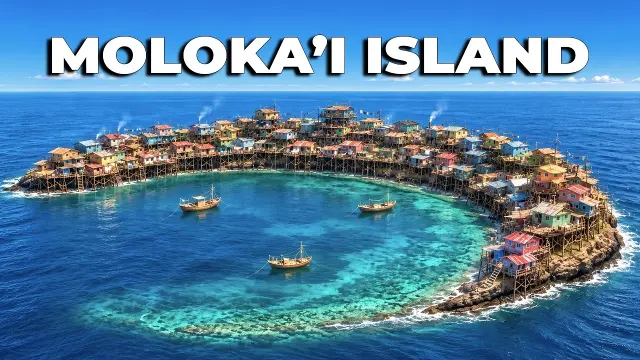
 Molokai Island in 4K: Daily Life in the Unseen Hawaii
#Native Hawaiian Culture
1 ideas
Molokai Island in 4K: Daily Life in the Unseen Hawaii
Get new #Native Hawaiian Culture ideas by email
Every Thursday: the week's best ideas, with the newest from #Native Hawaiian Culture.
Related tags
Native Hawaiian Culture: A Guide to Its Meaning
Native Hawaiian culture is the culture of the Kānaka Maoli, the Indigenous people of the Hawaiian archipelago. It took shape over many centuries of life on islands separated by open ocean, and it grew from Polynesian voyaging heritage: skilled navigators crossed the Pacific in double-hulled canoes, reading stars, swells, winds and birds to find and settle land. That inheritance of reading the natural world closely still runs through the culture today.
Values that hold it together
Much of Hawaiian life is organised around a few connected ideas. Aloha is often translated as love, but it also carries welcome, generosity and mutual regard. Aloha ʻāina, love of the land, treats the islands not as property but as kin and ancestor. Kuleana means responsibility, the rights and duties that come with belonging somewhere. ʻOhana, family, extends well beyond blood. Understanding these words helps you read almost everything else: a chant, a dance, a garden, a fishing practice.
Language
Read more
ʻŌlelo Hawaiʻi is a Polynesian language with a small sound system and a great deal of meaning carried in metaphor, chant and place names. The ʻokina marks a glottal stop; the kahakō is a long vowel. Both change meaning, so spelling matters. The language was suppressed for a period and is now taught in immersion schools and spoken again in many homes, which makes any effort you make with pronunciation a form of respect rather than a technicality.
Hula and mele
Hula is not a folk show. It is a system of recorded knowledge: genealogy, history, land, myth and emotion held in movement, gesture and chant. Hula kahiko, the older form, pairs chant with pahu drum and ipu; hula ʻauana is the more modern style accompanied by song and stringed instruments. Mele, song and chant, keeps moʻolelo, the stories and histories, alive. When hula is performed for visitors, the performers are usually students with teachers and lineages behind them.
Land, water and food
Two practices explain a great deal of Hawaiian life. Loʻi kalo, irrigated terraces for growing taro, produce the staple food pounded into poi, and taro is bound into genealogy and family identity. Loko iʻa, ancient fishponds, use walls and sluice gates to let small fish in and keep them until harvest, a form of aquaculture that works with tides rather than against them. Both depend on mālama ʻāina, caring for the land so it can care for people.
Crafts
Kapa, bark cloth beaten from plants and printed with carved stamps; featherwork using gathered feathers; and patchwork quilting, introduced through later contact and made entirely Hawaiian in its patterns. Lei-making uses flowers, seeds, shells and leaves, and a lei given is a relationship, not a souvenir.
If you are new to this
- Treat living culture as living: listen to Hawaiian voices first, and credit teachers and practitioners.
- Ask before you photograph, film or imitate. Not everything is meant to be shared outside its context.
- Learn the meaning of place names; they are maps of history and resources.
- Support local stewardship and buy from Native Hawaiian makers where you can.
Approach with curiosity and patience, and the culture will show you far more than its surface.
Videos come from YouTube and posts from Instagram; titles and summaries are our own. All rights belong to their creators.