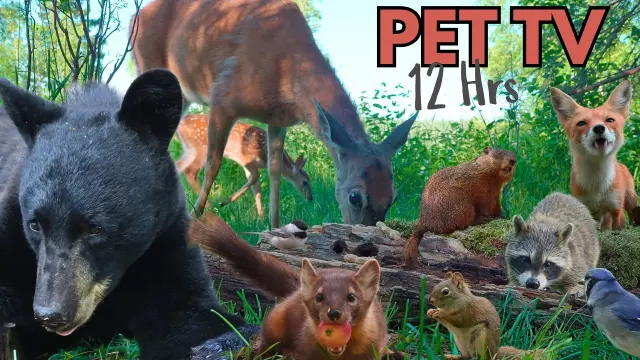
 Nature Compilation Video for Pets Featuring Wildlife and Forest Scenery
#Nature Scenes
1 ideas
Nature Compilation Video for Pets Featuring Wildlife and Forest Scenery
Get new #Nature Scenes ideas by email
Every Thursday: the week's best ideas, with the newest from #Nature Scenes.
Related tags
Nature Scenes: A Guide to Looking and Capturing
A nature scene is any view of the living, physical world that someone chooses to stop and look at: a wood in fog, a shoreline at low tide, light falling through leaves, frost on a fallen branch. The phrase covers both the thing itself and the picture made of it, which is why it works so well as a gathering point — it holds the walk you took and the photograph you brought home from it in the same breath.
Where the habit comes from
Admiring land for its own sake, rather than treating it as useful ground or a hazard to cross, is a surprisingly recent instinct in much of the world. Older traditions got there first: Chinese landscape painting treated mountains and mist as a worthy subject long before European artists stopped using countryside as mere backdrop for a portrait or a story. What changed, broadly, was a taste for wildness — for coasts, crags and weather rather than tidy gardens. Photography widened that further, because it let ordinary people bring a view home without owning a brush.
The main kinds of scene
Read more
- Woodland interiors, where the subject is texture, depth and filtered light rather than a single view.
- Mountains and high ground, which reward wide horizons and dramatic weather.
- Coast and water, from still lakes to breaking surf.
- Open country: meadows, heath, farmland, marsh.
- Skyscapes, where cloud and light are the whole picture.
- Small scenes — a leaf, a stone, moss, a puddle — that ask you to get close and look down.
What beginners should know
Light does most of the work. Low sun at the beginning and end of the day rakes across a landscape and reveals shape; flat midday light tends to flatten it. Weather that feels inconvenient — mist, rain, wind — usually makes a more interesting picture than a clear blue sky, so it is worth going out in.
Composition matters more than equipment. Give the eye something in the foreground to walk in from, keep the horizon level, and resist putting everything in the middle of the frame. Turn around occasionally: the best view is often behind you.
Practical tips
- Move slowly and stop. Most scenes are missed by walking past them, not by lacking a camera.
- Return to the same place in different light. Familiar ground teaches you more than a new location.
- Keep your distance from wildlife and never disturb a nest, a den or a resting animal for a photograph.
- Stay on paths, take your litter home, and leave flowers, shells and stones where they are.
- Carry water, check the forecast, and tell someone where you are going.
Why people collect them
Part of the appeal is simply attention: looking closely at land is a way of slowing down. And part of it is sharing — a good scene sent to someone who was not there is a small, generous act, a way of saying this is where I stood, and this is what it was like.
#Nature Scenes: frequently asked questions
How do I get started with nature scenes if I've never really paid attention before?
Begin with somewhere you already pass regularly and spend a few minutes simply looking before you reach for a camera. Going out in weather that feels inconvenient, like mist or a grey drizzle, tends to teach you more than waiting for a flawless day.
What do I actually need to capture a nature scene?
Very little beyond something to record with, because light and framing do far more of the work than gear does. Give the eye a foreground to enter from, keep the horizon level, and avoid parking the subject in the middle of the frame.
Which kind of nature scene should I choose to start with?
The one nearest to where you already are — a woodland edge, a stretch of shore, or a mossy stone and a puddle will all do. Small subjects reward close looking and need no travel, so they build the habit before you go chasing wide horizons.
How should I look after a place I keep coming back to?
Keep to marked trails, carry out everything you brought in, and resist pocketing flowers, shells or stones. Watch wildlife from a distance and never crowd a nest, den or resting animal to get a closer picture.
Any ideas for sharing a nature scene, or for a particular occasion?
A single image sent to someone who wasn't there works as a small, generous gift — it says where you stood and what it felt like. Returning to the same spot through the seasons and sending the pair makes a quietly personal record of a place.
What do people most often get wrong?
Striding past a good scene without pausing, and only heading out under blue skies. Another common slip is rarely turning around, when the better view is often the one behind you.
Videos come from YouTube and posts from Instagram; titles and summaries are our own. All rights belong to their creators.