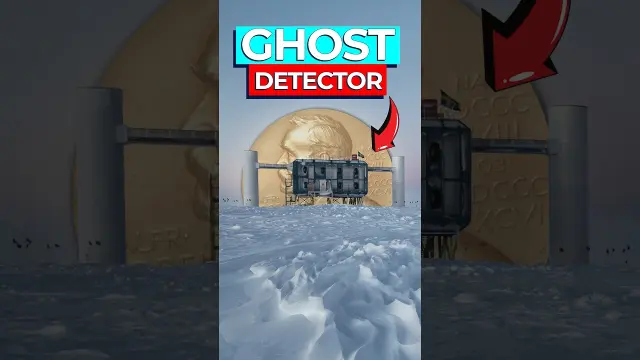
 Physicist Honored for a Telescope That Detects Ghost Particles
#Nobel Prize
5 ideas
Physicist Honored for a Telescope That Detects Ghost Particles
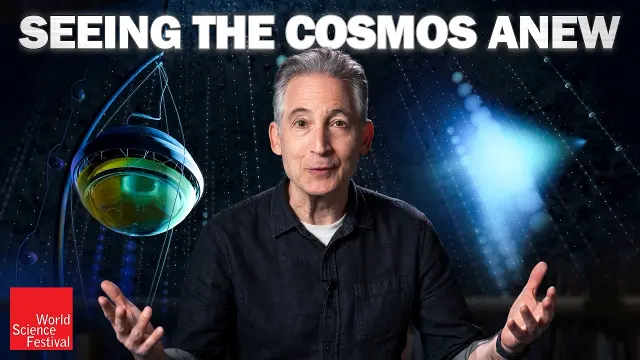 Explaining the Nobel Prize in Physics and the IceCube Detector
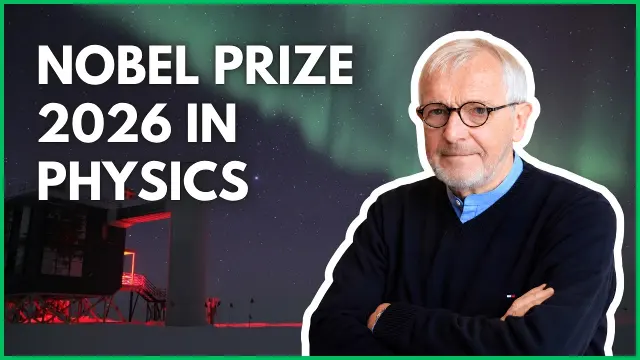 The Neutrino Story Behind a Solo Physics Nobel Prize
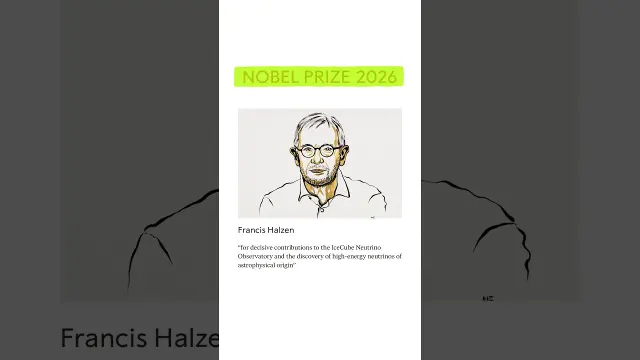 How a Telescope Buried in Antarctic Ice Won a Physics Nobel
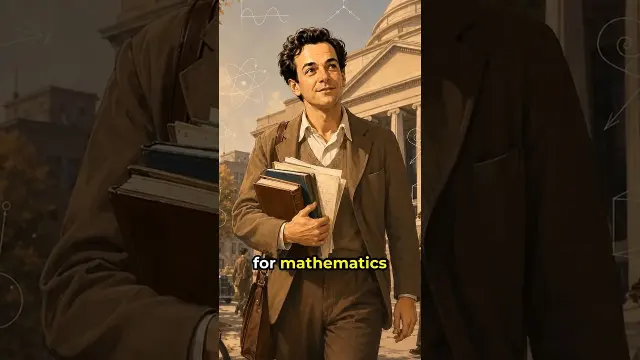 Richard Feynman: A Short Biography of the Curious Physicist
Get new #Nobel Prize ideas by email
Every Thursday: the week's best ideas, with the newest from #Nobel Prize.
Related tags
The Nobel Prize: A Guide to the World's Best-Known Award
The Nobel Prize is an international award given each year to people and organisations whose work has been judged to bring the greatest benefit to humankind. It is not a single prize but a family of them, and the word "Nobel" comes from one man: Alfred Nobel, a Swedish inventor and industrialist best known for developing dynamite. In his will he left most of his fortune to fund prizes in the fields he considered most valuable to society, and the first awards were given in 1901. The Nobel Foundation now administers the money and the prize system, while each prize has its own awarding body.
The prizes
There are six in total. Five were named in Nobel's will:
- Physics
- Chemistry
- Physiology or medicine
- Literature
- Peace
The sixth, economic sciences, was added later by Sweden's central bank and is formally a prize in memory of Alfred Nobel rather than one of the original five.
Read more
How laureates are chosen
Each prize has a committee that spends most of the year gathering nominations, consulting experts and narrowing a long list down to a final choice. Nominations are sealed for fifty years, so you cannot find out who proposed your favourite scientist. The rules keep the process deliberately narrow: a prize is usually shared by at most three people, and it is normally awarded to living individuals only. Physics, chemistry, medicine, literature and economics are presented in Stockholm, while the peace prize is awarded in Oslo, a division that dates back to the original arrangements.
Reading the prizes well
The award honours a body of work, not a single lucky discovery, and the gap between the work and the prize can be decades. That delay is one of the most interesting things about the Nobel: it rewards ideas that have already had time to prove themselves. It also means the list of laureates is a history of what a field eventually decided mattered, not a ranking of current importance.
A few habits help if you want to explore the prizes:
- Read the short citation first, then the longer background document the committees publish, which explains the science or the work in plain language.
- Follow a field rather than a year. Reading laureates in sequence shows how a discipline built on itself.
- Treat the peace and literature prizes as public arguments rather than verdicts; they are chosen by committees with human judgement, and they are often debated.
- Remember that many excellent researchers are never awarded, and that is a feature of any limited prize, not a measure of their worth.
Why it still matters
The Nobel gives the wider public a yearly reason to look at deep work in fields most of us never otherwise encounter. Used well, it is less a hall of fame than a doorway: a name, a citation and a short explanation that can lead you into genetics, particle physics, poetry or peace negotiations you would never have found on your own.
#Nobel Prize: frequently asked questions
What is the Nobel Prize, in simple terms?
It is a set of international awards given to people or organisations whose work is seen as bringing great benefit to humanity. Different prizes cover different fields, so it is more like a family of awards than one single honour.
How are Nobel Prize winners chosen?
Each prize has its own committee that reviews nominations, consults experts, and narrows the field before making a final decision. The process is intentionally selective, and nominations are kept private for a long time.
What kinds of work does the Nobel Prize usually recognize?
The prize usually honours a body of work rather than one isolated moment or discovery. That means the award often goes to ideas or achievements that have already stood the test of time and shaped a field in a lasting way.
How can I start learning about a Nobel Prize category?
A good way to begin is by reading the short citation first, then the longer explanation from the awarding committee. Following winners within the same field can also help you see how one idea builds on another.
What is a common mistake people make when reading about the Nobel Prize?
A common mistake is treating the prize as a complete ranking of the best people in a field. In reality, it reflects the committee's judgment about work that has proven especially important, and many excellent people are never awarded.
Why do people still pay attention to the Nobel Prize today?
It gives the public a way to discover major ideas in science, literature, and peace that they might otherwise never encounter. Used well, it can be a doorway into deeper learning rather than just a list of winners.
Videos come from YouTube and posts from Instagram; titles and summaries are our own. All rights belong to their creators.