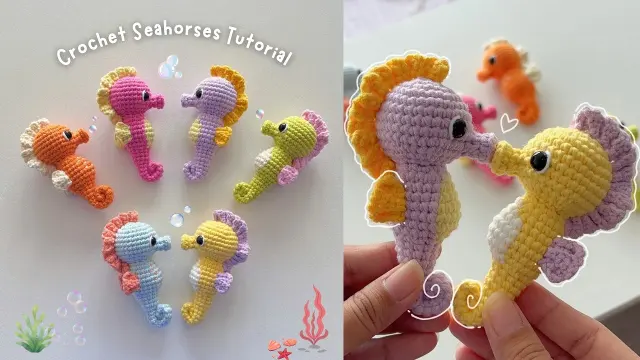
 Crochet Colorful Seahorse Amigurumi: Easy Ocean Tutorial
#Ocean Crafts
1 ideas
Crochet Colorful Seahorse Amigurumi: Easy Ocean Tutorial
Get new #Ocean Crafts ideas by email
Every Thursday: the week's best ideas, with the newest from #Ocean Crafts.
Related tags
Ocean Crafts: A Beginner's Guide to Seaside Making
Ocean crafts are the things you make from what the sea leaves behind, and from the shapes and colours it suggests. A handful of worn shells, a piece of glass tumbled soft by the waves, a branch of driftwood bleached pale — none of these cost anything, and all of them arrive already beautiful. That is a large part of the appeal: the making begins with a walk.
Where it comes from
Coastal communities have always worked with the sea's leftovers, out of thrift as much as affection. Fishing families mended nets and knotted rope, and the same skills turned into decorative work in quiet months. Shells became buttons, borders and keepsakes; driftwood became hooks, handles and small carvings. Sailors carried the habit of carving and knotting with them, and the tradition travelled. What you make today sits in that long line of making something from nothing much.
The materials
Read more
Most ocean crafts draw on a small, familiar set of things: shells of every size, sea glass, driftwood, smooth pebbles, sand, rope and netting, and the plain cotton, linen or wool that suits a maritime palette. Sea glass is the glass that has spent years in the surf, its edges rounded and its surface frosted — the longer it has been in the water, the softer it looks. Driftwood is wood that has been salted, sunned and sanded by weather until the grain stands out.
Main kinds of ocean craft
- Shell work: wreaths, framed arrangements, jewellery, small ornaments and embellished boxes.
- Sea glass craft: pendants, window hangers, mosaics and simple beadwork.
- Driftwood pieces: wall hooks, shelves, picture frames, mobiles and carved shapes.
- Textile work: crocheted and knitted sea creatures, rope bowls, macramé and netting.
- Paper and print: plaster casting in sand, shell rubbing, cyanotype and simple printing.
Collecting kindly
Take only what is loose and plentiful, and leave anything living, attached or occupied — a shell with something inside it is a home, not a material. Many beaches protect their sand, pebbles and shells, and in some places collecting is limited or forbidden, so check local rules before you fill a bag. Buying from a responsible supplier is often the better choice for anything you need in quantity.
Getting started
Wash and dry everything thoroughly before you store it, and sort by size and colour — half the pleasure is in the sorting. Shells and sea glass need no preparation beyond a rinse; driftwood usually needs brushing and, if you are sanding it, a dust mask and good ventilation. Test your adhesive on an offcut first, since smooth glass and chalky shell surfaces behave differently. Start with one small project rather than a grand plan, and keep a box of spare finds for later.
A little care
Watch for sharp edges on broken shell and glass, and keep small pieces away from young children. Keep finished work out of long, direct sunlight, which fades many colours, and away from damp, which can dull shells. Made slowly and kept simply, these pieces last for years.
#Ocean Crafts: frequently asked questions
How do I start making ocean crafts if I have never tried before?
Begin with a single small project rather than a big plan, using whatever you already picked up on a walk. Wash and dry your finds, then sort them by size and colour so you can see what you actually have to work with. Testing your glue on a spare offcut first saves a lot of frustration, since glass and shell surfaces grip very differently.
What materials and tools do I need for ocean crafts?
The core materials are the free ones: shells, sea glass, driftwood, smooth pebbles, sand, rope or netting, and a plain cotton, linen or wool fabric in sea colours. Beyond that you mainly need an adhesive that suits your surface, something to cut and sand with, and a dust mask and ventilation if you are sanding driftwood. Buying from a responsible supplier makes sense for anything you need in quantity.
Which kind of ocean craft should I choose?
Pick according to the material you already have most of and the skills you enjoy using. Shells and sea glass suit jewellery, framed arrangements and window hangers, driftwood lends itself to hooks, shelves and frames, and rope, netting or yarn opens up bowls, macramé and small crocheted sea creatures. If you like working with your hands in paper and print, sand casting and simple printing are a gentle way in.
How should I collect shells, sea glass and driftwood responsibly?
Take only what is loose and plentiful, and leave anything living, still attached, or already occupied, because a shell with something inside it is a home rather than a material. Beaches often protect their sand, pebbles and shells, and rules vary from place to place, so check locally before you fill a bag.
How do I care for finished ocean craft pieces so they last?
Keep them out of long stretches of direct sunlight, which fades many colours, and away from damp, which can dull shells over time. Watch for sharp edges on broken shell and glass, and keep small pieces out of reach of young children. Stored and handled simply, these pieces hold up for years.
What are common mistakes people make with ocean crafts?
Skipping the washing and drying step is the usual one, since sand and salt left in the crevices spoil the finish later. Another is using the wrong adhesive on smooth glass or chalky shell without testing it first, or starting with an ambitious project instead of a small one. Forgetting to check local collecting rules before gathering in quantity is a mistake worth avoiding too.
Videos come from YouTube and posts from Instagram; titles and summaries are our own. All rights belong to their creators.