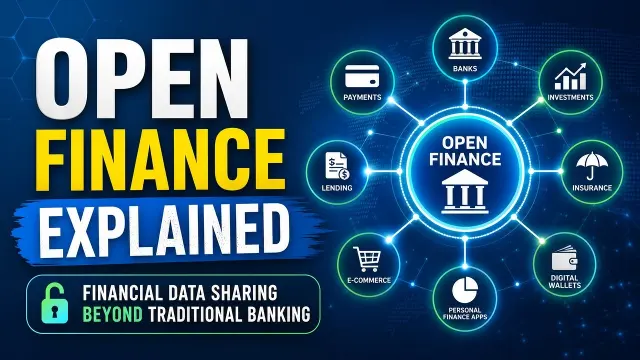
 Exploring Open Finance and Advanced Financial Data Sharing
#Open Finance
1 ideas
Exploring Open Finance and Advanced Financial Data Sharing
Get new #Open Finance ideas by email
Every Thursday: the week's best ideas, with the newest from #Open Finance.
Related tags
Open Finance: A Beginner's Guide to Shared Financial Data
Open finance is the practice of letting you, the customer, give a third-party provider permission to access the data held by your banks, insurers, pension funds and investment platforms, and in some cases to act on your behalf. It is an extension of open banking, which began with current accounts and payment services, widened out to savings, credit, mortgages, investments, insurance and pensions.
Where it comes from
The idea grew out of a simple frustration: your financial life is scattered across institutions that do not talk to each other, and the data about you is held in silos you cannot easily move. Regulators in several parts of the world responded by requiring banks to share data with authorised third parties at the customer's request, provided the customer gives explicit consent. Europe's payment services rules are the best-known example, and similar frameworks have appeared elsewhere. The underlying principle is always the same: your data belongs to you, not to the institution holding it.
How it actually works
Read more
You choose a provider, such as a budgeting app or an account aggregation service, and authorise it to connect to your bank. The connection is usually made through a standardised interface rather than by handing over your password. You approve what is shared and how long it lasts, and you should be able to withdraw that permission as easily as you gave it.
What it is used for
- Seeing all your accounts, cards and loans in one place, whichever bank they sit with
- Automatic budgeting and spending analysis
- Applying for credit or a mortgage, where a lender can assess affordability from verified data instead of paperwork
- Comparing insurance, savings or investment products using your real circumstances
- Making payments directly from your account, without a card
What beginners should know
Open finance is not the same as screen scraping. The authorised version relies on standard interfaces and registered providers, and it keeps your credentials out of the third party's hands. Consent is the centre of the system, so read what you are agreeing to: which accounts, which data fields, and for how long.
Security is not something you outsource entirely. Check that the provider is regulated or registered with a financial authority in your country, be wary of anyone asking for your banking password directly, and review your connected apps from time to time, revoking access you no longer use.
It is also worth understanding what you are giving away in the aggregate. Transaction data reveals a great deal about your habits, health, relationships and whereabouts. Sharing it can buy you genuinely better tools and prices, but it should be a deliberate trade, not a default.
Start small: connect one account, see whether the service earns its place, and build from there.
#Open Finance: frequently asked questions
How do I get started with open finance?
Pick a single service you actually want — a budgeting tool or an account aggregator, say — and connect just one account to it rather than handing over your whole financial life at once. Give explicit permission for that connection, then see whether the tool genuinely earns its place before adding anything else. Building up gradually keeps the decision deliberate and easy to reverse.
What do I need before I connect an account?
You need a provider that is regulated or registered with a financial authority in your country, and a connection made through a standardised interface rather than by typing your banking password into an app. Before you approve anything, check which accounts are being accessed, which data fields are being read, and how long the permission will last. Consent sits at the centre of the whole arrangement, so it is worth reading closely.
How is open finance different from screen scraping?
Screen scraping works by having you hand your login details to a third party so it can log in as you, which puts your credentials in someone else's hands. The authorised version uses standard interfaces and registered providers instead, so the service never sees your password. If something asks for your banking login directly, that is a sign to stop and check rather than to proceed.
How do I keep my connections in good order over time?
Treat your connected apps the way you treat any other permission you have granted: review them periodically and withdraw access from anything you no longer use. Permission should be as easy to take back as it was to give, so if that is awkward, it is worth questioning. Security is not something you can outsource entirely to the provider.
Which kind of provider should I choose?
Start from the problem you want solved — seeing everything in one place, budgeting, comparing products, or making a payment without a card — and choose a service that does that specific job well. Prefer providers that explain plainly what they access and for how long, and that make revoking access simple. A tool that asks for far more than its job requires is not a good first choice.
What mistakes do beginners commonly make?
The most frequent slip is approving broad access without reading what is being shared, then forgetting the connection exists. Another is treating data sharing as a default rather than a deliberate trade: transaction data reveals a great deal about your habits and circumstances, and it is worth deciding consciously what you get in return. Keep the exchange intentional and you avoid most of the trouble.
Videos come from YouTube and posts from Instagram; titles and summaries are our own. All rights belong to their creators.