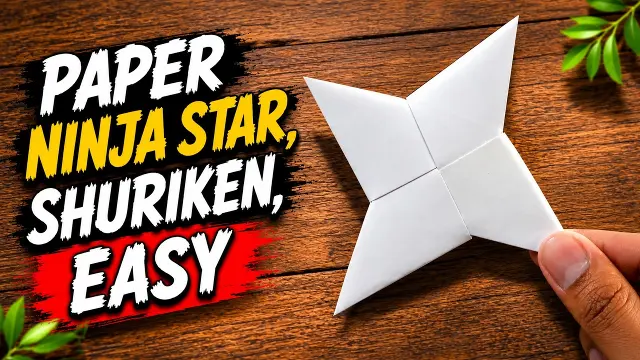
 Paper Ninja Star Shuriken Tutorial for Origami Beginners
#Origami Tutorial
3 ideas
Paper Ninja Star Shuriken Tutorial for Origami Beginners
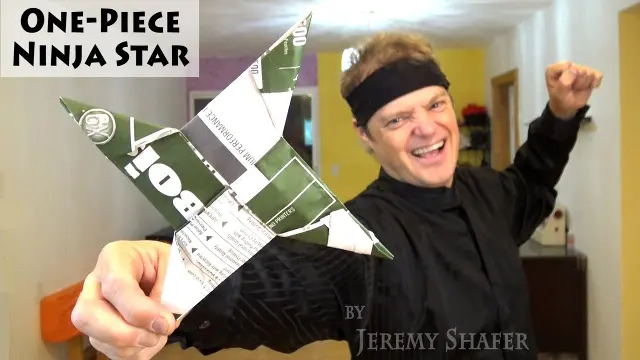 One-Piece Four-Pointed Ninja Star Folded From One Square
 Origami Tutorial: Folding a Paper Football
Get new #Origami Tutorial ideas by email
Every Thursday: the week's best ideas, with the newest from #Origami Tutorial.
Related tags
Origami Tutorials: A Beginner's Guide to Paper Folding
Origami is the craft of folding a flat sheet of paper into a three-dimensional shape without cutting or gluing it. The name joins the Japanese words for folding and paper, and the practice grew out of paper-folding traditions in Japan that were eventually shared with the rest of the world. Today it is a hobby, a classroom activity, a design discipline and, for some, a branch of mathematics.
What makes origami distinctive is its restraint. One square of paper, a flat surface and your hands are enough. Every model, from a simple boat to an intricate dragon, is built from the same small family of creases.
The basic folds
Almost every tutorial you pick up will assume you know a handful of moves. Learning them well makes everything else easier.
Read more
- Valley fold: the paper folds toward you, like closing a book.
- Mountain fold: the paper folds away from you, the reverse of a valley.
- Crease and unfold: marking a line first, then collapsing the paper along it.
- Squash and reverse fold: the two manoeuvres that turn flat folds into legs, beaks, wings and points.
Choosing paper
Standard printer paper works for practising, but it is thin and soft, and it creases reluctantly. Dedicated origami paper is usually lighter and holds a fold crisply. Squares are the traditional starting shape, and many beginners find that larger paper is easier than small paper: the same model at double the size is far more forgiving. Avoid heavy card at first, and be wary of paper that is glossy on both sides, which tends to slide.
Reading a tutorial
Good instructions combine diagrams, symbols and short written steps, and learning the symbol language is the real skill. A dashed line means a valley fold, a dash-dot line a mountain fold, and arrows show the direction of movement. Read the whole sequence before you start folding, then work step by step. If a step goes wrong, unfold to the last point that looked correct rather than forcing the paper; origami rarely recovers from a rushed crease.
Tips for a good result
- Fold on a firm, smooth surface and press each crease with a fingernail or the back of a spoon.
- Keep your folds as accurate as you can, especially early ones. Small errors multiply.
- Follow the model you chose, not the one you hoped for. Substituting a fold usually shows later.
- Expect the collapse stage of complex models to look messy before it resolves.
- Put the paper down when you get frustrated. Paper remembers everything, including impatience.
Origami rewards patience more than talent. Start with simple traditional models, repeat them until the folds feel natural, and each new tutorial will ask a little less of your attention and give a little more back.
#Origami Tutorial: frequently asked questions
How do I start learning origami as a beginner?
Start with a simple model and practice the basic folds until they feel natural. It also helps to read the full tutorial first, then fold step by step instead of jumping ahead.
What paper is best for an origami tutorial?
A square sheet is the usual starting shape, and larger paper is often easier for beginners to handle. Standard printer paper can work for practice, but lighter paper made for folding usually holds creases better.
Should I begin with a paper ninja star or a paper football?
A paper football is usually a friendlier place to begin because it relies on simpler folds and helps you build confidence. A ninja star is a fun next step once you are comfortable with accurate creases and following diagrams closely.
What are the most important folding techniques to learn first?
The key basics are valley folds, mountain folds, crease-and-unfold steps, and a few shaping moves like squash and reverse folds. Once you understand those, many tutorials become much easier to follow.
What mistakes should I avoid when doing origami?
The most common problem is rushing, because small errors early on can affect the whole model later. It also helps not to force a wrong fold; unfolding to the last correct step usually gives a better result than trying to fix it on the fly.
Videos come from YouTube and posts from Instagram; titles and summaries are our own. All rights belong to their creators.