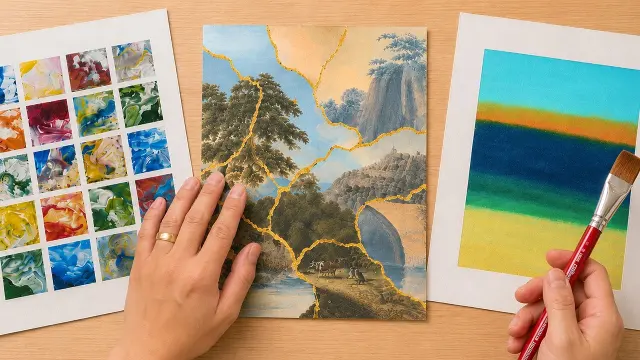
 Eight Creative and Easy Art Styles for Beginners
#Painting Ideas
1 ideas
Eight Creative and Easy Art Styles for Beginners
Get new #Painting Ideas ideas by email
Every Thursday: the week's best ideas, with the newest from #Painting Ideas.
Related tags
Painting Ideas: Finding Inspiration and Starting to Paint
Every painting begins as an idea, though not always a dramatic one. More often it is a colour you noticed on a walk, a shape of light on a kitchen wall, or a feeling you want to hold on to for a moment longer. Painting ideas are not rare gifts that arrive fully formed; they are habits of attention that anyone can build. This guide is about where those ideas come from, what you might do with them, and how to move from wanting to paint to actually making a mark on a surface.
What Counts as a Painting Idea
An idea can be very small. It might be a subject (a chair, a face, a bowl of lemons), a mood (quiet, restless, warm), a colour combination, a texture, or a question you want to explore visually. Beginners often assume an idea must be original or important. It does not. The same subject painted twice becomes two different paintings, because your hand and your attention are never identical. Familiar, ordinary subjects are a reliable place to start precisely because you already know how they feel.
Subjects Worth Trying
Read more
- Still life: objects you own, arranged simply, offering control over light and composition.
- Interiors and windows: rooms with their everyday clutter and the light falling through them.
- Landscapes and skies: forgiving subjects, since nobody checks whether a cloud is accurate.
- Portraits and figures: challenging but endlessly interesting, even when working from photographs.
- Abstract compositions: colour, shape and rhythm without a subject to describe.
- Copies and studies: painting from a work you admire is an old and respected way to learn.
Styles and Approaches
Realism aims to describe what is seen; impressionism chases the impression of light and movement; expressionism prioritises feeling over accuracy; abstraction works with form and colour alone. You do not have to choose one and stay there. Many painters move between approaches for years, and trying a style outside your comfort zone often unlocks an idea you did not know you had.
Practical Ways to Find Ideas
Keep a small notebook or a folder of images you respond to without judging why. Set yourself a constraint: one colour plus white, a single brush, ten minutes, a subject painted five ways. Constraints shrink the blank surface into something manageable. Paint the same thing in different light, at different times, in different moods. Look at other people's work regularly, not to copy it but to notice what draws your eye.
Advice for Beginners
Start with a surface you are not afraid of and materials you do not mind wasting. Limit your palette at first; a handful of colours teaches more about mixing than a full set. Work from life when you can, and from good photographs when you cannot. Accept that some paintings will fail, and that failure is part of the process rather than a verdict on your ability. Keep everything, even the awkward ones, and look back at them later.
Most of all, let the idea be modest. A painting does not need to be significant to be worth making, and the ideas that sustain a practice are usually the ordinary ones you return to again and again.
#Painting Ideas: frequently asked questions
How do I start painting if I have never painted before?
Begin with a surface and materials you are not worried about ruining, so the first mark feels low-stakes. Pick one ordinary subject you already know well, such as a chair, a bowl of fruit or the view through a window, and paint it simply. Keeping your palette limited at the start teaches you more about mixing colour than a full set of paints would.
What supplies do I actually need to begin?
A surface, a few brushes and a small handful of colours are enough to make a real start. Add something to mix on and something to wipe brushes with, and you have a working setup. Extra equipment can wait until you know what you like using.
What should I paint when I have no ideas?
Ideas rarely arrive fully formed, so treat them as something you collect rather than wait for. Keep a notebook or folder of images and colours that catch your eye, then try a small constraint such as one colour plus white, a single brush, or the same subject painted several ways. Constraints make an empty surface feel manageable instead of overwhelming.
Which style should I choose: realistic, impressionist, abstract or something else?
There is no rule that you must pick one and stay there. Realism describes what is seen, impressionism chases light and movement, expressionism favours feeling, and abstraction works with form and colour alone. Trying a style outside your comfort zone often uncovers an idea you did not know you had, so treat styles as tools rather than identities.
Is it worth copying paintings I admire?
Yes, copying and studying works you love is a long-established way to learn. The aim is not to reproduce them exactly but to notice what holds your attention and to work out how it was done. Looking at other people's work regularly also trains your eye for your own pieces.
What mistakes do beginners make most often?
Two common ones are assuming an idea has to be original or important, and treating a failed painting as a verdict on your ability. Modest, ordinary subjects are usually what sustain a practice over time, and some paintings simply will not work out. Keep the awkward ones anyway, because looking back at them later shows you what changed.
Videos come from YouTube and posts from Instagram; titles and summaries are our own. All rights belong to their creators.