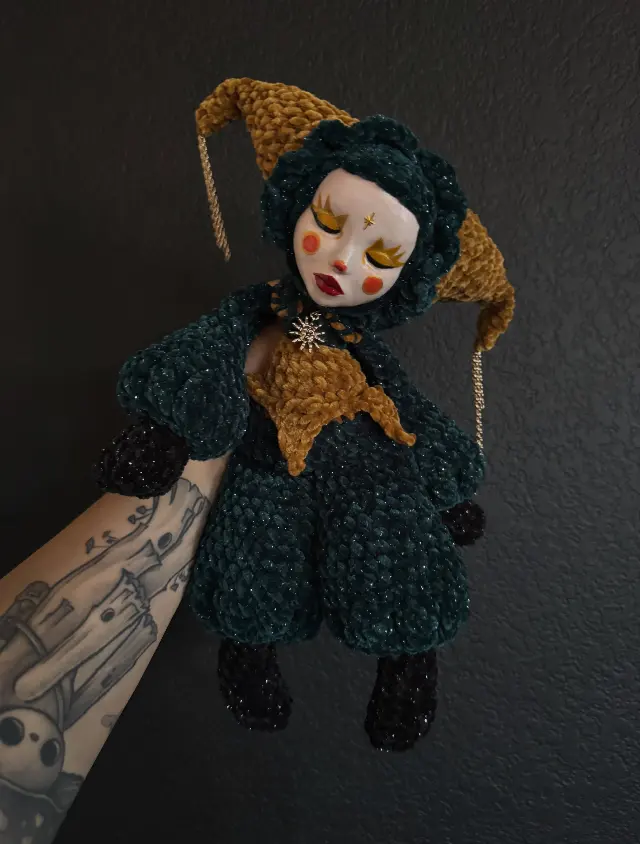
 Handmade Jester Doll With a Sculpted Clay Face
#Pattern Hack
1 ideas
Handmade Jester Doll With a Sculpted Clay Face
Get new #Pattern Hack ideas by email
Every Thursday: the week's best ideas, with the newest from #Pattern Hack.
Related tags
Pattern Hacking: A Beginner's Guide to Changing Sewing Patterns
A pattern hack is a deliberate change you make to an existing sewing pattern before you cut any fabric. Instead of drafting a garment from nothing, you take a pattern that already fits and rework one part of it: a neckline, a sleeve, a hem, a pocket. It sits somewhere between following a pattern and designing your own, and it is one of the most practical skills a home sewer can build.
Where it comes from
Commercial paper patterns have always been a starting point rather than a rulebook. Dressmakers have lengthened, shortened, merged and reshaped them for as long as patterns have been sold, and home sewing magazines have long printed variations on a basic block. What changed is the vocabulary: makers began sharing their altered versions online, and "pattern hack" became the friendly name for the whole habit of treating a pattern as raw material.
What it is for
Read more
Most hacks solve a fit problem or a taste problem. You might love the shoulders of a dress but want a different skirt, or need a bodice that closes at the back instead of the front. Hacking is also how people get more from a pattern they have already sewn twice, and how they use up fabric that will not quite stretch to the original layout.
Common kinds of hack
- Fit adjustments: lengthening or shortening a bodice, swayback and bust adjustments, blending two sizes between waist and hip.
- Simple swaps: a different neckline, a collar added or removed, short sleeves made long, a zip replaced with buttons.
- Additions: patch or in-seam pockets, a lining, a hood, cuffs, ties, a contrast yoke.
- Combining patterns, often called mashing: the top of one pattern joined to the bottom of another, matched at the waist or hip seam.
- Drafting a piece yourself: slash-and-spread to add fullness, or tracing a shape from a garment you already own.
What beginners should know
Trace your pattern onto fresh paper rather than cutting the original, so you can always go back. Work in a single change at a time, otherwise you will not know which alteration caused a problem. Mark the grainline, notches and seam allowances on anything you redraw, and keep the seam allowances consistent with the original. Check that seams you intend to join are still the same length by "walking" them against each other. Sew a test version in cheap fabric before committing your good material, especially for anything involving the armhole, neckline or crotch. Make notes and dates on your traced pieces; future you will be grateful.
Practical habits
Keep a small notebook of what you changed and how it turned out. Photograph the altered pieces next to the original. Press as you go, since a hack often moves seams and seam allowances need to be trimmed and finished properly. If a change starts to affect three or four parts of the pattern at once, pause: you may be drafting rather than hacking, and a fresh pattern may serve you better.
Videos come from YouTube and posts from Instagram; titles and summaries are our own. All rights belong to their creators.