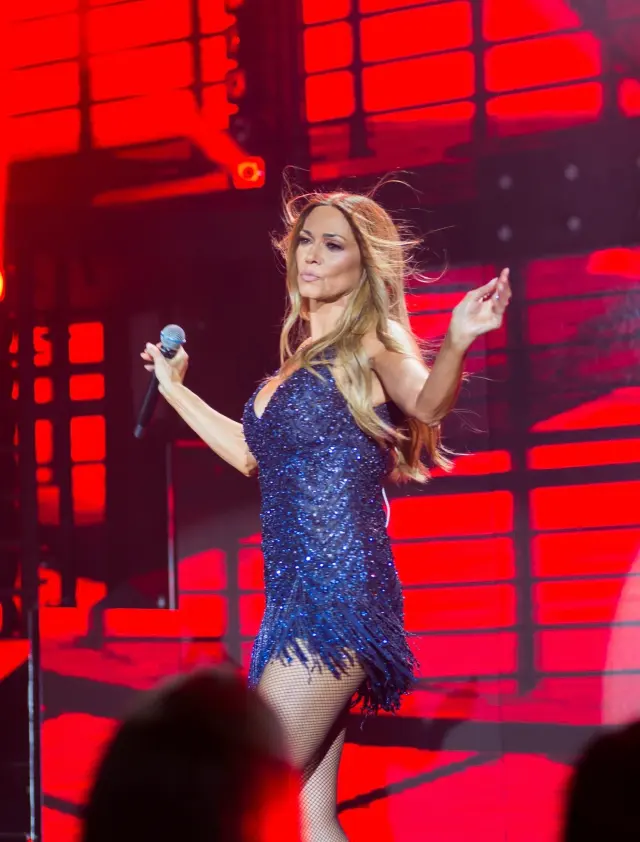
 Stage makeup look created for singer Elli Kokkinou live
#Performance Makeup
1 ideas
Stage makeup look created for singer Elli Kokkinou live
Get new #Performance Makeup ideas by email
Every Thursday: the week's best ideas, with the newest from #Performance Makeup.
Related tags
Performance Makeup: A Guide to Makeup That Holds Up on Stage
Performance makeup is makeup made for being looked at from a distance, under strong light, often for a long time. It is not simply an evening look turned up a notch: it is designed around the conditions of a stage, a camera or a spotlight, where ordinary makeup disappears and the face has to carry expression across a room.
Why stage makeup looks different
The stage changes what the audience sees. Bright light flattens contours and washes out colour, so a face painted with everyday makeup can read as pale and featureless from a few rows back. Distance does the same thing more slowly: detail vanishes before colour does. Performance makeup answers both problems with stronger contrast, more saturated colour and shapes that are drawn slightly larger and bolder than life. The aim is not to look heavy up close but to look clear from where the audience actually sits.
Where it comes from
Read more
The tradition runs through theatre, ballet, opera and clowning, where thick grease-based paints were used because they held under hot lights and could be seen across a hall. Variety and cabaret, drag performance and later concert touring all added to the vocabulary, as did film and television, which pushed the same craft in the opposite direction: precise, controlled and quiet. Today the same principles are shared across all of them, adjusted for how far away the viewer is.
Main kinds
- Theatre and stage: strong contouring, defined brows and eyes, expressive lips, all built to survive three acts.
- Dance: durable and sweat-resistant, with emphasis on eyes so expression reads during movement and from the back of the house.
- Live music and concert: often the boldest version, with graphic eyes, glitter or colour used as part of the visual identity of the show.
- Film and camera work: technically demanding but visually restrained, matched to the lens and the lighting rather than to a distance.
- Character and ageing makeup: shaping the face with highlight and shadow to suggest age, mood or a specific role.
What beginners should know
Start with skin preparation. Clean, moisturised skin holds makeup better, and a primer keeps the base from breaking down under heat. Build the base a shade or two more pigmented than you would wear daily, then set it with powder where shine is likely to appear.
Contour and blush need to be stronger than feels natural in the mirror, because the stage will soften them. Brows should be filled to a clear shape, since they frame the face at distance. Eyes benefit from defined liner, layered mascara or lashes, and a little highlight at the inner corner. Lips should be lined as well as filled so the shape survives talking and singing.
Practical habits
Pack a small touch-up kit with powder, lip colour and cotton buds. Blot rather than layer when shine appears. Test a full look in rehearsal lighting if you can, since a look that reads well in a bathroom mirror may not read on stage. Take it all off properly at the end of the night and give your skin a gentle cleanse; performance makeup is heavy by design, and your skin will thank you for the extra care.
#Performance Makeup: frequently asked questions
How is performance makeup different from an ordinary evening look?
Performance makeup is built for the distance between the face and the audience, and for strong light that flattens contours and washes out colour. That is why it uses stronger contrast, deeper colour and shapes drawn a little larger than life. The goal is not heaviness up close but clarity from where people are actually sitting.
What do I need to start doing performance makeup?
Begin with good skin preparation, since clean, moisturised skin holds product better and a primer keeps the base from breaking down under heat. You need a base with more pigment than your daily one, a setting powder, contour and blush, brow colour, defined liner and mascara or lashes, and a lip pencil. A small touch-up kit with powder, lip colour and cotton buds is worth assembling from the start.
Which type of performance makeup should I choose?
It depends on how far away the viewer is and what the performance demands. Stage and theatre work favours sculpted contours and expressive features, dance calls for durable sweat-resistant products with strong eyes, live music allows the boldest graphic and glitter-led looks, and camera work wants something quieter and precisely matched to the lens. Character and ageing work instead uses highlight and shadow to reshape the face.
How do I keep performance makeup from fading during a show?
Build the base with more pigment than usual and set it with powder wherever shine tends to appear, since stage light will soften whatever you apply. Line and fill the lips rather than just filling them, so the shape survives talking and singing. Between scenes or sets, blot instead of layering more product on top.
What mistakes do beginners usually make?
The most common is judging the look in a bathroom mirror instead of under real stage lighting, where a subtle face can read as pale and featureless. Another is stopping short on contour, blush and brows because they feel too strong in close-up, when distance will soften them anyway. Testing a full look in rehearsal light catches both problems before an audience does.
How should I take performance makeup off afterwards?
Remove it properly at the end of the night rather than sleeping in it, and give the skin a gentle cleanse afterwards. These products are heavy by design and sit on the skin for a long time under hot light, so the extra care at the end of the day is part of the routine, not an optional step.
Videos come from YouTube and posts from Instagram; titles and summaries are our own. All rights belong to their creators.