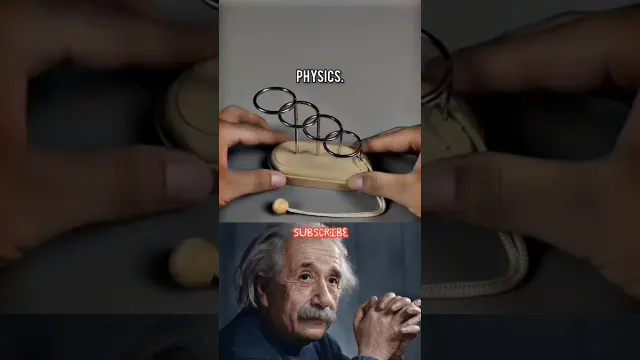
 A Simple Physics Demonstration and the Principles Behind It
#Physics Experiment
1 ideas
A Simple Physics Demonstration and the Principles Behind It
Get new #Physics Experiment ideas by email
Every Thursday: the week's best ideas, with the newest from #Physics Experiment.
Related tags
Physics Experiments: A Beginner's Guide
A physics experiment is an organised way of asking nature a question. You set up a situation where one thing can be changed while others are held steady, measure what happens, and compare the result with what you expected. The point is not a spectacular effect but a clear one: a result you can repeat, describe and explain.
How an experiment is built
Every experiment rests on a few parts. The variable you deliberately change is the independent variable; the thing that responds is the dependent variable; everything you keep the same is a control. A pendulum makes this visible. Change the length of the string and time the swings, keep the mass and the starting angle fixed, and the pattern in your results belongs to the length alone. Without that discipline you are only watching, not testing.
Measurement is the other half. Note what instrument you used and how precisely you could read it, because every result carries uncertainty. Repeating a measurement several times and averaging is not a formality; it is how you separate a real effect from a wobble in your hands.
Read more
Kinds of experiments worth starting with
- Mechanics: pendulums, ramps, rolling objects, collisions, springs and stretched rubber bands. These are the easiest to build and the richest in patterns.
- Optics: shadows, reflection in a mirror, a pencil that appears bent in a glass of water, rainbows made with a prism or a shallow tray.
- Fluids and air: floating and sinking, a Cartesian diver in a sealed bottle, water rising in a straw, surfaces that hold a drop of water in a dome.
- Electricity and magnetism: simple circuits with a battery, a bulb and wires, switches, and magnets tested against different materials.
- Heat: how quickly a cup of warm water cools, and how a lid or a layer of insulation changes that.
Making the results mean something
Write down your prediction before you begin, in plain words. Then record what you actually saw, including anything that surprised you. A table of paired values is more useful than a paragraph of impressions, and a rough graph usually shows the shape of a relationship faster than numbers alone. If a result does not fit, that is a finding, not a failure: check the setup, look for a second variable you accidentally changed, and try again.
Practical habits
Work with safe materials and keep water away from anything electrical. Tie back long hair near flames, and treat glassware as breakable. Keep a notebook and a pencil beside you, since memory is a poor recorder. Do one change at a time.
Most of all, stay curious about the ordinary: a swinging gate, a puddle drying in the sun, a spoon that looks broken in a glass. Physics experiments begin with noticing, and the habit of noticing is the one worth keeping.
#Physics Experiment: frequently asked questions
How do I get started with a physics experiment at home?
Start with something you already notice — a swinging gate, a spoon that looks bent in a glass of water, a puddle drying in the sun — and ask a question about it that you could actually answer by measuring. Then decide what you will change, what you will watch for a response, and what you will deliberately keep the same so the result can be traced to a single cause. Write your prediction down before you begin, in plain words.
What do I need to run a physics experiment?
Everyday objects cover most beginner experiments: string and a weight, a ramp, a torch, a mirror, a glass of water, a battery with a bulb and wires, or a magnet and a collection of materials to test. What matters more than equipment is a way to measure — something to time with, something to measure length or volume, and a note of how precisely you could read it. Keep a notebook and pencil beside you, because memory is a poor recorder.
Which kind of physics experiment should I choose?
Mechanics is the easiest place to begin, since pendulums, ramps, rolling objects and stretched rubber bands are simple to build and produce clear patterns in the results. Optics and fluids give quick, visible surprises, while circuits and heat suit anyone who enjoys a slower build-up. Pick the branch that matches the question you are curious about rather than the one that looks most impressive.
How do I make sure my results actually mean something?
Repeat each measurement and average the readings, so a real effect can be told apart from a wobble in your hands. Record paired values in a table rather than a paragraph of impressions, and sketch a rough graph if you want the shape of the relationship to appear quickly. When something does not fit your prediction, treat it as a finding: check the setup and look for another variable you changed without meaning to.
What are common mistakes beginners make?
The usual slip is changing more than a single thing at a time, which leaves no way to tell what caused the result. Others are skipping the prediction, not noting the instrument or its precision, and relying on a single reading instead of repeating it. Safety belongs on the same list — keep water away from anything electrical, tie back long hair near flames, and treat glassware as breakable.
Can a simple demonstration become a real experiment?
Yes, and that is often the best route in: take a demonstration you have seen, such as a Cartesian diver or a pencil that appears bent in water, and ask what would change if you altered just a single part of the setup. Turning it into an experiment means adding a comparison, a repeat and a written record, so the effect becomes something you can describe and explain rather than simply admire.
Videos come from YouTube and posts from Instagram; titles and summaries are our own. All rights belong to their creators.