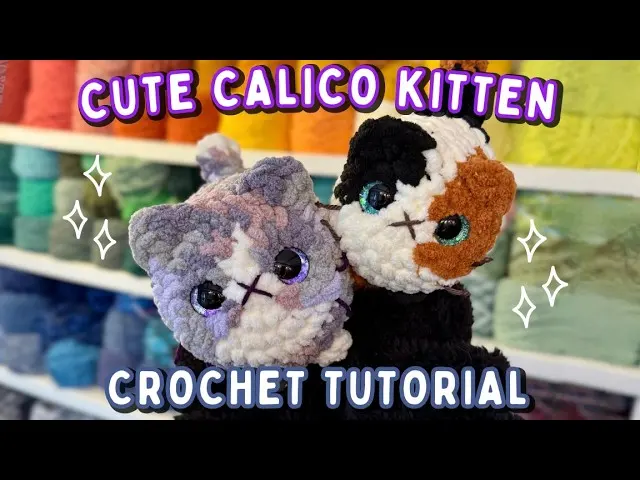
 Crochet a calico loaf cat amigurumi plushie
#Plush Yarn
1 ideas
Crochet a calico loaf cat amigurumi plushie
Get new #Plush Yarn ideas by email
Every Thursday: the week's best ideas, with the newest from #Plush Yarn.
Related tags
Plush Yarn: A Guide to Chenille and Velvet Yarns
Plush yarn is the general name for a family of very soft, thick yarns whose surface is made of short fibres standing upright rather than twisted into a smooth thread. Most of what you see under this name is chenille: a core of two or more tightly twisted strands with fibre packed between them, so the yarn looks like a tiny pipe cleaner or a velvet cord. The fibre — often polyester, sometimes cotton, acrylic or a blend — is what gives the finished fabric its dense, fuzzy nap and its characteristic squish.
The technique behind chenille is old, and it was historically used for furnishing fabrics and trims before it became a hand-knitting yarn. Velvet yarn is a close relative, usually with a shorter, denser pile and a slight sheen. "Blanket yarn" tends to describe the thickest weights, while "velvet" and "chenille" are often used interchangeably by shops. Whatever the label, the principle is the same: a pile surface rather than a spun, smooth one.
This thickness makes plush yarn unusually quick to work with. A single skein goes a long way, and because the yarn is bulky, simple stitches read as texture — a plain double crochet or garter stitch fabric looks plush without any pattern work. It is a favourite for amigurumi and soft toys, where the fuzz hides seams, increases and small imperfections, and for blankets, cushions, baby items, hats and snuggly garments. Chunky cardigans and simple sweaters in chenille are popular because the finished fabric is warm without much weight.
Working with it
Read more
Chenille has a reputation for being tricky, and a few habits make it much easier. The pile makes individual stitches hard to see, so work by feel and count as you go; a stitch marker every few rounds prevents the slow drift that turns a round toy oval. Choose a hook or needle slightly larger than the yarn label suggests if your tension is tight, and keep your hands relaxed — chenille sheds a little, and friction from a tight grip wears the fibres.
The biggest structural weakness is the core. If the yarn is pulled sharply, or if a knot or a tight chain puts strain on one spot, the pile can slide off and leave a bald patch. Avoid sharp tugs, join a new skein with a long tail and a secure method rather than a hard knot, and be gentle when you weave in ends. Fastening off loosely and then securing the tail with a needle and thread is more reliable than pulling hard.
For beginners
Start with something flat and forgiving: a small blanket, a cushion cover or a simple ball-shaped toy in a light colour, where stitches are easier to see than in black or navy. Use a plain stitch pattern, keep your hook size generous, and don't expect to unravel your mistakes easily — chenille does not like being frogged. Wash finished pieces gently, inside a pillowcase or mesh bag, and let them dry flat to keep the pile from matting.
#Plush Yarn: frequently asked questions
How do I start crocheting with plush yarn if I've never used it before?
Begin with a small flat project like a cushion cover or a simple ball-shaped toy rather than a large garment, so you can get used to the feel without committing a lot of yarn. Pick a light colour such as cream or pale grey, because the fuzz makes dark shades very hard to read. Work a plain stitch pattern and count your stitches as you go, since the texture itself gives you all the visual interest you need.
What hook or needle should I use with chenille-style yarn?
Go a size or two larger than the label recommends, especially if you tend to work tightly, because the bulky pile needs room to move through the stitch. A generous hook also keeps your hand from gripping hard, and a relaxed grip matters here since friction wears the fibres and makes the yarn shed. Check your tension on a small swatch first and adjust until the fabric feels soft rather than stiff.
How do I choose between plush yarn, velvet yarn and blanket yarn?
These labels overlap a lot in shops, and all of them describe a pile surface rather than a smooth spun thread. Velvet types usually have a shorter, denser pile with a slight sheen, while blanket yarn tends to be the thickest and warmest option. Choose based on the finish you want and how thick you want the finished fabric to feel, not on the name alone.
Why do my stitches disappear when I work with plush yarn, and how do I stop losing my place?
The upright fibres hide the individual stitches, so you have to work largely by feel instead of by sight. Place a stitch marker at regular intervals so you can tell when a round has drifted, which is what gradually turns a round toy oval. Counting as you go and keeping a steady rhythm is far more reliable than trying to spot every stitch afterwards.
How should I wash and care for something made from plush yarn?
Wash finished pieces gently, inside a pillowcase or a mesh bag, and let them dry flat so the pile doesn't mat or stretch out of shape. Avoid a hard wringing or a hot dryer, both of which flatten the nap. A light brushing once dry helps bring the fuzz back up.
What are the most common mistakes people make with chenille yarn?
The big one is pulling sharply or tying hard knots, because the pile sits on a core and a sudden strain can make it slide off and leave a bald patch. Join a new skein with a long tail and a secure join instead, and fasten off loosely before securing the end with a needle and thread. Also resist the urge to unravel your mistakes, since this yarn does not frog well and repeated ripping damages the fibres.
Videos come from YouTube and posts from Instagram; titles and summaries are our own. All rights belong to their creators.