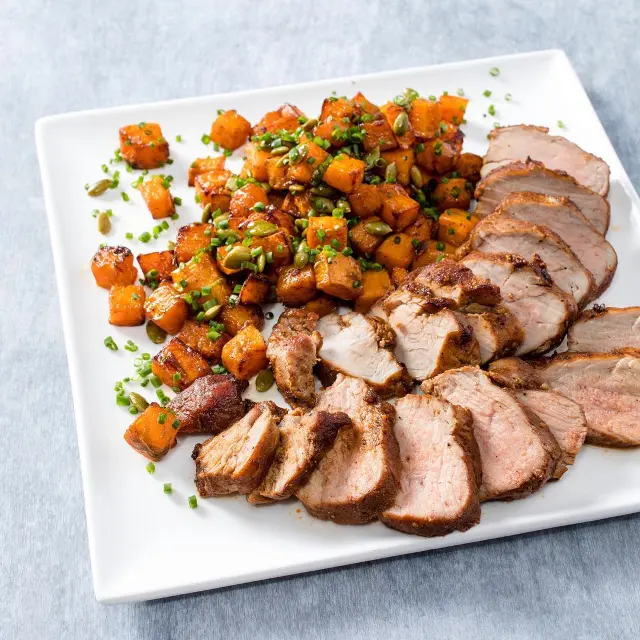
 Air fryer sweet and smoky pork tenderloin with butternut squash
#Pork Tenderloin
2 ideas
Air fryer sweet and smoky pork tenderloin with butternut squash
 Five Weeknight Pork Tenderloin Dinners Without Roasting
Get new #Pork Tenderloin ideas by email
Every Thursday: the week's best ideas, with the newest from #Pork Tenderloin.
Related tags
Pork Tenderloin: A Cook's Guide to the Tender Cut
Pork tenderloin is the long, narrow muscle that runs along the inside of the loin, tucked beneath the spine. It is the most tender cut on the pig, and also the leanest, which explains both why cooks love it and why it can turn dry if handled carelessly. A whole tenderloin is small, usually feeding two to four people, and it cooks in far less time than a roast.
Not the same as pork loin
The names get confused constantly. Pork loin is a larger, wider cut, often sold as a boneless roast or as chops, and it benefits from longer, slower cooking. The tenderloin is the slim, tapering piece, sometimes sold in a vacuum-sealed pack, sometimes under the name filet. If a recipe calls for one and you have the other, the timing will be wrong. Look for a piece roughly the thickness of a forearm, tapering to a thin tip.
Why it dries out, and how to prevent it
Read more
Because the tenderloin has so little fat, it has almost no margin for error. Three habits make the difference:
- Trim the silver skin. The shiny, connective membrane on the surface tightens as it cooks and can curl the meat. Slip a knife under it and pull it away.
- Even out the thickness. Fold the thin tail underneath and tie it, or cut the tenderloin into medallions, so the whole piece cooks at the same rate.
- Cook it to just done. Pork is safe and juicy at a slightly blush interior; a digital thermometer takes the guesswork out. Rest the meat for a few minutes before slicing so the juices settle.
Main ways to cook it
Searing and finishing in the oven is the classic method: brown the outside in a hot pan, then transfer to a moderate oven until it reaches temperature. Sliced into medallions, it can be pan-fried quickly and served with a pan sauce built from the browned bits. It takes well to grilling, whole or skewered, and to braising in slices for a heartier dish. Air fryers and pressure cookers have their own followings, and both work well because they cook fast and evenly.
Marinades and dry rubs suit the cut because its mild flavour absorbs seasoning readily. Acidic marinades tenderize further, but keep them short; long soaks in strong acid can make the surface mushy. Sweet glazes are popular but burn quickly, so brush them on near the end.
Buying and storing
Fresh tenderloin should look pink and moist, with little odour. It freezes well for a few months if wrapped tightly. Thaw it in the fridge rather than at room temperature, and pat it dry before cooking so it browns rather than steams.
For beginners
Start with medallions. They are forgiving, cook in minutes, and let you judge doneness by eye. Season simply with salt and pepper, sear in a little oil, and stop as soon as the centre is no longer pink. Once you trust that timing, a whole roasted tenderloin becomes an easy weeknight habit.
#Pork Tenderloin: frequently asked questions
What is the difference between pork tenderloin and pork loin?
Pork tenderloin is the slim, tapering muscle that runs along the inside of the loin, and it is both the tenderest and the leanest cut on the animal. Pork loin is wider and larger, often sold as a roast or as chops, and it stands up to longer, slower cooking. The two are not interchangeable in a recipe, because the cooking time that suits one will overcook the other.
How do I keep pork tenderloin from drying out?
Its lack of fat leaves very little room for error, so trim away the shiny silver skin and even out the thickness by tucking the thin tail under and tying it, or by cutting the piece into medallions. Cook it only until just done rather than well done, using a thermometer instead of guesswork, then let it rest briefly so the juices settle before slicing.
What is the easiest way for a beginner to cook pork tenderloin?
Start with medallions: they are forgiving, cook quickly, and let you judge doneness by eye instead of by timing. Season simply, sear them in a little oil, and take them off the heat as soon as the centre is no longer pink. Once that timing feels familiar, moving on to a whole roasted tenderloin becomes a realistic weeknight option.
Which cooking method works best for pork tenderloin?
Searing in a hot pan and finishing in a moderate oven is the classic approach, giving a browned exterior without overcooking the middle. Sliced into medallions it can be pan-fried fast with a pan sauce built from the browned bits, and it also takes well to grilling or to braising in slices for a heartier dish. Fast, even heat is the common thread, which is why air fryers and pressure cookers have their own followings.
Do marinades and dry rubs suit pork tenderloin?
Yes, its mild flavour absorbs seasoning readily, so both marinades and dry rubs work well. Acidic marinades tenderize further, but keep the soak short, since strong acid left too long can make the surface mushy. Sweet glazes are popular too, though they burn quickly, so brush them on near the end of cooking.
What should I look for when buying and storing pork tenderloin?
Choose a piece that looks pink and moist with little odour, roughly the thickness of a forearm and tapering to a thin tip. It freezes well when wrapped tightly, but thaw it in the fridge rather than at room temperature. Pat it dry before cooking so it browns instead of steaming.
Videos come from YouTube and posts from Instagram; titles and summaries are our own. All rights belong to their creators.