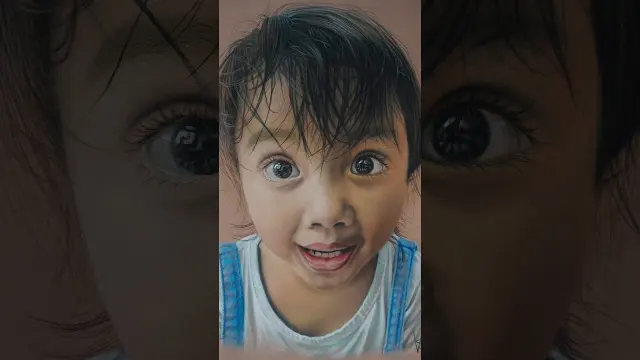
 Creating a Soft Pastel Portrait of a Young Child
#Portrait Art
1 ideas
Creating a Soft Pastel Portrait of a Young Child
Get new #Portrait Art ideas by email
Every Thursday: the week's best ideas, with the newest from #Portrait Art.
Related tags
Portrait Art: A Beginner's Guide to Capturing a Person
A portrait is an image of a particular person, made to record how they look and often something of who they are. It is one of the oldest and most enduring subjects in art, and it stays popular because it is both simple to begin and almost impossible to exhaust.
Where it comes from
People have made likenesses for as long as they have made images. Ancient Egyptian and Roman traditions carved and painted individuals, sometimes idealised and sometimes strikingly naturalistic. Portraiture flourished in the Renaissance, when artists studied anatomy and perspective and began to give faces real psychological weight. From there it spread across every medium: oil and tempera, watercolour, pastel, charcoal, printmaking, and later photography and digital drawing. Throughout, portraits have served many purposes — commemoration, status, devotion, family record, satire, self-examination.
Kinds and formats
Read more
Portraits are often described by how much of the body they show: a head study, a bust ending at the shoulders, a half-length, a three-quarter, or a full-length figure. They can also be grouped by intent. A formal portrait presents the sitter deliberately posed and dressed; an informal one catches them unguarded. A self-portrait turns the artist's attention inward. Beyond that, styles range from tight realism to loose expressive brushwork, from flat graphic shapes to studied anatomy, and each approach asks something different of both artist and viewer.
What beginners should know
Start with the structure of the head rather than the details of the features. Learning to see the skull as simple forms and to place eyes, nose and mouth in relation to the whole prevents the drifting proportions that trouble new artists. It helps to know that the eyes sit roughly halfway down the head, and that faces are rarely symmetrical in practice. Practise quick studies before attempting a finished piece.
Practical tips
- Work from life when you can. A mirror or a live sitter teaches more about volume than a photograph, which flattens forms and fixes the light.
- Simplify light first. Squint at your subject and separate the shapes of shadow from the shapes of light before you reach for detail.
- Choose one strong light source. Two competing lights confuse the modelling of a face.
- Compare constantly. Check the distance between features, the angle of the head, the space around the chin and hair.
- Keep your drawing loose for as long as possible. Correct big shapes early, then refine.
- If you work in colour, remember that skin is not one flat tone; it shifts between warm and cool, and reflects nearby colours.
- Step back often. Distance reveals mistakes that close attention hides.
Finally, likeness is only part of the aim. A convincing portrait also conveys posture, expression and mood, so allow yourself to notice how someone holds their head or where they look. Skill grows through repetition, and every study teaches something the next one will use.
#Portrait Art: frequently asked questions
How should a complete beginner start a portrait?
Begin with the structure of the head rather than the features. Treat the skull as simple forms and place the eyes, nose and mouth in relation to the whole before refining anything, and practise quick studies before committing to a finished piece.
Do I need a live model, or can I work from a photo?
Working from life teaches far more about volume, because a photograph flattens forms and locks the light in place. A mirror or a willing sitter is ideal, but a photo is fine for practice as long as you remember how much it has simplified the shape.
How do I choose between a formal and an informal portrait?
A formal portrait shows the sitter posed and dressed deliberately, and it suits commemoration or a sense of occasion. An informal one catches a person unguarded and usually carries more mood and personality, so pick the approach that matches what you want the picture to say.
What are the most common mistakes in portrait art?
Beginners usually rush the details before the big shapes are right, which throws the proportions off, or they light the face from two directions at once and lose the modelling. Correcting the large shapes early, comparing distances constantly and stepping back often prevents most of these problems.
How should I care for a finished portrait?
Keep it out of direct sunlight and away from damp, since fading and warping are usually caused by the environment rather than the materials. Handle works on paper by the edges or with clean hands, and store or hang them protected from dust and heat.
Any ideas for a portrait as a gift or for a special occasion?
A portrait of a child, a parent or a couple makes a personal keepsake for a wedding, anniversary or new arrival, and a small informal study often feels warmer than a stiff formal pose. Working from a favourite candid photograph alongside a short sitting gives both likeness and character.
Videos come from YouTube and posts from Instagram; titles and summaries are our own. All rights belong to their creators.