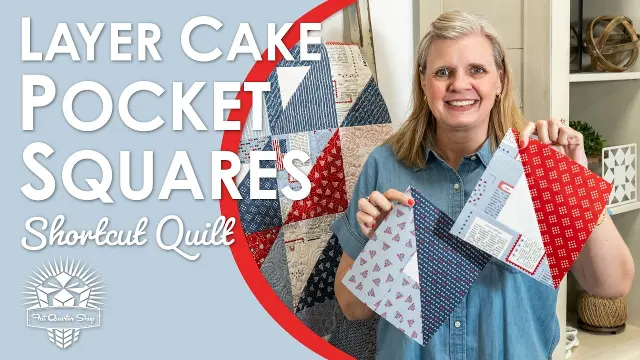
 Free Layer Cake Pocket Square Quilt Tutorial
#Precuts
1 ideas
Free Layer Cake Pocket Square Quilt Tutorial
Get new #Precuts ideas by email
Every Thursday: the week's best ideas, with the newest from #Precuts.
Related tags
Precuts: A Beginner's Guide to Pre-Cut Quilting Fabric
Precuts are fabrics sold already cut to a standard shape and size, bundled together in a coordinated range of prints and colours. Instead of buying yardage and spending an evening at the cutting mat, you open a pack and start sewing. They are popular with quilters in particular, because a single bundle guarantees that every fabric in a project already works together.
The idea grew out of the way fabric collections are designed: a designer creates a family of prints in matching colourways, and the manufacturer cuts that family into packs so that shops can sell a whole palette in one go. Precuts also suit small projects, scrap-style patchwork and anyone who dislikes rotary cutting.
The common cuts
- Fat quarter: roughly a quarter yard cut wide and short rather than long and narrow, so it gives a squarer, more usable piece for patchwork.
- Fat eighth: half a fat quarter, useful for small blocks and appliqué.
- Charm square: a small square, often around five inches; mini versions are half that.
- Layer cake: a pack of larger squares, commonly around ten inches, good for big simple blocks and quick quilts.
- Jelly roll: strips of a fixed width, usually around two and a half inches, cut across the full width of the fabric.
- Honey bun: narrower strips than a jelly roll, handy for braids, bindings and thin sashing.
Read more
Names vary between manufacturers and shops, so check the measurements on the label rather than trusting the name alone.
What beginners should know
Precut edges are usually pinked, meaning cut in a zigzag, which slows fraying but does not stop it. Handle the pieces gently and keep them in the pack until you use them. Most quilters do not prewash precuts, because washing loosens the pinked edges and causes shrinkage that throws the sizes off; if you prefer to wash your fabric, wash the finished project instead.
Because precut pieces are small, accurate seam allowances matter. Sew a test block first, press seams rather than ironing them back and forth, and avoid stretching the bias edges of squares when you feed them under the needle.
Practical tips
Buy your border, backing and binding fabric as yardage — precuts are meant for the pieced part of a project. If you want to extend a bundle, choose plain fabrics that pick up its colours rather than trying to match prints. Sort the pieces by colour before you start so you can spread strong prints evenly through the design. And keep the label from the pack: it tells you the collection name if you later need more of the same fabric.
Above all, precuts reward a simple approach. Let the fabric do the work, choose unfussy blocks, and enjoy skipping straight to the sewing.
#Precuts: frequently asked questions
What exactly are precuts, and why are they so popular with quilters?
Precuts are fabrics sold already cut to a standard shape, bundled together in a coordinated range of prints and colours drawn from a single designer collection. Because the whole palette is chosen for you, you skip the cutting mat entirely and go straight to sewing, with the guarantee that every piece in the project already works together.
Which precut should I pick for my first project?
Match the cut to the shapes your pattern asks for: smaller pieces suit little blocks and appliqué, larger squares suit big unfussy blocks, and strips are handy for braids, sashing and bindings. Names vary between manufacturers and shops, so always read the measurements on the label rather than trusting the name alone.
Should I prewash a precut bundle before I sew with it?
Most quilters don't, since washing loosens the pinked edges and can shrink the pieces enough to throw their sizes off. If you prefer working with washed fabric, wash the finished quilt instead of the pack.
How do I keep the pieces from fraying as I work?
Precut edges are usually pinked in a zigzag, which slows fraying but doesn't eliminate it. Leave the pieces in their pack until you actually need them, and handle them gently instead of shuffling them around a work surface.
What mistakes do people make when sewing with precuts?
The most common is expecting the bundle to cover the whole project — border, backing and binding are better bought as yardage, because precuts are meant for the pieced portion. Small pieces also punish careless seam allowances, so sew a test block first, press seams rather than ironing them back and forth, and don't stretch bias edges as they go under the needle.
Can I stretch a bundle by adding fabric from my stash?
Yes, and it usually works better with plains than with prints — choose solid colours that pick up shades already in the bundle rather than hunting for a print that matches. Sorting the pieces by colour before you begin helps you spread the strongest prints evenly through the design.
Videos come from YouTube and posts from Instagram; titles and summaries are our own. All rights belong to their creators.