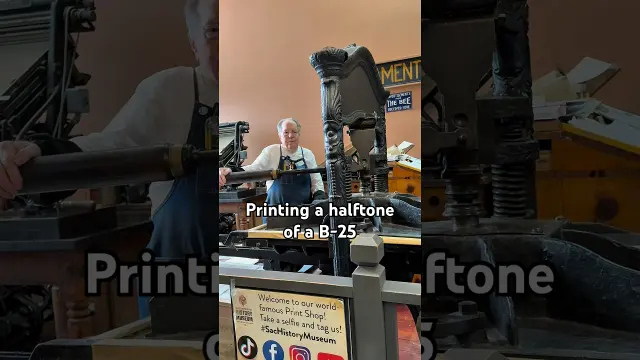
 Letterpress Printing a Donated B-25 Aircraft Halftone
#Printing
1 ideas
Letterpress Printing a Donated B-25 Aircraft Halftone
Get new #Printing ideas by email
Every Thursday: the week's best ideas, with the newest from #Printing.
Related tags
Printing by Hand: A Guide to Ink, Paper and Press
Printing is the craft of transferring an image onto a surface by pressing ink against it. It sits somewhere between a trade and a hobby: you can do it with a carved block, a frame of mesh and a squeegee, or a press that weighs more than you do. What every method shares is the same small miracle — a mirror image becomes the right way round, and one original becomes many copies.
Where it comes from
Printing grew out of the stamp and the seal. The earliest methods pressed a carved surface into paper or cloth, and relief printing from woodblocks developed independently in several parts of the world long before movable type made text reproducible. From there the craft branched: plates cut with fine lines, stones drawn on with grease, screens pulled with rubber blades. Each branch solved a different problem — speed, detail, colour, texture — and most of them are still practised today, often by people who simply like the look of ink on good paper.
The main families
Read more
- Relief printing. The image stands up and everything else is cut away. Woodcut, linocut and letterpress all belong here. The cut marks stay visible, which gives relief work its slightly rough, unmistakable character.
- Screen printing. Ink is pushed through a mesh stencil. It lays down a thick, opaque layer, so it works beautifully on fabric, board and any surface that resists a lighter touch.
- Intaglio. The image is incised into a plate, ink is worked into the grooves and the surface wiped clean. Etching and engraving produce the fine, velvety lines you see in old book illustrations.
- Planographic printing. Image and non-image areas sit on the same flat surface, separated by chemistry rather than depth. Lithography and its industrial descendant, offset, are the workhorses of commercial work.
- Digital printing. No plate and no screen — the file goes straight to the machine. Ideal for short runs and one-offs, less so if you want the physical presence of a printed edge.
What beginners should know
Choose the method by the result you want, not the other way around. Relief suits bold shapes and text; screen printing suits flat colour; intaglio suits line and detail. Paper matters as much as ink: a soft, absorbent stock takes a deep impression but can tear, while a smooth coated sheet holds crisp edges and dries differently. Most inks need air and time to cure, so plan flat space to leave prints undisturbed.
Practical tips
Start with one method and one colour until your hands know the movements. Print more copies than you need — the first pulls are rarely the best, and a run of tests teaches you more than a single careful attempt. Keep notes on paper, ink and pressure alongside your prints, because a result you love is hard to repeat without a record of how you got there. Set up registration marks so successive layers land where you meant them to. Clean your tools properly at the end; a neglected squeegee or roller will cost you more than it saved. And keep the imperfect pulls — they show you what the material does.
#Printing: frequently asked questions
How do I get started with printing if I have never done it before?
Pick a single technique and stay with it until your hands understand the movements, rather than trying several at once. Relief work such as linocut is a forgiving entry point because the tools are simple and the carved surface shows you clearly what will and will not take ink. Print plenty of practice pulls before you attempt anything you want to keep, since the early impressions are usually not the ones worth framing.
What supplies do you actually need to make your first print?
Beyond the obvious block, plate or screen, you need ink suited to the technique, a surface to roll or squeegee it onto, and paper chosen to match the weight of the impression you want. A brayer or squeegee, something to cut or draw with, and a clean flat space where wet prints can lie undisturbed while they cure are the rest of the basic kit. Add registration marks early, because lining up later layers by eye gets frustrating fast.
Which printing method should I choose for the result I have in mind?
Let the look you want decide the technique rather than the other way round: relief favours bold shapes and lettering, screen printing gives you flat opaque colour on fabric or board, and intaglio is the one for fine line and detail. Digital work skips the plate entirely and suits short runs, though it cannot give you the textured edge that a physical impression leaves. If you are unsure, look at prints you love and ask what surface and depth of ink they show.
What mistakes do beginners make most often?
The commonest is pulling a single careful print instead of a full run of tests, which teaches you almost nothing and leaves you unable to repeat the result you liked. Skipping notes is close behind — without a record of which paper, ink and pressure you used, a happy accident stays an accident. Neglecting cleanup at the end of a session also shortens the life of your rollers and squeegees, and dried ink is far harder to remove than fresh ink.
How should I store and care for finished prints?
Give them air and time to cure fully before stacking or framing, since ink that feels dry to the touch can still transfer onto whatever it touches. Store them flat between sheets of clean, acid-free paper, away from damp and direct light. Handle the printed surface by the edges rather than with your fingers, and keep the imperfect pulls too — they are a record of what the material does.
Can I use printing to make gifts or stationery for a celebration?
Yes, and it is one of the friendlier uses of the craft: cards, invitations, tags, wrapping cloth and small printed gifts all suit the medium, and a simple repeated motif carries a lot of charm. Screen printing works well on fabric and board, while relief is ideal for a bold monogram or illustration. Print extra copies, because a run always produces some impressions you will want to set aside.
Videos come from YouTube and posts from Instagram; titles and summaries are our own. All rights belong to their creators.