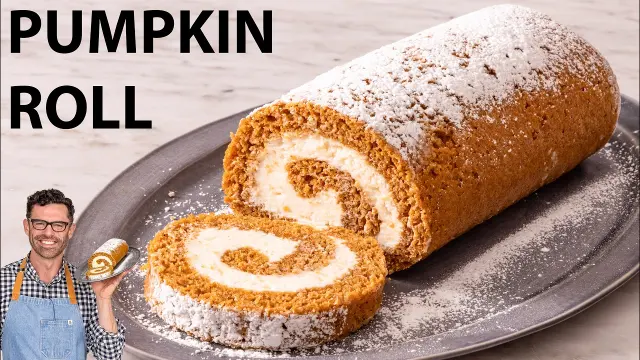
 Classic Pumpkin Roll With a Cream Cheese Filling
#Pumpkin Roll
1 ideas
Classic Pumpkin Roll With a Cream Cheese Filling
Get new #Pumpkin Roll ideas by email
Every Thursday: the week's best ideas, with the newest from #Pumpkin Roll.
Related tags
Pumpkin Roll: The Rolled Sponge Cake Explained
A pumpkin roll is a thin sheet of pumpkin sponge cake, baked flat, spread with filling and rolled up while still pliable into a tight spiral, then sliced crosswise to reveal the swirl. It belongs to the same family as the jelly roll and the Swiss roll: a cake defined less by its ingredients than by a single gesture — rolling — that turns a plain slab into something that looks far more difficult than it is.
The cake itself is a sponge, leavened mostly by whipped eggs rather than by much flour, which is what keeps it thin, springy and bendable. Canned or freshly puréed pumpkin goes into the batter along with the warm spices usually associated with it — cinnamon, ginger, nutmeg, clove, sometimes allspice. The filling is most often cream cheese beaten with butter and sugar, though mascarpone or a plain whipped cream appear too. The contrast is the point: a soft, gently spiced crumb against a cool, tangy, dense filling.
The technique, and why it works
The sponge is spread thinly on a lined rectangular pan and baked briefly, just until it springs back and pulls slightly from the edges. Overbaking is the most common mistake, because a dry cake cracks when rolled. While still hot, the cake is turned out onto a clean cloth dusted with icing sugar and rolled up inside that cloth, then left to cool in its curl. Rolling it warm trains the cake to hold the spiral, so the second rolling — around the filling — meets almost no resistance. Once filled, the roll is wrapped and chilled, which firms the filling and makes clean slices possible.
Read more
What beginners should know
- Roll the cake the moment it comes out of the oven. Waiting is the single biggest cause of cracking.
- Dust the cloth generously; any sticky patch will tear when you unroll.
- Keep the filling moderate. A thick layer squeezes out at the seam and makes the spiral uneven.
- Unroll gently, spread the filling leaving a border at the far edge, and roll back the way it was trained.
- Chill before slicing, and use a serrated knife with a light sawing motion rather than pressing down.
- A small crack is normal and usually disappears under a dusting of icing sugar.
Variations
The spice blend is the easiest thing to change: a little cardamom, or a spoonful of cocoa in the sponge for a darker, more autumnal version. The filling can take maple syrup, orange zest, a splash of vanilla or a handful of toasted pecans. Some bakers brush the cooled sponge with a light syrup to keep it moist, or finish the outside with a thin glaze instead of sugar. Chocolate and gingerbread sponges follow the same method with the pumpkin swapped out.
Keeping and serving
A finished roll is best after a few hours in the refrigerator, when the filling has set and the cake has softened against it. Keep it wrapped and cold, and let it stand briefly before serving so the filling slices cleanly. It freezes well, whole or in slices, which makes it a reliable thing to have on hand when people arrive unexpectedly.
#Pumpkin Roll: frequently asked questions
How do I approach a pumpkin roll if I've never baked a rolled cake before?
Treat it as a sponge cake baked thin rather than as a fancy pastry — the batter is simple and the shaping is the only real skill involved. The trick is to roll the cake up in a sugared cloth the instant it leaves the oven, so it learns the curl while it is still warm and flexible. After that, filling and re-rolling is mostly gentle handling rather than precision work.
What do I need on hand before I begin?
You want a rectangular pan lined with parchment, a clean thin kitchen towel, icing sugar for dusting, and a cooling rack. For the cake itself, pumpkin purée, eggs, sugar, a little flour and warm spices cover it, with cream cheese, butter and sugar for the filling. A serrated knife makes the difference when it comes to slicing later.
Which filling should I pick?
Cream cheese is the classic choice because its cool tang balances the warm spice of the sponge and it firms up nicely in the refrigerator. Mascarpone gives a richer, softer result, while plain whipped cream is lighter but less stable once sliced. Many people flavour whichever they choose with vanilla, maple or citrus zest rather than switching the base.
How should I store a pumpkin roll, and can I make it ahead?
Keep it wrapped and refrigerated, and it actually improves once the filling has set and the cake has softened against it. Slicing is easier if you let it sit out briefly first so the filling isn't rock-hard. It also freezes well whole or in slices, which makes it a good thing to have ready for unexpected visitors.
What occasions suit a pumpkin roll best?
It reads as an autumn and holiday table centrepiece, which is why it turns up at Thanksgiving-style gatherings and cooler-weather celebrations. Because it slices neatly into portions and travels well chilled, it works for potlucks, bake sales and edible gifts. Outside the seasonal window, the same method lets you swap in chocolate or gingerbread for a version that fits any time of year.
Where do most people go wrong with this cake?
Leaving the sponge too long in the oven or waiting to roll it are the usual culprits — a dry cake cracks the moment it's bent. Overfilling is the other common issue, since the excess pushes out at the seam and distorts the spiral. Small tears are normal and generally vanish under a dusting of icing sugar, so don't panic and start over.
Videos come from YouTube and posts from Instagram; titles and summaries are our own. All rights belong to their creators.