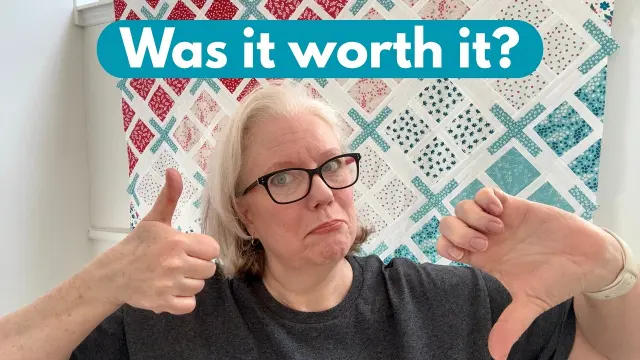
 Sewing the Skylight Quilt with a Precut Kit
#Quilt Along
1 ideas
Sewing the Skylight Quilt with a Precut Kit
Get new #Quilt Along ideas by email
Every Thursday: the week's best ideas, with the newest from #Quilt Along.
Related tags
Quilt Along: A Step-by-Step Guide to Sewing Together
A quilt along is a quilting project made public and paced. One designer or quilter writes a pattern and releases it in instalments over weeks or months, and everyone who joins sews the same quilt at roughly the same rhythm, comparing notes and finished blocks as they go. What began on quilting blogs and forums has spread into a quiet tradition across social media: a common hashtag collects the photos, so the work of strangers becomes a shared gallery. You do not need anyone in the room to feel you are sewing alongside others.
How a quilt along usually works
Most follow a predictable shape. There is a supply list first, so you can choose fabric and gather rulers, rotary cutter and threads before sewing starts. Then the pattern arrives in parts: cutting instructions one week, a set of blocks the next, then sashing, borders, quilting and binding. Some are sampler quilts, where each instalment brings a different block to learn. Some are mystery quilts, where the final design stays hidden and you sew on trust. Others are block-of-the-month projects, row quilts or appliqué series, and many are built around precut bundles, which simplifies fabric selection.
What beginners should know
Read more
The single most useful skill in any quilt along is a consistent quarter-inch seam allowance, because sameness matters more than exactness: blocks from hundreds of sewists only fit together in each other's quilts if everyone's seams behave the same way. Test yours, then test again after changing machines or presser feet. Press seams as you go rather than at the end, and keep pieces labelled and bagged by block, since a quilt along runs long enough for the dining table to be needed for dinner.
Read the whole instruction set before you cut anything, even the parts you have not received yet, if a full pattern is available. Understanding how the blocks relate to the finished layout helps you choose fabrics that will hold together across the whole quilt rather than one week at a time.
Practical tips
Sew a test block before committing your good fabric, and consider making a small scrap-block version of each instalment so mistakes stay cheap. Cut generously of anything you might use again. If life interrupts, remember the pattern stays available and the pace is a suggestion, not a deadline.
Above all, share what you make. The encouragement in a quilt along is the point of it: seeing a hundred variations of the same design, in different colours and different hands, teaches more about fabric and contrast than any single example could.
#Quilt Along: frequently asked questions
How do I get started with a quilt along?
Start by picking a quilt along you can actually keep pace with, then read the whole supply list and any available pattern instructions before you buy fabric. Gather your rulers, rotary cutter, thread and chosen fabrics, then sew a small test block so you learn the piecing before committing your good material. From there you simply follow each instalment as it arrives.
What supplies do I need to join one?
You need the basics of any patchwork project: a rotary cutter, a mat, an acrylic ruler, sewing thread, pins or clips, an iron and a sewing machine in good working order. Fabric is often the biggest decision, and many quilt alongs are built around precut bundles so the colour selection is already done for you. A few labels or bags help keep cut pieces organised between sessions.
Which kind of quilt along should I choose?
Sampler quilts suit people who want to learn a new block each instalment, while mystery quilts are for those who enjoy sewing without seeing the finished design. Block-of-the-month, row quilts and appliqué series each have their own rhythm, so pick the format that matches how much time and curiosity you have. If choosing fabric is the part you dread, a precut-based project removes that hurdle.
How should I care for a finished quilt?
Wash it gently with a mild detergent and avoid harsh bleach or heavy additives, and test any new product on a small corner first. Air-drying flat or drying on low heat protects the stitching and keeps the shape, and giving it a shake before it dries fully helps prevent creasing. Store it folded out of direct sunlight and rotate the fold lines now and then so the fabric does not wear along the same crease.
Can I make a quilt along project as a gift?
Yes, and it works especially well because the pace gives you a natural finish line to aim for. Choose a palette that suits the recipient rather than your own stash, and consider a smaller size if you need it done sooner. Quilts made for a new baby, a wedding or a housewarming are the classic occasions, and the shared-along story makes the gift easy to talk about.
What mistakes do people make most often?
The biggest one is an inconsistent seam allowance, since blocks only fit together when every seam behaves the same way across the whole project. Cutting before reading the full instructions and pressing seams only at the end are close behind, along with leaving pieces unlabelled so they get mixed up between instalments. Falling behind is not really a mistake, because the pattern stays with you and the schedule is only a guide.
Videos come from YouTube and posts from Instagram; titles and summaries are our own. All rights belong to their creators.