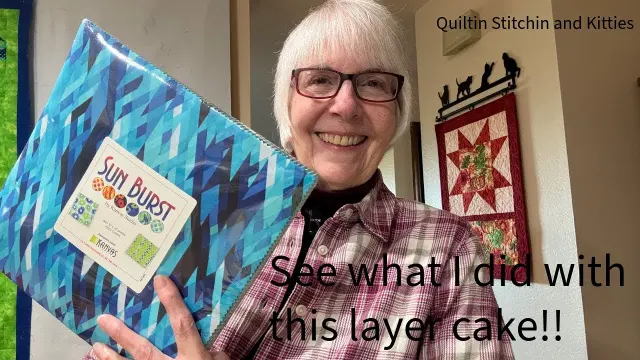
 Fun and Simple Layer Cake Quilt with Spectacular Results
#Quilt Ideas
1 ideas
Fun and Simple Layer Cake Quilt with Spectacular Results
Get new #Quilt Ideas ideas by email
Every Thursday: the week's best ideas, with the newest from #Quilt Ideas.
Related tags
Quilt Ideas: A Beginner's Guide to Patchwork Inspiration
Quilting is the craft of joining layers of fabric — usually a pieced top, a soft filling and a backing — and stitching through them to hold everything together. The stitching itself, not just the piecing, is what makes a quilt a quilt: it turns three loose layers into one warm, durable textile. People make them as bed covers, throws, wall hangings, baby gifts and keepsakes, and the tradition appears in many cultures, each with its own patterns and meanings.
Where the ideas come from
Quilt ideas rarely appear from nothing. They grow out of traditional block patterns handed down over generations, from the geometry of tiles and architecture, from nature, and from the fabric itself. A stack of fabric in a favourite colour combination can suggest a design just as easily as a pattern book can. Beginners often find it useful to keep a notebook or a folder of sketches and swatches, so that ideas can be collected before they are committed to cloth.
Main kinds of quilting
Read more
- Patchwork: sewing cut shapes together into blocks, the most recognisable style.
- Appliqué: cutting shapes from fabric and stitching them onto a background.
- Wholecloth: no piecing at all, with the design carried entirely by the quilting lines.
- English paper piecing: hand-sewn shapes, often hexagons, basted over paper templates.
- Quilt-as-you-go: joining smaller quilted sections, which suits people working in a small space.
Styles worth trying
Simple square and strip layouts let the fabric do the talking and are forgiving for a first project. Pre-cut fabric bundles in coordinated ranges make it easy to work with a consistent palette, and they suit patterns built from squares, rectangles or triangles. Scrap quilts use up leftovers and produce a lively, unpredictable look. More experienced makers often move toward curved piecing, foundation paper piecing for precise points, or appliqué with hand-turned edges. Modern improvisational quilting, where shapes are cut and placed without a fixed pattern, is another route entirely and rewards a relaxed approach.
What beginners should know
Start smaller than you think — a baby quilt or a lap throw teaches the whole process without becoming exhausting. Accurate cutting matters more than speed, so a rotary cutter, a mat and a long ruler are worth learning to use properly. Sew a consistent seam allowance, press seams as you go, and accept that the first attempt will not be perfect. Choose quilting cotton for the top, as it is stable and easy to handle, and pre-wash fabrics if you are worried about colours bleeding. Baste the layers thoroughly; most puckers and tucks come from insufficient basting rather than from the stitching itself.
Practical tips
Let one fabric lead and build the rest of the palette around it. Take a photograph of your layout in black and white to check the balance of light and dark before you sew. Keep notes on what you made and how much fabric it took, so the next project is easier. And finish what you start where you can: a completed simple quilt teaches more than a drawer of unfinished ambitious ones.
#Quilt Ideas: frequently asked questions
How do I start quilting with no experience?
Begin with something small, like a lap throw or a baby quilt, because a compact project takes you through piecing, layering, quilting and binding without wearing you out. Pick a simple design built from squares or strips so the fabric carries the look, and let your first effort be a learning piece rather than a showpiece. Finishing one modest quilt teaches you far more than starting several ambitious ones.
What do I need before making my first quilt?
You need fabric for the top, a soft filling, something for the backing, thread and a way to cut accurately — a rotary cutter, a cutting mat and a long ruler make a real difference. Quilting cotton is a sensible choice for the top since it is stable and easy to handle, and it helps to wash fabrics first if you are worried about colours running. Beyond supplies, patience with pressing and basting matters more than any gadget.
Which kind of quilting should I choose?
It depends on what you enjoy: patchwork suits people who like planning shapes and colour, appliqué appeals if you prefer drawing with fabric, and wholecloth lets the stitching itself be the design. English paper piecing is a good fit if you like handwork you can carry around, while quilt-as-you-go works well in a small space since you join already-quilted sections. Try the one that matches how you like to work rather than the one that looks most impressive.
How should I care for a quilt so it lasts?
Use it, but wash it gently and sparingly, and let it dry flat or on a line rather than tumbling it hot, which stresses the stitching and the fabric. Store quilts folded loosely and refold them along different lines now and then so creases do not set into the same place. Keeping them out of prolonged direct sun helps preserve the colours.
What quilt ideas work well as gifts for a baby or a wedding?
A small quilt for a new baby is a classic choice, and because it is small it is a manageable project even for someone fairly new to the craft. For a wedding, a quilt in colours that suit the couple's home, or one that reuses meaningful fabrics, becomes a keepsake rather than just a blanket. Personal touches in the palette or the pattern usually mean more than an elaborate design.
What mistakes do beginners make most often?
The most common ones are cutting inaccurately, skipping the pressing, and basting too little — most puckers and tucks come from thin basting rather than from the quilting itself. Another frequent slip is choosing a project that is too large or too complex for a first attempt. Sewing a steady seam allowance and checking your layout, even by photographing it in black and white to judge light and dark, prevents a lot of frustration.
Videos come from YouTube and posts from Instagram; titles and summaries are our own. All rights belong to their creators.