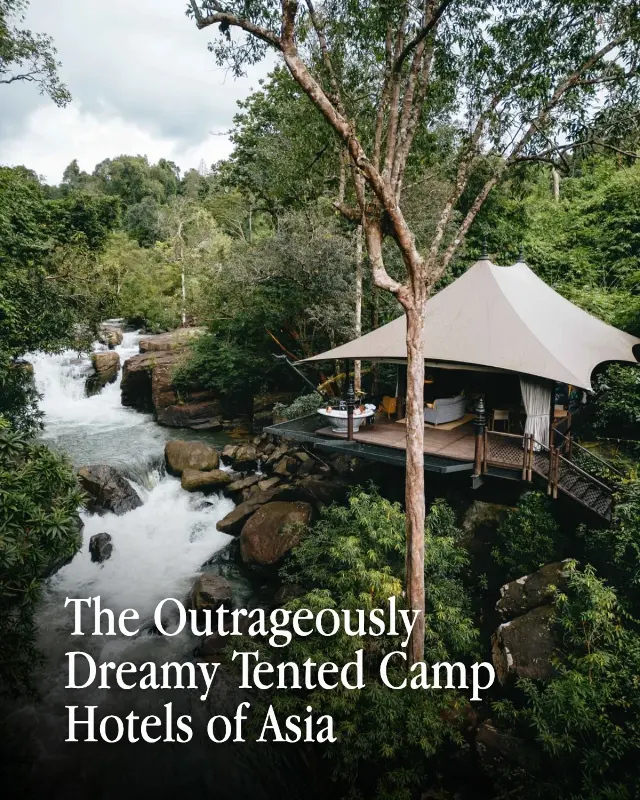
 Luxury Tented Camps from Cambodia's Jungles to Rajasthan
#Rajasthan
1 ideas
Luxury Tented Camps from Cambodia's Jungles to Rajasthan
Get new #Rajasthan ideas by email
Every Thursday: the week's best ideas, with the newest from #Rajasthan.
Related tags
Rajasthan: Forts, Desert Towns and Colours of India
Rajasthan is a state in the north-west of India, bordered by the Thar Desert on one side and the greener plains of the Aravalli hills on the other. Its name means "land of kings", and the region's history as a patchwork of princely states still shapes almost everything a visitor notices: the forts on the ridgelines, the ornate city palaces, the painted havelis with their carved balconies, and the way each town seems to have chosen a colour of its own.
Cities and their characters
The state's identity is spread across many towns rather than concentrated in one capital. Jaipur is known for its pink-washed old city and its grid of bazaars. Jodhpur clusters around a vast hilltop fort above a maze of indigo-painted houses. Udaipur is built around a chain of lakes and is famous for its water palaces. Jaisalmer rises out of the desert in golden sandstone, while Pushkar draws pilgrims to its lakeside ghats and Bundi and Kota are quieter places where stepwells and miniature painting traditions survive. In the south, Chittorgarh and Kumbhalgarh hold some of the region's most imposing fortifications.
Craft, cloth and colour
Rajasthan is one of the great craft regions of India. Hand block printing, tie-dye, and resist dyeing are practised in villages around the dyeing towns, producing the bright cottons and quilts seen across markets. Blue pottery, a glazed ceramic tradition, leatherwork, brass and ironware, and stone carving all have local centres. Textiles here are not souvenirs so much as everyday workwear, and you will see strong contrasts — mirrored embroidery, odhni veils, and turbans whose colour and wrapping differ from community to community.
Food and daily life
Rajasthani cooking grew out of a dry climate where fresh vegetables and water were scarce, so it leans on lentils, millet and wheat, dairy, dried ingredients and preserved foods. Ghee, buttermilk, gram flour dishes, and sweets made with milk are central. It is a largely vegetarian table with a strong tradition of hospitality, and meals are often eaten with the hands.
Read more
Music, festivals and animals
Folk music travels easily here: the stringed instruments, camel-hide drums and travelling singers of the desert communities. Festivals revolve around harvest, the monsoon, cattle and the old royal courts, and many involve processions, fairs and market days rather than ticketed events. Camels, elephants and peacocks are part of the visual landscape.
Tips for a first visit
Spread your time across a few towns rather than many, since distances are long and roads slow. Dress modestly, especially at religious sites, and remove shoes where asked. Ask before photographing people, and buy crafts from the maker or a fair-priced cooperative where you can. Carry water and sun protection, avoid the midday heat, agree on prices before rickshaw rides, and treat bargaining as a conversation rather than a contest. Learning a few words of Hindi goes a long way.
#Rajasthan: frequently asked questions
Which Rajasthan city should I pick for a first trip?
Choose by what you want to look at rather than by ranking the towns: Jaipur for the pink old city and its bazaars, Udaipur for lakes and water palaces, Jodhpur for the hilltop fort above the indigo houses, Jaisalmer for golden sandstone in the desert. Rather than squeezing in as many places as possible, give your time to a small handful of towns, because the distances between them are long and the roads are slow.
What should I wear and pack for Rajasthan?
Loose, light clothing that covers shoulders and legs works best — it keeps you cool and is also what's expected at temples and other religious sites. Bring sun protection, plenty of drinking water and shoes you can slip off easily, since you'll be asked to remove them before entering shrines.
How do I buy textiles and crafts without getting it wrong?
Buy from the person who made the piece or from a cooperative that pays its artisans fairly — that's where block prints, blue pottery and mirror-work embroidery are usually at their best anyway. Agree on a price before a rickshaw ride, and treat bargaining as a friendly conversation rather than a contest you have to win.
How should I care for block-printed cotton and quilts once I get them home?
Wash them separately in cool water with a mild detergent the first few times, since natural dyes often release colour, and dry them in the shade rather than in strong direct sun. Hand washing is gentler than a machine for hand-printed and embroidered pieces, and it keeps the colours from fading.
What's the most common mistake first-time visitors make?
Trying to see too much — the state is big and travel between towns eats whole days, so an itinerary that looks reasonable on paper can end up being mostly car time. The other frequent slip is treating local people as scenery: ask before photographing anyone, and meet shopkeepers and drivers as people rather than as transactions.
Is a desert tented camp a good way to experience Rajasthan?
Yes, if you want the Thar at night rather than only through a car window — camps range from simple to genuinely comfortable, and the desert sky and quiet are the point. Plan it for the cooler part of the year and book ahead, since the good camps fill up and the off-season heat is punishing.
Videos come from YouTube and posts from Instagram; titles and summaries are our own. All rights belong to their creators.