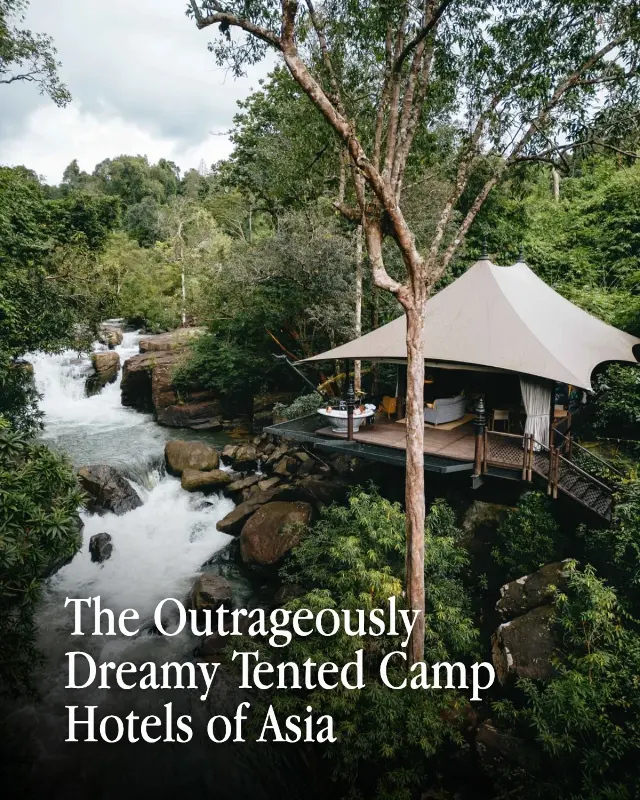
 Luxury Tented Camps from Cambodia's Jungles to Rajasthan
#Tented Camps
1 ideas
Luxury Tented Camps from Cambodia's Jungles to Rajasthan
Get new #Tented Camps ideas by email
Every Thursday: the week's best ideas, with the newest from #Tented Camps.
Related tags
Tented Camps: A Guide to Comfortable Camping in the Wild
A tented camp is a place to sleep under canvas without giving up the comforts of a room. Instead of a thin dome pitched on the ground, you get a spacious structure with proper beds, lighting, somewhere to sit and often a private washroom. It sits somewhere between camping and a small hotel, and that is exactly the appeal: the sounds of the night outside, a solid bed and a hot shower inside.
The form has its roots in travelling tents. Explorers, surveyors and armies carried canvas across long distances because it was light, repairable and could be moved by people or animals. When early safari travel in East Africa took shape, the camp began to be organised for guests rather than for expedition members: a cook, a few attendants, a ring of tents around a fire. That arrangement, refined over decades, is the ancestor of the modern tented camp.
The main kinds
- Safari camps, the classic model, usually in bush or savannah country and often reached by light aircraft or a long drive.
- Mobile camps that move with the season or follow a route, leaving no permanent footprint behind.
- Desert camps, built for cold nights and clear skies, where the tent is mostly shelter from wind and sun.
- Forest and jungle camps, where humidity, insects and rain shape every practical decision.
- Glamping sites closer to home, which borrow the look of the safari tent but often add electricity, plumbing and a shared dining tent.
- Eco-camps that rely on solar power, dry toilets or water brought in, usually in sensitive landscapes.
Read more
What to expect
The word "tent" covers a wide range. A camp might offer a simple canvas room with a shared bathroom block and bucket showers, or a structure with an en-suite bathroom, a wooden floor and a veranda. Meals are often taken together at a long table, which is part of the pleasure: you meet the other guests whether you planned to or not.
Practical advice for a first stay
Ask what is included before you book, particularly transfers, meals and guided activities, since these vary a great deal. Find out how the camp is powered and whether you can charge devices. Pack layers: canvas holds warmth poorly at night and heats up quickly in the morning sun. Bring a torch, and something to keep valuables dry. Take earplugs if you are a light sleeper, and shoes you can slip on for the walk to the bathroom after dark.
Respect the camp's rules about walking alone at night and about wildlife. In many places a guide will escort you between your tent and the main area, and that is not a formality.
Tented camps suit travellers who want to be close to a landscape rather than insulated from it, but who also want to sleep well. Choose the level of comfort that matches the trip, ask direct questions, and the canvas will do the rest.
#Tented Camps: frequently asked questions
What is a tented camp, and how does it differ from ordinary camping?
It is a canvas structure built for sleeping in comfort, with a real bed, lighting, a place to sit and often its own washroom, rather than a thin dome on the ground. The point is to keep you close to the landscape — night sounds, weather, wildlife — while removing the discomfort that usually comes with it. Think of it as sitting between a campsite and a small hotel.
How do I choose the right kind of tented camp for my trip?
Start with the landscape you want and the level of comfort you can do without: a bush camp, a desert camp, a forest camp and a glamping site near home each ask something different of you. Then check how the camp is reached, how it is powered and what the bathroom arrangement actually is, because those three details shape the day-to-day experience more than the décor does. Match the camp to the trip rather than to the photographs.
What should I pack for a first stay under canvas?
Bring clothing you can add and remove easily, since canvas sheds heat quickly after dark and warms fast once the sun is up. A torch, a dry bag for anything valuable, and shoes you can step into for a nighttime walk to the bathroom cover most of what people forget. Light sleepers should bring earplugs, and everyone should ask in advance whether devices can be charged on site.
What do first-time guests most often get wrong?
The commonest mistake is assuming that meals, transfers and guided activities are part of the rate — they frequently are not, so ask directly before booking. Others underestimate the cold at night, or treat the rule about walking alone after dark as a formality when a guide escort is genuinely there for a reason. A little direct questioning beforehand prevents most disappointment.
How should canvas be cared for so the tent lasts?
Keep canvas dry before packing it away, because damp fabric stored folded is what turns into mildew and a permanent smell. Clean off dust and debris rather than scrubbing, let the material air thoroughly in shade rather than harsh sun, and store it somewhere dry and rodent-free. Small tears and tired seams are worth repairing promptly, since canvas is made to be mended rather than replaced.
Is a tented camp a good setting for a special occasion?
Yes — the shared long table and the fire at the centre of camp make it unusually easy to mark an anniversary, a birthday or a small celebration with people you have only just met. It suits occasions where the setting itself is the event rather than a programme of entertainment. Say what you are celebrating when you book, so the camp can help without you having to organise anything on the day.
Videos come from YouTube and posts from Instagram; titles and summaries are our own. All rights belong to their creators.