 The Financial Economics of Owning and Operating a Restaurant
#Restaurant Economics
1 ideas
The Financial Economics of Owning and Operating a Restaurant
Get new #Restaurant Economics ideas by email
Every Thursday: the week's best ideas, with the newest from #Restaurant Economics.
Related tags
Restaurant Economics: Costs, Pricing, and Profit
What restaurant economics means
Restaurant economics is the study of how a restaurant uses money to buy ingredients, pay people, set prices, and still remain viable. It covers the whole flow of value in a food business: what it costs to prepare and serve each dish, how much guests are willing to pay, and how many sales are needed to cover fixed expenses such as rent, utilities, and wages.
At its core, restaurant economics is about balance. A restaurant has to offer food and service that guests value, while keeping enough margin to meet operating costs. If prices are too low, even busy service may not be profitable. If prices are too high, demand can drop. Good restaurant economics helps you find the middle ground.
The main parts of restaurant economics
Read more
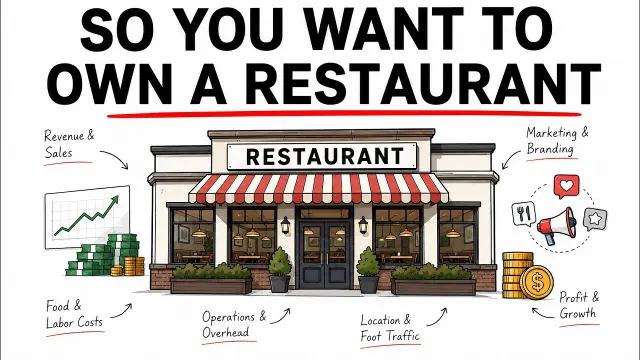
A restaurant’s finances are usually shaped by a few broad categories:
- Food and beverage costs: the ingredients and drinks used to make menu items
- Labour costs: kitchen, service, management, and support staff
- Fixed costs: rent, insurance, licenses, equipment, and other regular overhead
- Variable costs: packaging, cleaning supplies, payment processing, and utilities that rise with activity
- Waste and spoilage: ingredients lost through over-ordering, poor storage, or uneven demand
Understanding these categories helps you see where money is going and where small changes can improve results.
Pricing and menu structure
Menu pricing is one of the most important parts of restaurant economics. Prices need to reflect ingredient costs, preparation time, portion size, and the overall dining experience. A well-designed menu does more than list dishes: it guides guests toward items that are both appealing and financially sensible for the business.
Many restaurants think about contribution margin, which is the amount left after direct costs are removed from a dish’s price. Items with strong margins can help support other parts of the business, while lower-margin dishes may still be useful if they attract guests or define the restaurant’s identity.
Efficiency and day-to-day decisions
Small operational choices can have a big effect on economics. Careful purchasing, sensible portion control, and good inventory management all help reduce waste. Clear recipes and consistent training make it easier to keep quality steady and costs predictable.
It also helps to watch how the dining room and kitchen work together. A menu that is too broad can create waste and slow service. A focused menu is often easier to manage, especially for beginners. Simple systems for ordering, storage, prep, and service can make a restaurant more efficient without making it feel less personal.
What beginners should know
If you are new to restaurant economics, start with a few basics:
- Know the cost of each dish, not just the cost of ingredients overall
- Track sales by category so you can see what performs well
- Keep fixed costs under control before expanding the menu
- Build in room for waste, because no kitchen is perfectly efficient
- Review pricing regularly so it stays aligned with costs
Restaurant economics is not only about cutting expenses. It is about designing a business where food, service, and pricing support one another. When those parts work together, a restaurant has a better chance of staying stable and serving guests well over time.
Videos come from YouTube and posts from Instagram; titles and summaries are our own. All rights belong to their creators.