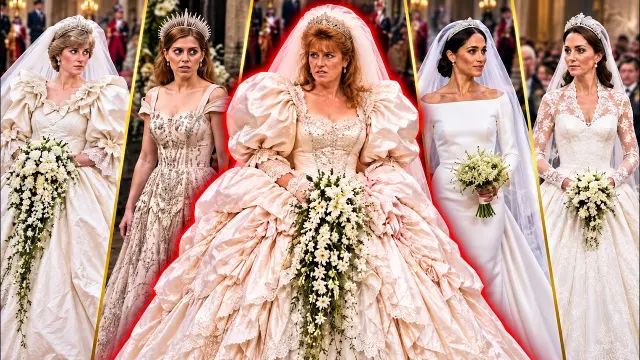
 A Look at Twenty Controversial Royal Wedding Dresses Through History
#Royal Weddings
1 ideas
A Look at Twenty Controversial Royal Wedding Dresses Through History
Get new #Royal Weddings ideas by email
Every Thursday: the week's best ideas, with the newest from #Royal Weddings.
Related tags
Royal Weddings: Traditions, Dress and Ceremony
A royal wedding is a marriage involving members of a reigning or formerly reigning dynasty, and it is almost never only a private family event. Because such a marriage once carried diplomatic weight — binding families, alliances and territories — the ceremony developed a public dimension that survives today in processions, broadcasts and crowds lining the streets. Even in countries where the monarchy is now largely ceremonial, a royal wedding remains a state occasion that blends religious rite, family celebration and national ritual.
The ingredients of the ceremony
Most royal weddings follow the same broad structure, though the details vary enormously between countries and faiths. You will usually find a religious service in a large church, cathedral or temple, conducted according to the tradition of the family; a civil or legal element where the law requires one; and a celebration afterwards for guests, staff and the wider public.
Distinctive features tend to include:
Read more
- A formal entry and procession, sometimes travelling between several locations during the day
- Music chosen and often composed for the occasion, performed by choirs and orchestras
- Rings, vows and blessings exchanged before a large official guest list
- A public appearance after the ceremony, whether from a balcony, a palace garden or a route through the streets
- A wedding breakfast or banquet, and separate receptions for different circles of guests
Traditions are not universal. Some royal houses favour modest ceremonies; some non-European monarchies incorporate Shinto or other rites that look nothing like a European cathedral wedding; some families stage a smaller religious service and a larger civil celebration. What they share is a strong sense of choreography — every arrival, greeting and exit is planned.
Dress, veil and flowers
The wedding dress of a royal bride is where symbolism is densest. It is expected to be formal and covering, and it usually carries national associations: lace from a historic local industry, a silhouette that echoes an earlier era, embroidery with meaning. Trains add ceremony, and a veil often accompanies a tiara or a family headpiece. Brides who marry into a family may wear a tiara from its collection; grooms often wear uniform, national dress or morning dress rather than an ordinary suit.
The bouquet follows the same logic — flowers chosen for scent, season and symbolism, in a shape that suits the dress. Because royal weddings involve so much standing and walking, arrangement and weight matter as much as appearance.
Taking inspiration without copying
If a royal wedding has caught your eye, borrow the principles rather than the specifics. Consider a covered neckline with a defined shoulder, a full but light skirt, or a long veil in a soft tulle. When you try dresses on, judge them walking, sitting and climbing steps, not just standing still — a train that feels magical in a mirror can be a burden all day. A simple headpiece, a small tiara-style comb or fresh flowers can give the same ceremonial feeling without a formal court.
For the celebration itself, the strongest ideas are the calmest ones: a clear order of events, a seated dinner with a short list of speeches, seasonal flowers repeated in modest arrangements, and stationery that sets the tone before guests arrive. Ritual, done warmly, is what makes these weddings memorable — and that is something any couple can have.
#Royal Weddings: frequently asked questions
How do I plan a wedding inspired by royal ceremonies without turning it into a performance?
Start from the structure these weddings are built on: a service with real religious or legal weight, a procession of some kind, a shared meal afterwards. Give each part a clear order of events so arrivals, greetings and exits feel calm rather than improvised. The formality comes from choreography and warmth, not from the size of the guest list.
What do I actually need for a ceremonial, formal wedding?
The essentials are a venue large enough for a formal entrance and a seated dinner, music performed live if possible, and a defined dress code that tells guests how seriously to take the day. Add a public moment after the ceremony — a toast, a garden gathering or a short receiving line — so the people who matter get to greet you. Stationery and flowers should set the tone before anyone arrives.
Which style of royal-inspired dress should I choose?
Look for a covered neckline with a defined shoulder, a full but light skirt, or a long veil in soft tulle — these carry ceremony without requiring a court setting. When you try dresses on, judge each one walking, sitting and climbing steps, since a heavy train or tight bodice only reveals itself over a long day. A simple headpiece, a tiara-style comb or fresh flowers can supply the same sense of occasion.
How should I care for a formal gown, veil and bouquet so they survive the day?
Have the dress fitted so it moves with you rather than against you, and test it with the shoes and underlayers you plan to wear. Keep the veil and any delicate lace away from heat and damp, store them flat or hung as the maker advises, and arrange for someone to hold the train and bouquet during the parts of the day when you need your hands. Because flowers are chosen for scent and season, ask that the bouquet be assembled close to the ceremony and kept in water until you carry it.
What small touches give a wedding a ceremonial feeling on a modest scale?
Repeat seasonal flowers in modest arrangements instead of one vast installation, and let a short list of speeches do the work of a long programme. A single striking element — a long veil, a piece of family lace, a headpiece — reads as far more deliberate than many decorations at once. Ritual done warmly is what guests remember, and any couple can have that.
What mistakes should I avoid when borrowing ideas from royal weddings?
The common error is copying specifics rather than principles: a train too heavy to walk in, a schedule so packed that the couple never speaks to their guests, or a guest list inflated to match a ceremony that was never meant to be private. Royal weddings are state occasions with staff and rehearsal behind every movement, so scale the choreography to the help you actually have. Borrow the sense of order and symbolism, not the spectacle.
Videos come from YouTube and posts from Instagram; titles and summaries are our own. All rights belong to their creators.