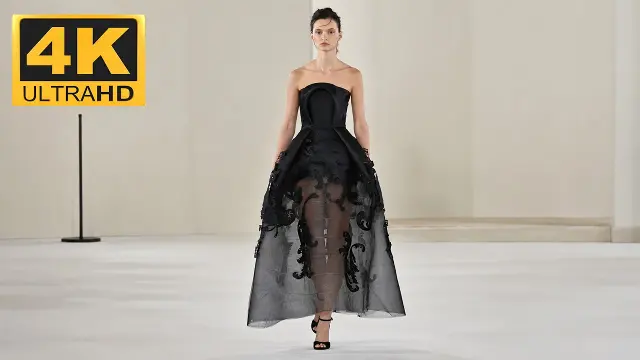
 Rami Al Ali Fall and Winter Haute Couture Collection
#Runway Show
1 ideas
Rami Al Ali Fall and Winter Haute Couture Collection
Get new #Runway Show ideas by email
Every Thursday: the week's best ideas, with the newest from #Runway Show.
Related tags
Runway Shows: How a Collection Walks Into the World
A runway show is the moment a collection leaves the studio and meets an audience. Garments are worn by models who walk a set route — the runway, or catwalk — past seated guests, photographers and buyers. Everything in the room is designed to make clothing legible: the order of the looks, the lighting, the music, the pace.
Where it comes from
The format grew out of the nineteenth-century Paris couture houses, where clients came to the salon and saw garments worn by house models rather than hanging on a rail. As couture became an international business with press and wholesale buyers, showing to a room full of people at once made sense. The runway as we picture it — a raised, straight path, front row, photographers at the end — developed through the twentieth century alongside fashion photography and the seasonal calendar.
The main formats
Read more
- Salon or presentation: models move among guests or stand in an arranged tableau; intimate, closer to the original couture model.
- Catwalk show: a linear or shaped runway, seated audience, choreographed exits, usually under twenty minutes.
- Static or installation: garments on mannequins or a small number of models, allowing close inspection of detail.
- Digital film: a produced video instead of a live event, often used to control image and reach a wider audience.
Shows also differ by purpose: haute couture, ready-to-wear for the traditional autumn/winter and spring/summer calendars, menswear, graduate and student shows, and trade presentations aimed mainly at buyers.
The work behind it
A show is a collaboration. Designers set the collection's argument; stylists decide how each look is completed; casting chooses the models; the set and lighting designer shapes the space; hair and makeup teams build a consistent face; a producer holds the schedule. Music and seating carry meaning too — where a guest sits signals relationships within the industry, and the soundtrack sets pace.
What beginners should notice
Watch the clothing rather than the spectacle. Look at silhouette first — where the volume sits, how long the line is — then at fabric in motion, since a show reveals how a material falls and catches light in a way a still photograph cannot. Notice repetition: a shape or colour returning across several looks is usually the designer's central idea. Look at the styling choices, too, and ask which are part of the garment and which are only for the runway.
If you attend, arrive early, keep the aisle clear, and photograph without blocking the view behind you. If you follow shows from home, look at the still images afterwards; details such as seams, closures and finishing are rarely visible in motion.
#Runway Show: frequently asked questions
What is a runway show, and how does it differ from a lookbook?
A runway show is a live presentation where models walk a set route past guests, photographers and buyers, so a collection is seen in motion and in a chosen order. A lookbook shows the same clothes as still images, which is easier to study but loses how fabric falls and catches light as a model moves. The show is built to make the clothing legible in a single pass, so lighting, music and pacing all serve that aim.
Which format should someone choose for a first presentation?
It depends on what the collection needs to communicate and on the resources behind it. A salon or presentation format lets people get close to the garments and is forgiving of a small team, while a catwalk show gives a stronger sense of narrative and pace but demands far more staging. A digital film or an installation of mannequins are sensible routes when detail matters more than the live moment.
What has to be organised before a show can happen?
A show is a collaboration, so the work splits across several hands: the designer sets the collection's argument, the stylist completes each look, casting chooses the models, and the set and lighting designer shapes the space. Hair and makeup teams build a consistent face across the line-up, and a producer holds the whole schedule together. Music and seating are part of the planning too, since they frame how the clothes are read.
How should a beginner watch a runway show?
Start with silhouette rather than spectacle: notice where the volume sits and how long the line runs. Then watch the fabric in motion, because movement reveals drape and sheen that a photograph flattens. Look for repetition as well, since a shape or colour returning across several looks is usually the designer's central idea, and ask yourself which styling choices belong to the garment and which exist only for the runway.
What are common mistakes people make at or with a show?
The usual slip is watching the production instead of the clothing, which leaves you with an impression of lighting and music but no sense of the collection. Guests also underestimate timing and arrive late, or stand and photograph in the aisle and block the view behind them. If you follow shows from a distance, the fix is to look at the still images afterwards, since seams, closures and finishing rarely register in motion.
How do you look after a garment after it has been shown?
Runway pieces are often handled hard — pinned, steamed repeatedly, walked in under hot lights — so give them time to settle and check for stress at seams and closures before storing. Follow the care label for the fibre rather than assuming, and store on a padded hanger or folded flat so the shape the designer built is not distorted. Anything with surface embellishment is better kept away from pressure and direct light.
Videos come from YouTube and posts from Instagram; titles and summaries are our own. All rights belong to their creators.