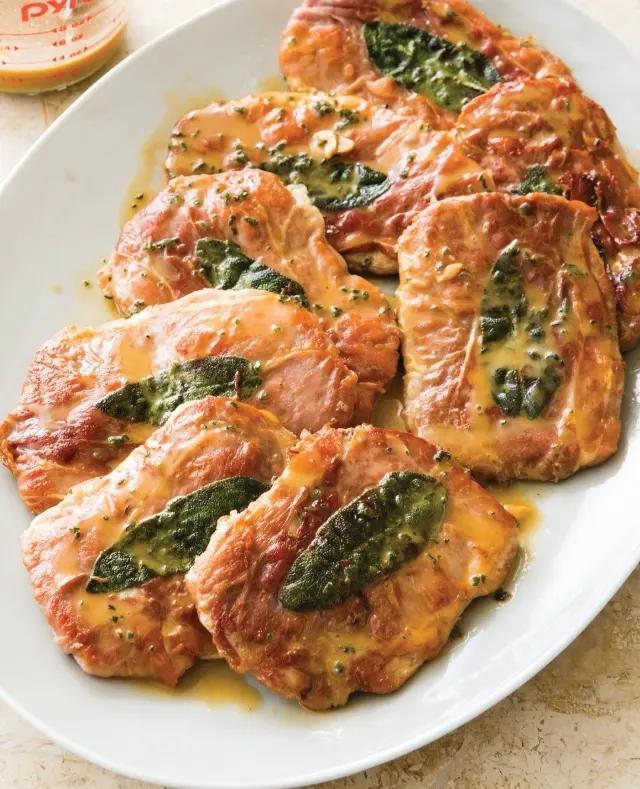
 Pork saltimbocca with a quick lemon, wine and sage pan sauce
#Saltimbocca
1 ideas
Pork saltimbocca with a quick lemon, wine and sage pan sauce
Get new #Saltimbocca ideas by email
Every Thursday: the week's best ideas, with the newest from #Saltimbocca.
Related tags
Saltimbocca: A Guide to the Roman Classic
Saltimbocca is a classic Italian dish built on three ingredients: a thin cutlet of meat, a slice of prosciutto and a leaf of sage. The name means something close to "jumps in the mouth" — a playful description of a dish that is small, savoury and eaten in a few bites. It belongs to the cooking of Rome and central Italy, where it is usually called saltimbocca alla romana, and it has stayed popular for the simple reason that it takes minutes to make and needs almost nothing from the pantry.
How it is made
The meat is sliced or pounded thin, then topped with a slice of prosciutto and a sage leaf. A toothpick or a small skewer holds everything together while it cooks, because the three layers are not otherwise attached. The cutlets are usually dusted lightly with flour, then fried quickly in butter or oil over a fairly high heat, prosciutto side down first so the sage and ham settle into the meat. A splash of dry white wine goes into the hot pan at the end; it lifts the browned bits from the bottom and reduces into a thin, glossy sauce. The whole process is short enough that the meat stays tender — overcooking is the one mistake that ruins it.
The classic and its variations
Read more
Veal is the traditional choice, cut from the leg into thin escalopes. Because veal is not always easy to find or to feel comfortable buying, chicken breast and pork loin are common substitutes; both work well, provided they are pounded thin enough to cook through in the same short time. Some cooks add a little flour to the sauce to thicken it, some use marsala instead of white wine for a sweeter finish, and some versions include a slice of cheese or a tomato-based sauce. Purists in Rome would keep it to meat, prosciutto, sage, butter and wine, but the dish is forgiving and regional households differ.
What beginners should know
Buy prosciutto sliced thinly, since a thick slice will not soften in the pan. Use sage sparingly — one leaf per cutlet is enough, as the flavour is strong. Have everything prepared before you turn on the heat, because the cooking itself takes only a couple of minutes per side. Dry the meat with kitchen paper so it browns rather than steams, and do not crowd the pan; cook in batches if needed. Warm the plates, as the cutlets cool quickly.
Serve saltimbocca with something plain that will catch the pan sauce: mashed potato, polenta, or simply good bread and a green salad. It suits a light red or a crisp white equally well. Made with care, it is one of the clearest examples of Italian cooking's central idea — a handful of good ingredients, handled briefly and respectfully, need very little else.
#Saltimbocca: frequently asked questions
How do I make saltimbocca for the first time?
Pound or slice the meat thin, lay a slice of prosciutto and a sage leaf on top, and pin the layers together with a toothpick so they stay put in the pan. Dust lightly with flour and fry fast over fairly high heat, starting prosciutto side down so the ham and sage settle into the meat, then splash in dry white wine and swirl the pan to make a thin sauce. Prepare everything before you turn on the heat, because the actual cooking is over in moments.
Which meat should I choose — veal, chicken or pork?
Veal is the traditional choice, but chicken breast and pork loin are widely used and both give good results. What matters far more than the animal is the thickness: the cutlet has to be pounded thin enough to cook through in the brief time it spends in the pan.
What do I need on hand before I start cooking?
Thin cutlets, thinly sliced prosciutto, fresh sage, butter or oil, a little flour, dry white wine and toothpicks or small skewers. Buy the prosciutto sliced thin, since a thick slice won't soften in the pan, and go easy on the sage — its flavour is strong enough that a single leaf per cutlet carries the whole dish.
Why does my saltimbocca turn out tough or watery?
Toughness almost always means it was left in the pan too long, and a soggy surface usually comes from wet meat or an overcrowded pan. Pat the cutlets dry with kitchen paper so they brown instead of steaming, and cook them in batches, keeping the finished ones warm on heated plates.
What should I serve alongside saltimbocca?
Choose something plain that will soak up the pan sauce — mashed potato, soft polenta, or simply good bread with a green salad. It sits happily with either a light red or a crisp white, so serve whatever you would enjoy with the meat you used.
Can I prepare saltimbocca ahead for a dinner with guests?
Yes — assemble and pin the cutlets in advance and keep them covered in the fridge, then cook them to order just before serving. The dish is quick enough that the cooking is the last thing you do, which makes it a good choice for a small gathering where you'd rather be at the table than at the stove.
Videos come from YouTube and posts from Instagram; titles and summaries are our own. All rights belong to their creators.