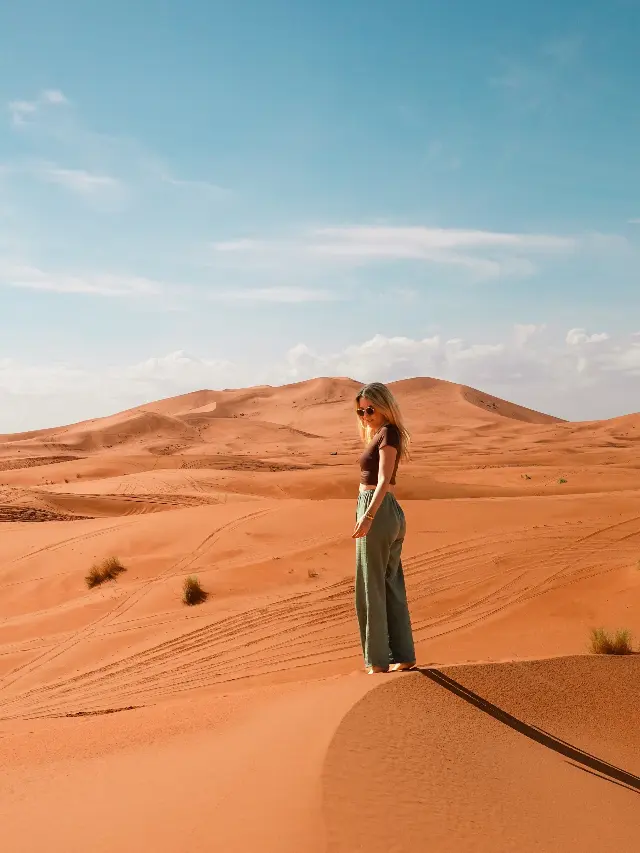
 Sunny Desert Adventures and Camel Trekking in Morocco
#Sand Dunes
1 ideas
Sunny Desert Adventures and Camel Trekking in Morocco
Get new #Sand Dunes ideas by email
Every Thursday: the week's best ideas, with the newest from #Sand Dunes.
Related tags
Sand Dunes: How Wind Shapes Desert Landscapes
A sand dune is a hill or ridge of loose sand piled up by the wind. Dunes are the signature landform of hot deserts, but they also appear along coasts, on lake shores, in semi-arid grasslands and even in cold, high-latitude regions, so you don't have to cross a desert to stand on one.
How a dune forms
Three things are needed: a supply of loose sand, wind strong enough to move it, and something that makes the wind slow down. Wind carries grains in short hops close to the ground and by nudging larger grains along the surface. Where a rock, a shrub or a patch of grass interrupts the airflow, sand drops out and gathers. The pile grows, and once the crest becomes unstable the grains slide down the sheltered side, so the whole dune creeps slowly forward over the years.
This gives every dune the same basic anatomy: a long, gentle windward slope and a shorter, steeper slope on the sheltered side, where the sand rests at the angle at which it can no longer hold itself up, and a sharp crest between them.
Read more
The main shapes
- Barchan: a crescent with two horns pointing downwind, forming where sand is scarce and the wind is steady.
- Transverse: long ridges lying across the wind, typical where there is plenty of sand.
- Linear, or seif: tall, straight ridges running parallel to the wind, created where the wind shifts between two directions.
- Star: several arms radiating from a high centre, built by winds that blow from many directions.
- Dome: a low, rounded mound with no clear crest.
- Parabolic: a U-shape with horns pointing upwind, usually a coastal dune caught and held by vegetation.
Where you find them
Dunes exist wherever the conditions are right rather than only in the great deserts. Coastal dunes form behind beaches, where salt-tolerant grasses trap sand blowing inland. Inland dunes appear near lakes and in dry grassland. In many places the sand is only a thin skin over older ground, and the dune is a passing feature of the landscape rather than a permanent one.
Dunes and the living world
Dunes are habitats, not emptiness. Deep-rooted grasses, specialised insects, reptiles and small mammals live in them, and the plants of coastal dunes are what keep the sand from blowing away. Dunes also shield the land behind them from storms and flooding. Where they move onto roads, fields or settlements they become a problem, and planting vegetation is the usual way of holding them in place.
Practical advice for a visit
Sand reflects heat and light, so protect your skin and eyes, carry more water than you think you need and avoid the middle of the day. Walk on the gentle windward slope and along the crest, and expect the descent on the sheltered side to be soft and steep. Keep camera gear and phones sealed against fine grains.
On coastal dunes, stay on paths and off the vegetation, which takes years to recover and is the only thing anchoring the sand. If you want to try sandboarding, camel trekking or driving on dunes, go with people who know the terrain.
Watching the light move across a dune field at sunrise or sunset is the part most visitors remember.
#Sand Dunes: frequently asked questions
How do sand dunes form in the first place?
A dune needs loose sand, wind strong enough to carry it, and an obstacle that slows the airflow — a rock, a shrub, a clump of grass. Sand drops out of the wind where it slows, the pile builds up, and once the crest grows too steep the grains slide down the sheltered side. That slow creep is why every dune ends up with a gentle windward slope, a steep lee slope and a sharp crest between them.
How can I tell which kind of dune I'm looking at?
Look at the shape and at where the horns point. A crescent with horns aimed downwind is a barchan and forms where sand is scarce, long ridges running across the wind are transverse dunes in sand-rich areas, and tall straight ridges parallel to the wind are linear dunes shaped by shifting wind directions. Star dunes have several arms radiating from a high centre where winds come from many angles, while a U-shape with horns pointing upwind is usually a coastal dune held by vegetation.
Do I have to travel to a desert to see dunes?
No — dunes appear anywhere the conditions line up, including coastlines behind beaches, lake shores and dry grassland, and even in cold high-latitude regions. Many are only a thin skin of sand over older ground, which makes them a temporary feature of the landscape rather than a permanent one. That means a dune visit can be a short trip rather than an expedition.
What should I bring and how should I move around on a dune visit?
Sand throws back both heat and light, so cover your skin and protect your eyes, carry more water than feels necessary, and plan your walking away from the hottest part of the day. Go up the gentle windward slope and travel along the crest, and expect the descent on the sheltered side to be soft and steep. Seal phones and cameras against fine grains, and if you want to try sandboarding or dune driving, go with people who know the terrain.
What's the most common mistake visitors make on coastal dunes?
Walking off the paths and onto the vegetation. Those plants are the only thing anchoring the sand, they take a long time to recover once trampled, and losing them is what sets a dune moving onto roads or fields. Staying on established paths is the single easiest way to leave the dune as you found it.
When is the best light for photographing dunes?
Sunrise and sunset, when low light rakes across the surface and makes the crests and the windward-lee contrast readable. That moving light is usually the part visitors remember most, and it's also the easiest condition for photographing a dune field without it flattening into a plain field of sand. Arrive early enough to walk in before the light is at its best.
Videos come from YouTube and posts from Instagram; titles and summaries are our own. All rights belong to their creators.