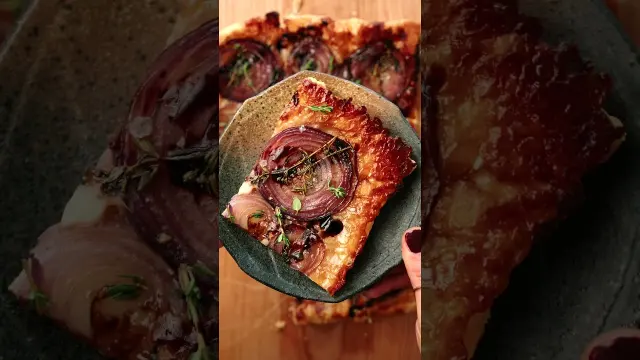
 Upside down red onion tart with puff pastry and Gruyere
#Savory Tart
1 ideas
Upside down red onion tart with puff pastry and Gruyere
Get new #Savory Tart ideas by email
Every Thursday: the week's best ideas, with the newest from #Savory Tart.
Related tags
Savory Tart Guide
What a savory tart is
A savory tart is a baked dish made with a crust and a filling that is not sweet. It usually combines a pastry base with ingredients such as vegetables, cheese, herbs, eggs, cream, meat, fish, or legumes. The result can be simple and rustic or neat and elegant, depending on how it is assembled.
Savory tarts appear in many food traditions. Some are open-faced, with the filling arranged directly in the crust. Others are made as galettes, hand pies, or deeper tartlets. The same idea can be adapted to many cuisines, which is part of what makes savory tarts so useful in home cooking.
The main kinds
Read more
There are a few common styles of savory tart:
- Open tart: the filling is baked in a visible layer over the crust.
- Deep tart: the filling is taller and often richer, sometimes with eggs or cream to set it.
- Rustic tart: the edges are folded in loosely rather than formed in a pan.
- Individual tartlets: small portions that are useful for appetizers or lunch.
- Upside-down tart: ingredients are arranged in the pan first, then covered with pastry and turned out after baking.
You can make a savory tart with puff pastry for a lighter, crisp finish, or with shortcrust pastry for a sturdier base. Some recipes use a yeasted dough or a crumbly tart shell, depending on the texture you want.
Common fillings and flavors
Savory tarts are a good way to use seasonal vegetables and leftovers. Popular combinations include:
- Onion, cheese, and herbs
- Leek and egg
- Tomato and mustard
- Mushroom and thyme
- Spinach and feta
- Pumpkin or squash with soft cheese
- Caramelized vegetables and goat cheese
- Ham, bacon, or smoked fish with a creamy filling
A good savory tart usually balances richness, acidity, and texture. Cheese or cream adds depth, herbs lift the flavor, and vegetables bring freshness. A little mustard, lemon zest, or vinegar can keep the filling from tasting flat.
What beginners should know
If you are new to savory tarts, keep the filling simple. Too much moisture can make the crust soft, so cook watery vegetables first or drain them well. Blind baking the crust can also help if the filling is wet or if you want a crisp base.
A few practical tips:
- Chill pastry before baking so it keeps its shape.
- Use a tart pan or baking sheet lined with parchment if needed.
- Do not overload the filling.
- Season each layer, not just the top.
- Let the tart rest briefly after baking so it slices more cleanly.
Serving and variations
Savory tart can be served warm, at room temperature, or even cold, which makes it useful for lunch, picnics, and casual entertaining. A simple green salad often goes well with it. If you want a more complete meal, add roasted vegetables or soup on the side.
Once you understand the basic structure, you can vary the crust, filling, and shape in many ways. That flexibility is what makes savory tart such a lasting and practical dish.
#Savory Tart: frequently asked questions
How do I make a savory tart for the first time?
Start with a simple pastry base and a filling that does not need much preparation, such as softened onions with cheese and herbs. Keep the layers thin and season as you go, then bake until the crust is golden and the filling is set. Once you are comfortable with that structure, you can add more ingredients and try different shapes.
What do I need to make a savory tart at home?
You need a pastry of your choice, a tart pan or a lined baking sheet, and a filling built around vegetables, cheese, eggs, cream, or cured meat and fish. Parchment paper, a rolling pin, and something to weigh the crust down while it pre-bakes are helpful but not essential. A sharp knife and a little patience for letting the tart rest after baking make serving much easier.
Which kind of savory tart should I choose?
Pick an open tart in a pan when you want a neat, sliceable result for a table, and a rustic free-form tart when you prefer something looser and quicker to assemble. Individual tartlets suit appetizers and packed lunches, while a deep tart works when you want a richer, more substantial filling that sets as it bakes. The pastry matters too: a flaky one gives a light crisp finish, a shortcrust gives a firmer base.
How should I store and reheat a savory tart?
Let the tart cool completely, then keep it covered in the refrigerator and eat it within a short time, since fillings with egg, cream, or fish spoil faster than plain vegetable ones. Reheat it gently in an oven rather than a microwave so the crust recovers some of its crispness. Many savory tarts are also good cold or at room temperature, which is part of their appeal.
What are good savory tart ideas for a gathering?
For a casual lunch or picnic, a tomato and mustard tart or a spinach and feta tart travels well and needs only a green salad alongside. For something more striking on a shared table, an upside-down tart made with caramelized onions, pastry, and cheese is turned out of the pan to show off the arranged top. Smaller tartlets let guests try more than one flavor.
What mistakes should I avoid when making a savory tart?
The most common problem is a soggy base, usually caused by wet fillings or pastry that was not chilled before baking, so drain or pre-cook watery vegetables and keep the dough cold. Overloading the pan makes the tart hard to slice and slow to set, so build restrained layers. Forgetting to season the filling and the crust separately leaves the finished tart tasting flat.
Videos come from YouTube and posts from Instagram; titles and summaries are our own. All rights belong to their creators.