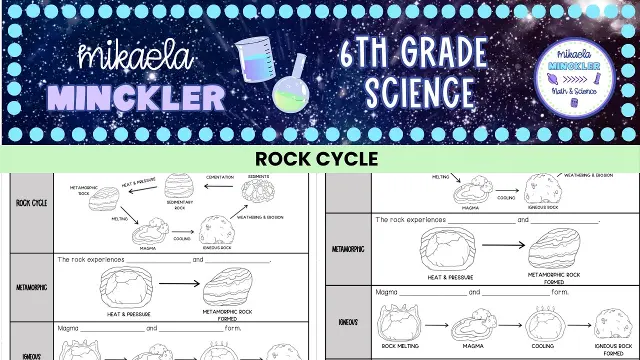
 The Rock Cycle Explained: Guided Notes for Sixth Grade Science
#Science Lesson
4 ideas
The Rock Cycle Explained: Guided Notes for Sixth Grade Science
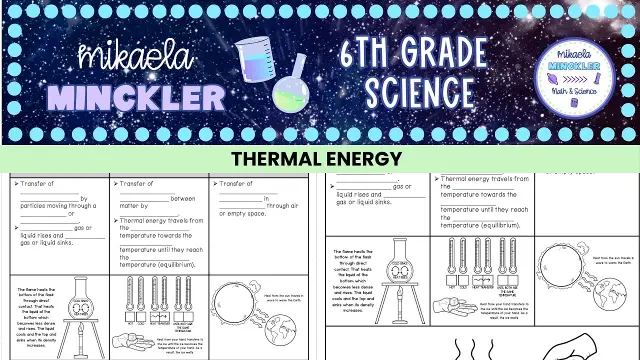 Thermal Energy Notes: Conduction, Convection and Radiation
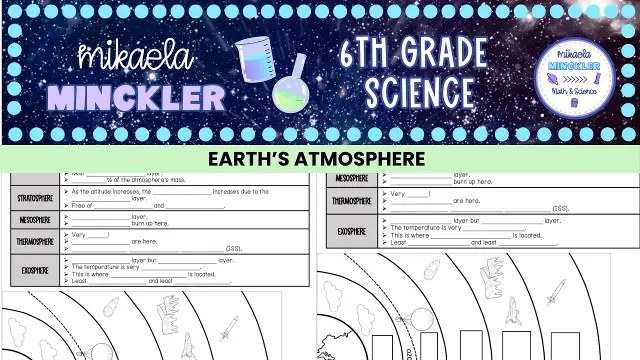 Earth's Atmosphere: A Guided Notes Walkthrough for Grade Six
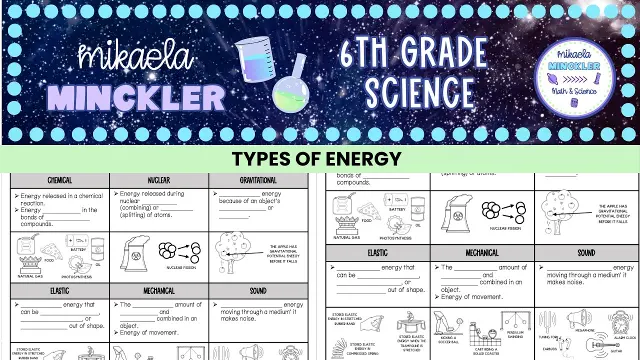 Types of Energy: Guided Notes Lesson for Sixth Grade Science
Get new #Science Lesson ideas by email
Every Thursday: the week's best ideas, with the newest from #Science Lesson.
Related tags
How to Plan a Science Lesson That Sticks
A science lesson is a structured period of teaching built around explaining how the natural world works and giving learners a chance to see it for themselves. Unlike a lesson in a subject that lives mainly on the page, science teaching usually pairs an idea with something observable — a demonstration, a specimen, a measurement, a model — so that the concept has somewhere to attach. The subject matter is broad: energy, matter, living things, forces, weather, rocks, the human body, and the slow work of questioning evidence that underlies all of them.
Start with one idea
The most common mistake in planning is trying to cover too much. A lesson works better when it is organised around a single clear idea stated in plain language — heat moves from warmer objects to cooler ones, air has weight, water changes the shape of the land over time. Everything else in the lesson should serve that idea. Write the goal first, then choose the activity, not the other way round.
The shape of a good lesson
Read more
Most effective lessons follow a recognisable arc. Open with something that creates curiosity: a question, a surprising object, a short demonstration with an outcome learners cannot yet explain. Then introduce the vocabulary and the explanation that makes sense of it. Give time to apply the idea — a short experiment, a sorting task, a diagram to complete. Close by returning to the opening question so learners can answer it in their own words.
Guided notes and notebooks
Guided notes — handouts with headings, key terms and blanks to fill — help learners follow an explanation without copying everything. They work best when the blanks are the concepts, not the filler, and when there is room for drawings and questions. Science notebooks, whether paper or digital, give a place for predictions, observations and reflections across a whole unit.
Demonstrations and practical work
Hands-on work is memorable but needs structure. Decide in advance what learners should notice, and ask them to predict before they observe. Keep equipment simple and test it yourself first. When a full experiment is not possible, a teacher-led demonstration with learner observation and discussion achieves much of the same effect.
Talk and questioning
Science is a social activity. Build in paired talk so learners can rehearse explanations aloud, and ask open questions that begin with why or how rather than questions with a single remembered answer. Accept partial answers and ask a follow-up that pushes thinking further.
Safety and habits
Establish routines early: goggles where needed, care with heat and glass, no tasting, clear benches, and instructions repeated before materials are handed out. Teach learners to record what actually happened rather than what they expected, and to treat an unexpected result as interesting rather than wrong. That habit — honest observation, careful explanation — is the real subject of every science lesson.
#Science Lesson: frequently asked questions
How do I start planning a science lesson?
Start with one clear idea you want learners to understand, then build the rest of the lesson around it. A good science lesson usually begins with a question, a surprising object, or a simple demonstration that sparks curiosity.
What should be included in a science lesson plan?
A strong lesson usually includes a clear explanation, a chance to observe something directly, and time for learners to apply the idea. Guided notes, discussion, and a short task like sorting, drawing, or completing a diagram can help make the learning stick.
What kind of science lesson works best for young learners?
The best choice depends on the topic, but lessons that connect ideas to something visible or hands-on are especially effective. For topics like energy, the atmosphere, or the rock cycle, guided notes plus a model, demonstration, or simple observation activity can make the idea easier to understand.
How can I keep a science lesson engaging?
Use an opening that makes learners curious, then let them predict, observe, and talk about what they notice. Open questions and pair discussion help learners explain their thinking instead of only memorizing facts.
What are some common mistakes to avoid in a science lesson?
One common mistake is trying to cover too many ideas at once, which can make the lesson feel unfocused. It also helps to avoid giving learners too much equipment or too little structure; science activities work best when expectations, safety, and observation goals are clear.
How should I handle practical work and demonstrations in science?
Choose simple equipment, test it first, and be clear about what learners should notice before they begin. If a full experiment is not practical, a teacher demonstration with careful observation and discussion can still make the concept memorable.
Videos come from YouTube and posts from Instagram; titles and summaries are our own. All rights belong to their creators.