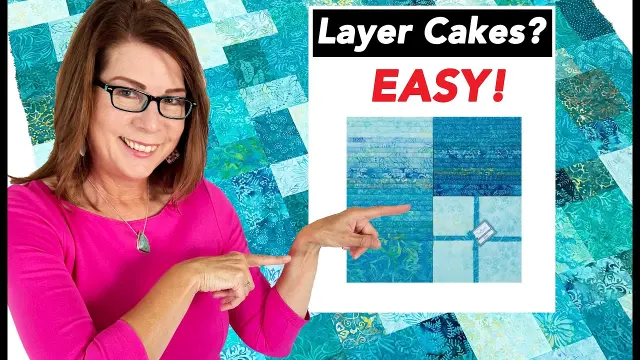
 Fast 3-Hour Layer Cake Donation Quilt Tutorial
#Scrap Quilt
1 ideas
Fast 3-Hour Layer Cake Donation Quilt Tutorial
Get new #Scrap Quilt ideas by email
Every Thursday: the week's best ideas, with the newest from #Scrap Quilt.
Related tags
Scrap Quilt Guide: Turning Fabric Leftovers Into Heirlooms
A scrap quilt is a patchwork quilt built from many small pieces of leftover fabric rather than from yardage bought specifically for the project. The scraps may come from dressmaking, from worn-out clothing, from a friend's stash, or from the trimmed edges of other quilts. Because the pieces vary in colour, print and size, the finished quilt has a character that no single-fabric design can imitate: it holds a record of everything else you have sewn.
The tradition is old and practical. Quiltmaking grew out of household economy, and cloth was too valuable to throw away. Makers saved every usable fragment, stitched them into squares, strips and triangles, and assembled them into something warm. In many places the scrap quilt was also a social object, made at gatherings where neighbours pooled their scraps and their time. The aesthetic that emerged from necessity, a lively, slightly irregular mix of prints, is now prized for its own sake.
Main approaches
There are two broad ways to work. In a controlled scrap quilt, you choose a colour story in advance, perhaps warm tones with a little blue for contrast, and sort your scraps to fit it. The result looks deliberate and calm. In a true scrap quilt, sometimes called a free or "anything goes" scrap, you use whatever you have and let chance arrange it. These quilts look busier, but they have an energy that is hard to plan.
Read more
Among the classic patterns, the simple square grid is the most forgiving. Strip quilts, made from long rectangles sewn end to end, come together quickly. Triangles, often made from two contrasting squares, add movement. Postage-stamp quilts use very small squares and reward patience. Many makers also use a "jelly roll" or pre-cut bundle as a starting point, then supplement it with their own scraps.
What beginners should know
Start by sorting. Group scraps by size first, since size limits what you can cut, and only then by colour. Press every piece before cutting; wrinkled fabric measures wrong. Cut scraps down to a few standard sizes so they fit together, and be willing to trim a block to fit rather than fight it.
Fabric choice matters. Cotton is easiest to work with, and mixing weights, such as a slippery lining with a sturdy cotton, causes trouble. Check that old clothing is clean and not too thin before you include it.
Practical tips
- Keep a box for scraps as you sew and cut them into usable squares at the end of each session.
- Use a consistent seam allowance, usually a quarter inch, and test it on a sample before you begin.
- Let a design wall or a cleared floor help you arrange blocks before sewing them together.
- Mix scale and density rather than only colour: tiny prints, large florals and solids give the eye somewhere to rest.
- Make a small test block first if you plan to combine many different fabrics.
Scrap quilts take longer to prepare than to sew, but they use what you already own, they teach you to work with what appears, and they leave you with something that carries the memory of every other project in it.
#Scrap Quilt: frequently asked questions
How do I start a scrap quilt if I've never made one before?
Begin by gathering and sorting your scraps rather than shopping for fabric, since the whole point is to use what you already have. Group the pieces by size first, because size decides what shapes you can cut, and press everything flat before you cut into it. A simple grid of squares is the most forgiving first pattern and lets you learn the process without a complicated layout.
What do I actually need to make one?
You need a pile of leftover fabric, a rotary cutter or sharp scissors, a ruler, pins, thread and a sewing machine or needle for hand piecing. Cotton scraps are the easiest to work with, so set aside slippery linings and very thin, worn cloth. A design wall or a cleared floor is genuinely useful for arranging blocks before you sew them.
Should I choose a controlled colour scheme or just use everything?
A controlled scrap quilt means picking a colour story in advance and sorting your scraps to fit it, which gives a calm, deliberate result. An anything-goes scrap quilt uses whatever comes to hand and looks busier, but it has a liveliness that is hard to plan. Many makers land somewhere in between, letting colour guide them loosely while still working from the scrap box.
Which pattern is best for a beginner?
The plain square grid is the most forgiving, because straight seams and even squares hide small inaccuracies. Strip quilts sewn from long rectangles come together quickly, while triangles add movement but need more care at the points. Very small squares reward patience rather than speed, so save those for a later project.
How do I keep a scrap quilt from looking messy?
Vary scale and density as well as colour: mix tiny prints, large florals and plain solids so the eye has somewhere to rest. Cutting scraps down to a few standard sizes helps the blocks fit together, and being willing to trim a block rather than force it keeps seams honest. Making one small test block first shows you how your particular mix of fabrics behaves.
How should I care for a scrap quilt once it's finished?
Because the fabrics come from different sources, wash it gently and test any odd or old piece for colour bleeding before it goes into the quilt. Old clothing should be clean and not too thin before you include it, since weak cloth will wear through first. Store it folded out of direct sun and repair loose seams early rather than letting them spread.
Videos come from YouTube and posts from Instagram; titles and summaries are our own. All rights belong to their creators.