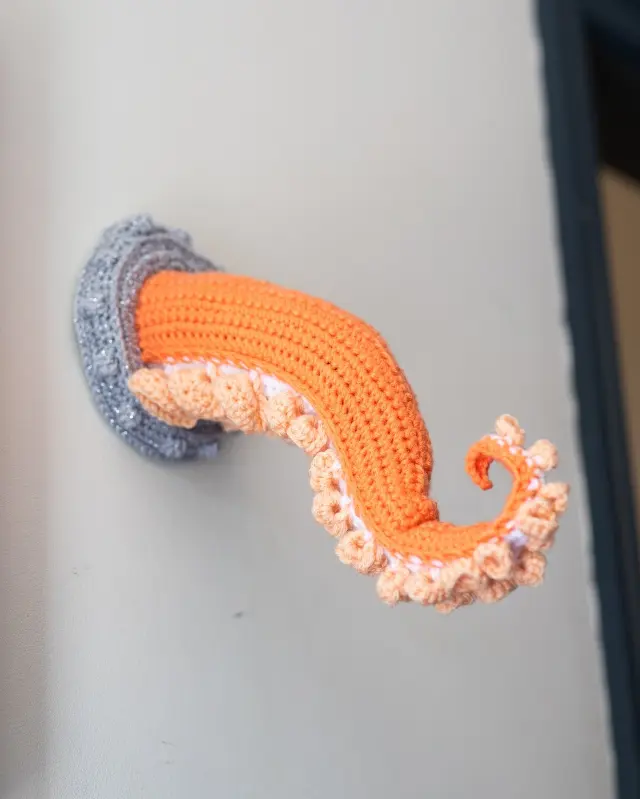
 Crochet Octopus Tentacles Peeking Through a Porthole
#Sea Monster
1 ideas
Crochet Octopus Tentacles Peeking Through a Porthole
Get new #Sea Monster ideas by email
Every Thursday: the week's best ideas, with the newest from #Sea Monster.
Related tags
Sea Monsters: Legends Beneath the Waves
Sea monsters are the creatures of the deep as imagined by fear, wonder and a long tradition of storytelling. They are not a single animal but an idea: a being vast enough, strange enough or hidden enough to explain what people could not otherwise understand about the sea. For as long as humans have sailed, fished and crossed water, they have told stories about what waits below.
Where the stories come from
Much of the tradition grows out of genuine encounters with animals that were unfamiliar or glimpsed briefly. A whale surfacing at dusk, a giant squid's arm, a sunfish rolling on its side or a long ribbon of kelp can look astonishing when seen from a small boat in poor light. Travellers' accounts were repeated and embroidered, and mapmakers filled the blank spaces of the oceans with drawings of serpents and tusked fish. Coastal communities everywhere have their own versions, from northern krakens and lindworms to the water dragons and lake serpents of inland folklore.
The main kinds
Read more
Folkloric sea monsters tend to fall into a few recognisable types.
- Serpents and sea dragons, with long humped bodies coiling through the waves.
- Giant cephalopods, the many-armed terror that can wrap a ship.
- Merfolk, half human and half fish, sometimes gentle and sometimes dangerous.
- Enormous fish and whales that swallow boats whole.
- Shapeshifters and spirits of the water, tied to particular shores, storms or tides.
Sea monsters and real creatures
Several legends sit close to real biology. The giant squid and the colossal squid are genuine animals of the deep ocean, rarely seen alive and known mostly from stranded specimens and beaks found in whale stomachs. The oarfish, a long silver fish that swims in deep water, likely fed stories of sea serpents when it washed ashore. Sailors once mistook the manatee for a mermaid. Knowing this does not spoil the stories; it makes them richer, since the sea really does hold animals that stretch belief.
If you want to make your own
Sea monsters are a favourite subject for drawing, crochet, sculpture, costume and story. A few practical thoughts help:
- Decide what it is made of. Scales suggest fish, smooth hide suggests whale or eel, and suckers suggest cephalopod.
- Choose a silhouette first. A long curved body reads as serpentine; a rounded mass with many arms reads as kraken.
- Build in one impossible feature, such as too many eyes or a mouth that opens sideways. Restraint makes it more convincing.
- Use colour to place it. Cold blues and greens suit deep water; muddy browns and greys feel like something hauled up from the bottom.
- Give it a habitat. A creature designed for the abyss, with pale skin and small eyes, tells a story before you explain anything.
A note on telling the tales
Treat the old stories with care: many belong to particular places and peoples, and retelling them well means knowing where they come from. Whether you are reading folklore, drawing a serpent for a child's bedroom wall or making a soft toy with tentacles curling through a porthole, sea monsters remain what they have always been, a way of giving shape to the ocean's strangeness.
#Sea Monster: frequently asked questions
How do I start making a sea monster of my own?
Begin by deciding what the creature should read as at a glance — a long coiling serpent, a many-armed mass, or a scaled fish — because the silhouette carries the idea before any detail does. Pick a single impossible feature to build the design around, such as an extra row of eyes or a mouth that opens sideways, and let everything else stay believable. Keep the piece small at first so you can test the shape before committing to a larger version.
What materials or supplies work best for a sea monster project?
The surface you choose should hint at the creature's nature: scales for something fish-like, smooth hide for a whale or eel, suckers for a cephalopod. Yarn, fabric, clay, paper, and costume materials all adapt well depending on whether you are crocheting, sculpting, or making something to wear. Let colour place the creature too, with cold blues and greens reading as deep water and muddy greys as something dredged up from the bottom.
Which kind of sea monster should I choose for my project?
Think about the story you want to tell and what your material handles well — a serpent suits long flexible shapes, a giant cephalopod suits anything that can carry curling arms, and merfolk suit a half-and-half construction. Enormous fish or whales are a good fit when you want a simple rounded body with a strong mouth. Water spirits and shapeshifters give you the most freedom, since nothing about them has to be anatomically consistent.
How do I care for a finished sea monster piece so it lasts?
Most of the care depends on the material: textile and crochet pieces generally want gentle washing, drying away from direct heat, and storage where arms and tentacles will not crease permanently. Sculpted or painted pieces should be kept out of prolonged damp and sunlight so colours and surfaces do not fade or warp. Anything with small attached parts is best kept where children cannot pull them loose.
What are common mistakes when designing a sea monster?
The usual problem is adding too much: piling on eyes, teeth, fins, and tentacles until the creature stops reading as anything at all. Restraint is what makes the single strange detail convincing, so pick one and let the rest of the body behave like a real animal. Another frequent slip is ignoring habitat — giving a creature of the abyss bright colours or large eyes undercuts the story the design is trying to tell.
How can I use old sea monster folklore without getting it wrong?
Many of these stories belong to particular places and peoples, so it is worth finding out where a tale comes from before you retell or adapt it. If you are drawing or crafting a creature for a room or a toy, you can stay respectful by treating the source as a real tradition rather than a generic decoration. Where you are unsure of the origins, it is fine to invent your own creature instead of borrowing someone else's.
Videos come from YouTube and posts from Instagram; titles and summaries are our own. All rights belong to their creators.