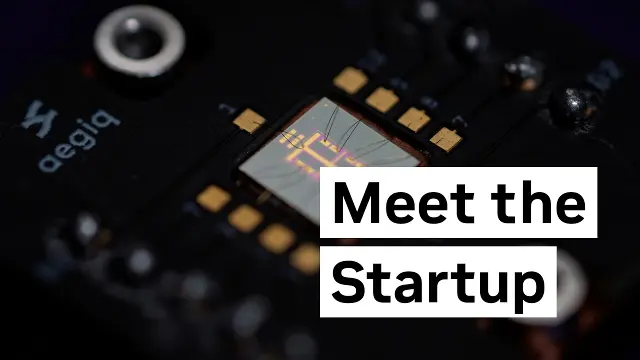
 Aegiq Builds Photonic Quantum Computers for Fiber Networks
#Semiconductor Manufacturing
1 ideas
Aegiq Builds Photonic Quantum Computers for Fiber Networks
Get new #Semiconductor Manufacturing ideas by email
Every Thursday: the week's best ideas, with the newest from #Semiconductor Manufacturing.
Related tags
Semiconductor Manufacturing: How Chips Are Made
Semiconductor manufacturing is the set of industrial processes that turn raw silicon into the integrated circuits found in phones, cars, appliances, medical devices and data centres. It sits between materials science and precision engineering: the work is measured in nanometres, yet it happens at enormous scale, with hundreds of identical circuits built at once on a single disc of silicon.
From sand to wafer
The starting point is silica, the main component of ordinary sand. It is refined into electronic-grade silicon, melted and drawn into a single crystal, then sliced into thin discs called wafers and polished until the surface is almost perfectly flat. Everything that follows happens on and just inside that surface.
The main steps
Read more
Chip fabrication is a cycle of layering, patterning and removing, repeated dozens of times to build up the intricate three-dimensional structure of a circuit.
- Deposition adds thin films of conducting, insulating or semiconducting material.
- Lithography transfers a circuit pattern onto the wafer using a light-sensitive coating and a mask, in much the same logic as photographic exposure.
- Etching removes material where the pattern says it should not remain, either with chemicals or with plasmas.
- Doping introduces tiny amounts of impurity so that specific regions conduct electricity in a controlled way.
- Annealing and planarisation heat the wafer and flatten each new layer so the next one can be built on top.
- Testing and packaging follow: each die is checked electrically, then cut apart and sealed into a protective package with connections to the outside world.
Kinds of fabrication
The industry usually describes its work in two halves. Front-end means wafer fabrication: forming the transistors inside the silicon and building the metal wiring that connects them above it. Back-end means assembly, packaging and test, where the finished wafer is diced, each die sealed into a protective package and checked electrically before it leaves the plant. Within fabrication, some plants specialise in logic, some in memory, some in power devices or sensors, which need thicker materials and different tolerances. A related distinction is between companies that design chips and those that manufacture them for others, a split that has shaped the industry's geography.
What beginners should know
Cleanrooms matter more than any single machine. A speck of dust is enormous next to a modern transistor, so air is filtered continuously, operators wear protective garments and wafers travel between tools in sealed containers. Yield, the share of working chips on a wafer, is the number that quietly governs everything: a small improvement in yield is often worth more than a dramatic new process.
A few practical notes if you are learning the field: follow one process step from start to finish rather than trying to absorb all of them at once, learn why each layer exists before memorising equipment names, and remember that the whole discipline is a negotiation with contamination, heat and variation. Patience is the real prerequisite, since a finished wafer may take months to complete.
#Semiconductor Manufacturing: frequently asked questions
How do I start learning about semiconductor manufacturing?
Begin with the material itself: how silica becomes a refined silicon crystal, and how that crystal is sliced and polished into a wafer. From there, follow a single process step all the way through instead of trying to absorb the whole flow at once. Understanding why each layer exists matters more early on than memorising the names of the machines that build it.
What is the difference between front-end and back-end fabrication?
Front-end work is wafer fabrication: forming the transistors inside the silicon and building the metal wiring that connects them above it. Back-end covers assembly, packaging and test, where the wafer is diced, each die sealed into a protective package and checked electrically. Thinking of them as two halves of one journey makes the industry's structure much easier to follow.
Why are cleanrooms so important in chip manufacturing?
A modern transistor is so small that a single speck of dust is enormous next to it, and one stray particle can ruin the circuit it lands on. This is why air is filtered continuously, operators wear protective garments and wafers move between tools in sealed containers. Contamination control, rather than any individual machine, is what separates a working fab from a failing one.
What does yield mean and why does it matter so much?
Yield is the share of chips on a wafer that actually work when tested, and it quietly governs the economics of everything else in the plant. A modest gain in yield is often worth more than a dramatic new process, because it multiplies the output of work already being done. Beginners should treat yield as the number that explains most decisions engineers make.
Which kind of fabrication plant specialises in what?
Some plants focus on logic chips, some on memory, and others on power devices or sensors, which need thicker materials and different tolerances. A separate distinction is between companies that design chips and those that manufacture them on someone else's behalf. Knowing which category a plant belongs to tells you a lot about the processes and constraints it works under.
What mistakes do beginners make when learning this field?
The most common one is trying to memorise equipment names before understanding what each layer of the circuit is for. Another is forgetting that the whole discipline is a negotiation with contamination, heat and variation rather than a set of isolated tricks. Patience is the real prerequisite, since a finished wafer can take months to complete.
Videos come from YouTube and posts from Instagram; titles and summaries are our own. All rights belong to their creators.