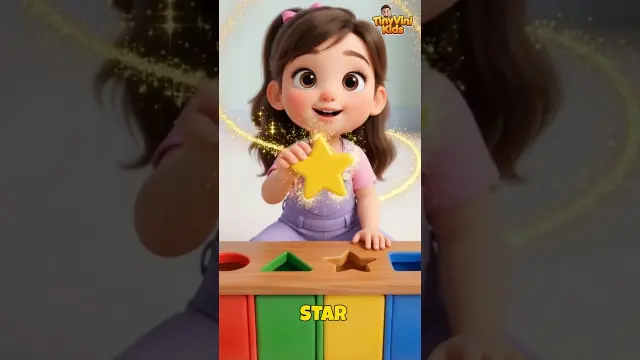
 Learn Shapes with a Fun Shape Sorting Toy for Kids
#Shape Sorting
1 ideas
Learn Shapes with a Fun Shape Sorting Toy for Kids
Get new #Shape Sorting ideas by email
Every Thursday: the week's best ideas, with the newest from #Shape Sorting.
Related tags
Shape Sorting for Young Children
Shape sorting is a simple early learning activity where a child matches objects or pieces to the correct opening, outline, or container. It helps children notice differences in shape, size, and orientation while building hand-eye coordination and problem-solving skills. You will often see shape sorters made as toys, puzzles, or classroom materials, but the idea is much broader: any activity that asks a child to identify and place shapes belongs to shape sorting.
What shape sorting teaches
At first, shape sorting is about matching one form to another. As children practice, they begin to recognize circles, squares, triangles, rectangles, stars, and other common shapes more quickly. They also learn that the same shape can look different when it is turned around, which is an important part of spatial awareness.
Shape sorting can support:
- Shape recognition
- Visual discrimination
- Fine motor control
- Hand-eye coordination
- Early problem-solving
- Language development, as children name what they see
Read more
Different kinds of shape sorting
Shape sorting can happen in many ways. Some activities use a box or board with openings that match specific shapes. Others use cards, cut-outs, or everyday objects grouped by shape. Children may sort by:
- Shape only
- Shape and color
- Size
- Category, such as round, pointed, or curved shapes
There are also more open-ended ways to sort, such as separating buttons, blocks, or paper shapes into groups. This gives children practice without needing a single “right” toy.
What beginners should know
Young children often need time to turn a shape until it fits. That is part of learning, not a mistake. A child may also confuse shapes that look similar, such as a square and a rectangle, or may focus more on color than shape at first. This is normal.
It helps to begin with:
- A small number of shapes
- Clear, simple shapes with obvious differences
- Large pieces that are easy to hold
- Plenty of repetition
You can name shapes aloud as your child plays, but there is no need to quiz them. Gentle repetition works better than pressure.
Practical tips for shape sorting play
Keep the activity calm and simple. Show one shape at a time and let your child try before giving help. If a piece does not fit, encourage turning it rather than forcing it. That small pause helps children learn how shapes work in space.
You can make shape sorting part of everyday life too. Ask your child to find round lids, square napkins, or triangle signs during a walk. Simple sorting at home can be just as useful as a toy, and often more meaningful because it connects to the real world.
If your child loses interest quickly, keep sessions short. The goal is not perfection. The goal is repeated, playful practice that builds confidence and understanding over time.
Videos come from YouTube and posts from Instagram; titles and summaries are our own. All rights belong to their creators.