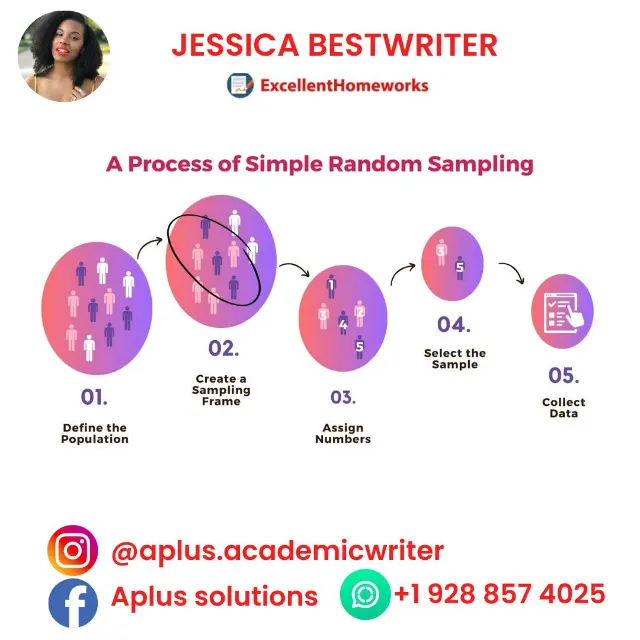
 Simple Random Sampling Explained: Steps, Benefits and Limits
#Simple Random Sampling
1 ideas
Simple Random Sampling Explained: Steps, Benefits and Limits
Get new #Simple Random Sampling ideas by email
Every Thursday: the week's best ideas, with the newest from #Simple Random Sampling.
Related tags
Simple Random Sampling: A Beginner's Guide
Simple random sampling is the most basic form of probability sampling. It means choosing a subset of individuals from a larger group in such a way that every individual has the same chance of being selected, and every possible combination of that size has the same chance of appearing. It is the foundation on which much of survey methodology and statistical inference rests, and understanding it makes the logic of more complex sampling designs much easier to follow.
Where it comes from
The idea grows out of probability theory and the practical need to describe a large population without measuring all of it. Early work on representative sampling for social and agricultural surveys established the principle that a sample selected at random, with a known method of selection, allows researchers to reason about the whole from the part. The mathematics of random selection and estimation was formalised in the first half of the twentieth century, and the approach has been taught as the reference standard ever since.
Why randomness matters
Read more
A sample chosen haphazardly, by convenience or by whoever is easiest to reach, tends to carry hidden biases. Random selection does not guarantee a perfect sample, but it removes the researcher's discretion from the choice and gives every member of the population a known probability of inclusion. That known probability is what allows estimates to be accompanied by margins of error and confidence intervals. Without it, you can still describe your sample, but you cannot honestly say how far it is likely to be from the truth about the population.
The main methods
- Lottery or physical draw: names or numbers are placed in a container and drawn without replacement.
- Random number tables: each member of a numbered population is matched against a published sequence of digits.
- Computer-generated selection: a random number generator assigns values to a sampling frame and the required number of cases is taken.
- Random digit dialling and similar adaptations: used where no complete list of the population exists, with careful handling of the gaps such a method creates.
What beginners should know
The quality of a simple random sample depends almost entirely on the sampling frame, the list from which the sample is drawn. If the list is incomplete, out of date or contains duplicates, even a perfectly random draw will be flawed. Decide in advance how you will handle non-response, since people who cannot be reached often differ systematically from those who can. Sample size is a separate question from method: a random sample that is too small will produce wide, unstable estimates, while a large biased one stays biased.
Practical tips
Number the frame and keep a record of the random sequence you used, so the selection can be checked or repeated. Replace units only under rules written down beforehand, never because a particular case is inconvenient. Note both the intended sample and the achieved sample, and report how they differ. Finally, remember that simple random sampling is often impractical when the population is spread over a wide area or has no reliable list; stratified, cluster and systematic designs exist for exactly those situations, and most of them build on the same underlying logic.
#Simple Random Sampling: frequently asked questions
How do I actually draw a simple random sample if I'm new to this?
Start by writing out the full list of everyone or everything you want to include, then give each entry a number. From there you can pull numbers from a container, walk through a table of random digits, or let a computer generate the selection for you. The important part is that the random choice decides who gets in, not your own judgement about who would be convenient or interesting.
Do I need a complete list of the population before I start?
Yes, and it matters more than almost anything else in the process. The list you draw from — the sampling frame — has to be complete and current, because a random draw from a bad list just produces a bad sample with confidence. If no reliable list exists, you usually need a different design such as random digit dialling, or you move on to stratified, cluster or systematic approaches.
Which selection method should I choose — drawing by hand or using a computer?
Both give equivalent results when done properly, so pick based on scale and record-keeping. A physical draw suits small groups and is easy to explain to others, while random number tables and generators are far faster and less error-prone once your population gets large. Whichever you choose, keep a written record of the sequence so the selection can be checked or repeated later.
Should I worry about people who don't respond?
You should, because non-responders often differ from responders in ways that quietly tilt your results. Decide before you begin how missing cases will be handled and stick to that rule, rather than improvising as you go. It's also worth reporting both the sample you intended to take and the one you actually reached, so readers can see the gap.
Does a bigger sample make a biased sample acceptable?
No — size and method solve different problems. A large biased sample stays biased; adding more people just makes the wrong answer more precise. Conversely, a properly random sample that is too small gives estimates so wide and unstable that they're hard to act on, so you need both a sound selection method and enough cases.
When is simple random sampling the wrong tool?
It becomes impractical when your population is scattered across a wide area, since reaching a random spread of far-flung cases is costly, or when no dependable list exists at all. In those situations stratified, cluster or systematic designs are usually better choices. They rest on the same underlying logic, so learning this method first makes them much easier to understand.
Videos come from YouTube and posts from Instagram; titles and summaries are our own. All rights belong to their creators.