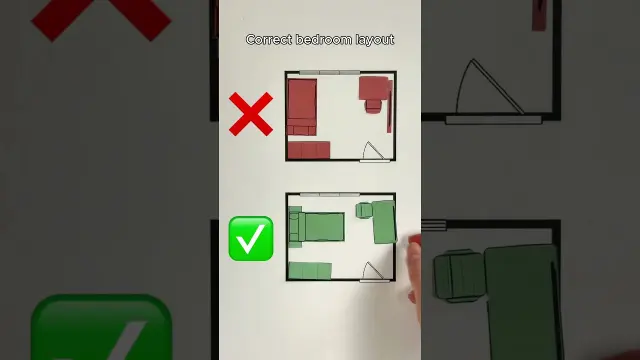
 Comparing Right and Wrong Bedroom Layouts
#Sleep Friendly
1 ideas
Comparing Right and Wrong Bedroom Layouts
Get new #Sleep Friendly ideas by email
Every Thursday: the week's best ideas, with the newest from #Sleep Friendly.
Related tags
Sleep-Friendly Bedrooms: A Calm Space for Better Rest
A sleep-friendly bedroom is a room designed around rest rather than around storage, entertainment or display. The idea is simple: the fewer demands a space makes on your attention, the easier it is to let go of the day in it. Good sleep is influenced by many things, and the room is only one of them, but it is the one you can change most directly.
Why the room matters
Sleep does not begin when you close your eyes. Your body starts preparing for it well before, responding to light, temperature and sound, and to the associations it has built with a particular place. When a bedroom is used mainly for sleeping and dressing, the mind learns to read that room as a signal to wind down. When it doubles as an office, a gym and a cinema, that signal becomes muddled.
Light
Read more
Light is the strongest cue your body uses to tell day from night. In the evening, dim, warm, low-placed lighting supports the shift towards rest. Bright overhead light and screens held close to the face work against it. Curtains or blinds that shut out early summer mornings and street lamps are worth the investment; if total darkness is not possible, a comfortable sleep mask does the same job.
Temperature and air
Most people sleep better in a slightly cool room than a warm one. Light bedding that can be layered is more adaptable than a single heavy duvet, and it lets you adjust through the night without waking fully. Fresh air matters too: a window opened briefly before bed, or a room ventilated during the day, often makes a difference that is felt rather than noticed.
Sound
Complete silence is rare and not always necessary. Many people find steady, low-level sound easier than sudden noise, whether that is a fan, a quiet street or a soft white-noise device. If noise is unpredictable, earplugs are a simple and inexpensive answer.
Layout and calm
The arrangement of a bedroom affects how restful it feels far more than its size or style. A few principles hold across most rooms:
- Keep the bed as the visual centre, with clear space on at least one side for getting in and out comfortably.
- Place the bed away from direct draughts and, where possible, out of the direct line of a door.
- Keep surfaces beside the bed small, so they hold a lamp, a book and a glass of water rather than everything you own.
- Store what you can behind closed doors; visible clutter tends to keep the mind active.
- Choose soft, natural textures for bedding and floor coverings, and keep colours muted if you find strong ones stimulating.
Habits that support the space
A sleep-friendly room works best alongside a few routines: a consistent bedtime and waking time, a wind-down period without bright screens, and keeping the bed for sleep rather than for work. If you struggle with sleep persistently, it is worth speaking to a doctor rather than trying to solve it through furnishings alone.
#Sleep Friendly: frequently asked questions
How do I start making my bedroom more sleep friendly?
Begin with the room's overall purpose rather than shopping: decide that the space is mainly for sleeping and dressing, and move out the desk, the exercise gear or the screen that muddles that signal. Then work through the basics in order of impact — light, temperature, air, sound and clutter — since these are the things your body actually responds to. Small, deliberate changes usually beat a full makeover.
What do I actually need for a sleep-friendly bedroom, and what can I skip?
The essentials are simple: something that blocks early light, bedding you can layer so you can adjust warmth through the night, and a way to soften unpredictable noise. A few small bedside surfaces and closed storage do more for calm than decorative extras. Gadgets and matching furniture sets are optional — nothing in the room needs to be expensive to do its job.
How do I choose the right kind of bedding and lighting for my room?
Choose bedding in light layers rather than one heavy duvet, so you can add or remove warmth without fully waking. For lighting, favour dim, warm, low-placed lamps in the evening instead of bright overhead fixtures, and keep a book and a glass of water within reach on a small bedside surface. Soft natural textures and muted colours help if strong tones feel stimulating to you.
How should I care for a sleep-friendly bedroom day to day?
Air the room regularly and open a window briefly before bed, since freshness is often felt rather than noticed. Keep the surfaces beside the bed clear so they hold only a lamp, a book and a glass, and put everything else behind closed doors. Wash bedding on a steady rhythm and clear visible clutter before you turn in, because an untidy room tends to keep the mind active.
What layout mistakes make a bedroom less restful?
The most common mistake is treating the bed as an afterthought — pushing it into a corner where one side is hard to get out of, or leaving it in the direct line of a door or a draught. Another is letting the room fill with visible storage and busy surfaces, which crowds the bed out of its role as the visual centre. Leaving clear space on at least one side of the bed and keeping storage closed fixes most of this.
Do I need total silence and complete darkness to sleep well?
Not necessarily. Steady low-level sound — a fan, a quiet street, a soft white-noise device — is often easier than unpredictable noise, and earplugs are a simple answer when it can't be controlled. For light, good curtains or blinds are worth it, but if total darkness isn't possible, a comfortable sleep mask does the same work.
Videos come from YouTube and posts from Instagram; titles and summaries are our own. All rights belong to their creators.