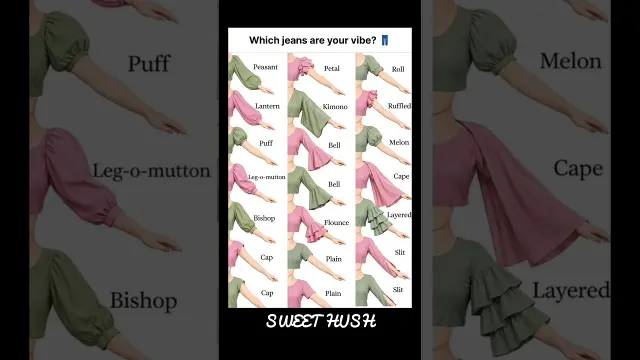
 Twenty-One Sleeve Designs for Blouses, Kurtis and Tops
#Sleeve Inspiration
1 ideas
Twenty-One Sleeve Designs for Blouses, Kurtis and Tops
Get new #Sleeve Inspiration ideas by email
Every Thursday: the week's best ideas, with the newest from #Sleeve Inspiration.
Related tags
Sleeve Inspiration: A Guide to Styles, Shapes and Sewing
A sleeve is a modest strip of fabric with an outsized effect. It changes the whole line of a garment, decides how a piece feels to wear, and quietly signals its era, its purpose and its mood. Look at a plain blouse with a different sleeve and you have a different blouse: practical, romantic, formal, relaxed.
Where sleeves come from
Sleeves have not always been sewn in. In earlier European dress, they were often separate pieces, laced or pinned to a bodice, sometimes replaced for a different occasion or given as a token between people. The idea that a sleeve is a place for expression, not just coverage, is old. What has changed is the machinery and the patterns behind it, which is why a sleeve is still one of the most satisfying things to learn to make.
The main shapes
Read more
- Set-in sleeve: the classic. It joins the body at a curved armhole seam on the shoulder and gives a neat, tailored line.
- Raglan: the seam runs diagonally from underarm to neckline, which makes it comfortable and forgiving, especially in knits.
- Kimono or dolman: cut in one piece with the body, with no shoulder seam. Simple and relaxed, with fabric pooling under the arm.
- Puff: gathered at the shoulder cap so the volume sits high.
- Cap: a short sleeve that barely covers the shoulder, often cut in one piece with a facing.
- Bell or flute: close at the top, flaring towards the hem.
- Bishop: full along the arm and gathered into a cuff at the wrist.
- Lantern: volume through the middle, gathered at both top and bottom.
- Flutter: short, loose and softly draped, often cut on a curve.
Length is its own language: cap, short, elbow, three-quarter, long. So are the details, cuffs, bands, plackets, ties, elastic and gathers, which decide how a sleeve finishes and how it wears.
What beginners should know
The armhole is the part that asks for patience. The sleeve cap is cut slightly larger than the armhole and eased in, and that small excess is what lets you lift your arm. Clip the curves, press the seam as you go, and always test a new sleeve in inexpensive fabric before cutting your good cloth.
Fabric choice matters as much as the pattern. Crisp cotton and linen hold a puff or a bell; soft jersey and viscose drape and collapse into flutter and dolman shapes. For gathers, sew two rows of long stitches and pull the threads, rather than one, so the fabric folds evenly.
Practical tips
Measure your upper arm, not only your bust, and add the ease the pattern expects. If you are adapting a sleeve, check that the cap still matches the armhole length. Setting a sleeve in flat, before the side seam is closed, is often easier than sewing in the round. Keep a notebook of sleeves you like, sketched or photographed, and note what makes them work.
Sleeve inspiration is really a study in proportion. Once you can read a sleeve, you can read a whole garment.
Videos come from YouTube and posts from Instagram; titles and summaries are our own. All rights belong to their creators.