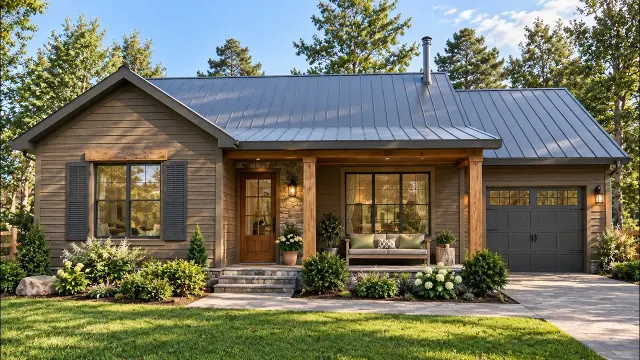
 Charming Rustic Small Home Design With Warm Wood Details
#Small Space Design
1 ideas
Charming Rustic Small Home Design With Warm Wood Details
Get new #Small Space Design ideas by email
Every Thursday: the week's best ideas, with the newest from #Small Space Design.
Related tags
Small Space Design Ideas and Principles
Small space design is the art of making limited square footage feel comfortable, practical, and beautiful. It is used in studios, compact apartments, tiny houses, small bedrooms, narrow hallways, and other rooms where every bit of space matters. The goal is not to make a room look bigger in a trick sense, but to help it work better and feel more open, orderly, and inviting.
What small space design focuses on
Good small space design begins with function. In a compact room, each item should earn its place. Furniture often needs to do more than one job, such as offering storage, folding away, or serving as a flexible surface. Clear walkways, simple arrangements, and a thoughtful scale are often more important than having many pieces.
Light also plays a major role. Pale walls can help reflect natural light, but darker colors can work too if they are used with care and balanced by enough contrast and light. Mirrors, sheer curtains, and uncluttered window areas can make a room feel airier. Just as important is keeping the eye from feeling crowded, which often means avoiding too many competing patterns or oversized accessories.
Read more
Common styles and approaches
Small spaces can suit many styles, from minimal and modern to rustic, traditional, or cozy eclectic. The best choice is usually the one that keeps the room visually calm while still feeling personal.
- Minimal styling uses clean lines, limited furniture, and hidden storage.
- Cozy styling relies on warm textures, layered lighting, and soft furnishings.
- Rustic styling brings in natural materials such as wood, woven baskets, and linen.
- Modern styling often uses streamlined shapes and a restrained palette.
- Transitional styling blends classic and contemporary elements for a balanced look.
No matter the style, consistency helps. Repeating a few materials, colors, or shapes can make a small room feel more unified.
Practical techniques for beginners
Start by measuring the room carefully. This helps you choose furniture that fits comfortably instead of crowding the space. It also helps to think in zones. Even one room can have a sleeping area, reading corner, work surface, or dining spot if each area is clearly arranged.
A few useful habits can make a big difference:
- Choose furniture with visible legs to keep the room feeling lighter.
- Use vertical space with shelves, tall storage, or hooks.
- Keep larger items simple and avoid too many small pieces.
- Store everyday things where you actually use them.
- Leave some empty surfaces so the room can breathe.
Lighting matters as much as storage. A mix of ambient light, task lighting, and softer accent light can make a small room feel more welcoming and usable throughout the day.
A calm, usable result
The best small space design feels easy to live with. It supports your routines, reduces visual clutter, and makes the room feel generous rather than cramped. When you choose pieces carefully and keep the layout thoughtful, even a very small room can feel polished, personal, and restful.
Videos come from YouTube and posts from Instagram; titles and summaries are our own. All rights belong to their creators.