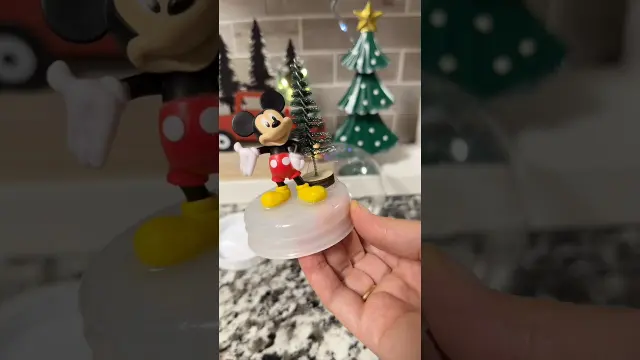
 Make Your Own Snow Globe With Dollar Tree Supplies
#Snow Globe
1 ideas
Make Your Own Snow Globe With Dollar Tree Supplies
Get new #Snow Globe ideas by email
Every Thursday: the week's best ideas, with the newest from #Snow Globe.
Related tags
Snow Globe Guide: History, Styles and How They Work
A snow globe is a sealed transparent sphere, usually glass, mounted on a base and filled with liquid. Inside sits a small scene — a house, a figure, a city skyline — along with a scattering of particles that swirl and settle when the globe is shaken. The charm lies in that brief moment of movement: a miniature world experiencing its own weather.
Where the idea comes from
Small decorative objects with moving particles inside liquid have appeared in various forms across Europe, but the snow globe as we recognise it took shape in the nineteenth century, when glassmaking and small-scale manufacturing made sealed ornamental domes practical. Early examples were often souvenirs of cities or monuments, and that association stuck: the snow globe remains a classic keepsake, sold in gift shops beside the landmarks it depicts.
The liquid matters more than it looks. Water alone allows particles to fall too quickly, so makers add a little glycerine to slow them down and give the flakes that drifting, suspended quality. The particles themselves are usually plastic or ceramic; older globes sometimes used bits of bone, porcelain or ground stone, which is one reason very old examples are treated gently.
Read more
The main kinds
Musical snow globes hide a small mechanism in the base, wound by hand or turned with a key, that plays a tune while the globe turns. Traditional decorative globes are purely visual, ranging from inexpensive novelty pieces to hand-blown glass with painted resin figures. There are also photo globes with a slot for a picture, and flat-backed or dome-shaped styles made with plastic instead of glass, which are common where children will be handling them.
What beginners should know
If you are making one yourself, the two hard parts are sealing and settling. Ordinary tap water can cloud over time, so many crafters use distilled water, and the base joint has to be watertight or the globe will leak. Glitter is the easiest particle to work with, though it tends to cling to the glass and to the figures; heavier flakes sink faster but read more clearly. Give a homemade globe a day to sit before judging it — both cloudiness and slow leaks tend to show up then.
If you are buying or keeping one, avoid storing it in direct sunlight, which fades the scene inside and can discolour the liquid, and never place a glass globe on a high shelf where it may be knocked. Dust the outside with a soft cloth rather than a spray aimed at the seal. A well-kept snow globe can last for decades, though the liquid will eventually evaporate slightly and the flakes will slow down — a small imperfection most collectors accept as part of its character.
#Snow Globe: frequently asked questions
How do I start making a snow globe at home?
Begin with a clean jar or glass dome that has a tight-fitting lid, since the seal is what makes or breaks the project. Attach your figure to the inside of the base with a waterproof adhesive, let it cure fully, then fill with liquid and add your particles before closing. Give it a full day to sit undisturbed before you judge the result, because cloudiness and slow leaks usually reveal themselves only after that settling period.
What liquid and particles work best inside a snow globe?
Distilled water is the usual choice because tap water can turn cloudy over time, and a small amount of glycerine is added to slow the fall of the particles so they drift instead of dropping straight down. Glitter is the easiest particle for a first attempt, though it tends to cling to the glass and to the figures inside. Heavier flakes sink faster but stay more visible as distinct shapes, so many makers mix a little of both.
Which kind of snow globe should I choose?
Think first about who will be handling it and where it will live. Musical globes hide a wind-up mechanism in the base and suit a gift or a display shelf, while flat-backed and dome-shaped plastic styles are the practical choice in a house with children. Photo globes with a slot for a picture make a more personal keepsake, and hand-blown glass is best reserved for a spot where it will not be knocked.
How should I care for a snow globe so it lasts?
Keep it out of direct sunlight, which fades the scene inside and can discolour the liquid, and avoid high shelves or edges where it might be knocked over. Dust the outside with a soft cloth rather than spraying cleaner near the seal, since the joint is the part most easily damaged. Expect the liquid to evaporate very gradually and the flakes to slow over time; most collectors treat that as character rather than damage.
What is a snow globe good for as a gift or decoration?
Its strength is as a small, self-contained scene that suits a landmark, a holiday, a birth, or a shared place that means something to the recipient. Because shaking it produces a moment of movement, it works well as a table centrepiece, a mantel piece, or a keepsake that gets picked up rather than simply looked at. A photo globe or one built around a personal figure turns it into something more than an ornament.
What are the most common mistakes when making a snow globe?
The two recurring failures are a seal that is not truly watertight and particles that were chosen without thinking about how they behave in liquid. Using ordinary tap water, gluing the figure in place without letting the adhesive cure, and judging the globe too soon are the usual culprits behind a cloudy or leaking result. Test the seal over a sink and wait before deciding it has gone wrong.
Videos come from YouTube and posts from Instagram; titles and summaries are our own. All rights belong to their creators.