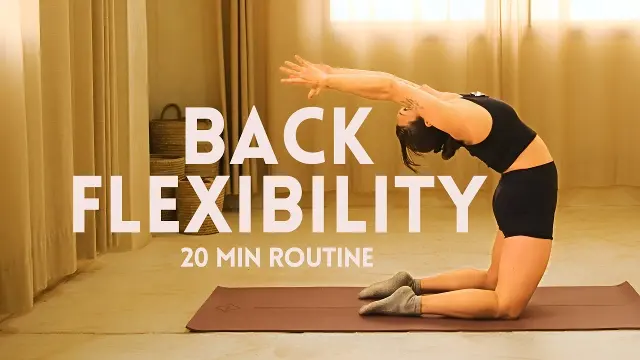
 Twenty Minute Back Flexibility and Spinal Mobility Routine
#Spinal Mobility
1 ideas
Twenty Minute Back Flexibility and Spinal Mobility Routine
Get new #Spinal Mobility ideas by email
Every Thursday: the week's best ideas, with the newest from #Spinal Mobility.
Related tags
Spinal Mobility Guide
Spinal mobility is the ability of your spine to move comfortably through bending, twisting, extending, and rounding. Your spine is designed to be both strong and flexible, and healthy movement helps you reach, turn, lift, and sit with less strain. Good mobility also supports balance, coordination, and everyday comfort.
What spinal mobility means
The spine is made up of many small bones, joints, discs, muscles, and ligaments working together. Mobility is not the same as flexibility alone. Flexibility is how far a muscle can stretch, while mobility is how well a joint can move with control. A mobile spine can shift smoothly in several directions without stiffness or compensation from the shoulders, hips, or lower back.
Why it matters
Read more
When your spine moves well, everyday tasks often feel easier. You may find it simpler to look over your shoulder, get up from the floor, bend to tie your shoes, or carry things with better control. Limited mobility can happen for many ordinary reasons, including long periods of sitting, repetitive movement, poor posture habits, stress, or simply not moving through a full range very often.
Common kinds of spinal movement
The spine usually moves in a few main ways:
- Flexion: rounding forward
- Extension: arching gently backward
- Rotation: twisting to either side
- Lateral flexion: side bending
A healthy routine often includes all of these in small, controlled amounts. You do not need extreme range to benefit. Smooth, pain-free movement is the goal.
How to improve it safely
Start with gentle, regular movement. Slow circles, cat-and-cow motions, seated twists, side bends, and controlled back extensions are common ways to explore spinal movement. Walking, swimming, dancing, and other varied activities can also help because they keep your body moving in many directions.
When you practice mobility work, keep the movement easy and unforced. Breathe steadily, move slowly, and avoid bouncing. It can help to warm up first, especially if you feel stiff in the morning or after sitting for a long time. A few minutes every day is often more useful than a long session done rarely.
Helpful habits for beginners
If you are new to spinal mobility work, begin with small ranges and good alignment. Notice whether the movement comes from your spine, hips, or shoulders, and try not to force one area to do all the work. Support your practice with basics such as standing up regularly, changing positions often, and paying attention to how you sit, lift, and sleep.
If a movement causes sharp pain, numbness, tingling, or dizziness, stop and get professional advice. Gentle mobility should feel like controlled movement, not strain.
A simple approach
Think of spinal mobility as a steady habit rather than a quick fix. A few mindful minutes each day can help you move with more ease, stay connected to your posture, and keep your spine feeling supple over time.
#Spinal Mobility: frequently asked questions
How do I start improving spinal mobility if I've never worked on it before?
Begin with small, easy ranges rather than reaching for a big stretch right away. Slow cat-and-cow motions, gentle seated twists and side bends let you explore how your spine moves, and a few mindful minutes done regularly tend to serve better than one long session. Warm up briefly first, especially if you feel stiff after sitting or first thing in the morning.
What do I need to practise spinal mobility at home?
Very little beyond some clear floor space, comfortable clothing and enough room to kneel or sit down. A mat is nice for comfort but not essential, and the movements themselves need no equipment. What matters more is steady breathing and moving slowly enough to notice what your spine, hips and shoulders are each doing.
Which kinds of spinal movement should a routine include?
A well-rounded routine touches on rounding forward, arching gently back, twisting to each side and side bending. You don't need a large range in any of them; smooth, controlled movement through all of these directions is the aim. Mixing in varied activity like walking, swimming or dancing helps too, because it keeps the spine moving in many ways without feeling like exercise.
What are the most common mistakes beginners make with spinal mobility?
Bouncing or pushing into the end of a range is one of the easiest habits to slip into, as is letting the lower back or shoulders do all the work. Another is doing one long session occasionally instead of short regular ones. Keep the movement unforced, breathe steadily, and if something feels sharp or brings numbness, tingling or dizziness, stop rather than push through.
How can I care for my spinal mobility in everyday life, not just during practice?
The habits around your practice matter as much as the practice itself. Standing up regularly, changing position often, and paying attention to how you sit, lift and sleep all give your spine more chances to move through its range. A short daily check-in with gentle movement keeps you connected to your posture between the busier parts of the day.
Can spinal mobility work fit into a busy day?
Yes, and short and frequent suits it well, which is handy when time is tight. A few minutes of slow circles, twists or side bends when you get up or between tasks is enough to keep the habit going. Treat it as a steady routine rather than a quick fix and it becomes easier to keep up over time.
Videos come from YouTube and posts from Instagram; titles and summaries are our own. All rights belong to their creators.