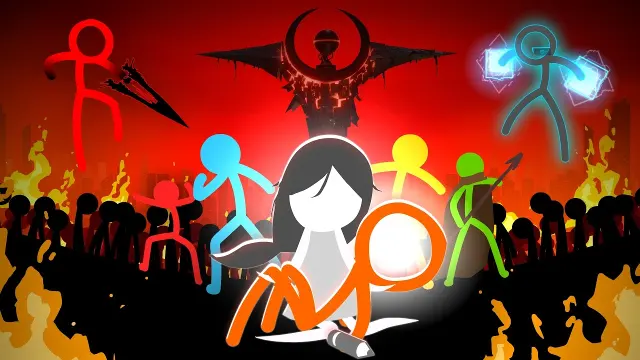
 Alan Becker's Animator vs. Animation: The Dark Age Episode
#Stick Figure Animation
1 ideas
Alan Becker's Animator vs. Animation: The Dark Age Episode
Get new #Stick Figure Animation ideas by email
Every Thursday: the week's best ideas, with the newest from #Stick Figure Animation.
Related tags
Stick Figure Animation: A Beginner's Guide
A stick figure is one of the oldest and most forgiving drawings a person can make: a circle for a head, a line for the spine, lines for arms and legs. Animation takes that simplest of marks and gives it time, weight and intention. Stick figure animation is the craft of making those lines move, and its appeal comes from the same place its name does — nothing is hidden behind detail, so everything the figure does has to read clearly.
The form has roots in flipbooks, chalkboard doodles and the earliest hand-drawn cartoons, where animators discovered that a few lines could carry a whole character. It grew alongside cheap, accessible tools: once simple programs let people drag and pose a jointed figure on a screen, animating stopped requiring drawing talent and started requiring timing instead. That shift is why the style has stayed so popular among hobbyists, teachers, students and storytellers.
The main styles
The first approach is frame-by-frame drawing. You redraw the figure slightly differently on each frame, either on paper, in a flipbook or with a digital drawing tool. It teaches animation from the ground up — spacing, arcs, squash and stretch — because every change has to be made by hand.
Read more
The second is puppet or rigged animation, where a single figure has joints you rotate and keyframe along a timeline. You pose the figure at chosen moments and the software fills in the movement between them. It is faster and more precise, and it makes long, complicated sequences practical.
Many animators mix the two, using a rig for the body and adding hand-drawn effects: dust, impact lines, weapon trails, explosions, or a figure that stretches and shatters in ways a jointed puppet cannot.
Starting out
Beginners usually underestimate timing and overestimate drawing. A stick figure walking badly is almost never a bad drawing — it is bad spacing. Two exercises help more than any tutorial: animate a simple bouncing ball until it feels weighted, and animate a figure sitting down and standing up, watching where the hips and shoulders lead. Study reference video frame by frame, and act movements out yourself.
Plan your scene with a few thumbnail sketches before animating, keep a consistent line thickness so the figure stays legible, and remember that a plain background makes the action clearer. When something looks wrong, slow it down and check the pose at each key moment rather than adding more frames.
Above all, finish short pieces. A ten-second scene that is complete teaches more than a minute-long idea that never gets past the opening. The style's honesty is its gift: with nothing to hide behind, every improvement you make is visible immediately.
#Stick Figure Animation: frequently asked questions
How do I start making stick figure animation if I can't really draw?
Drawing skill matters far less than timing here, because a stick figure needs only a circle and a few lines. Start with a simple practice loop — a bouncing ball, then a figure sitting down and standing up — so you feel where weight and momentum come from before you attempt a story. Once those feel natural, move on to short scenes you can actually finish.
Should I animate frame by frame or use a rigged puppet figure?
Frame-by-frame means redrawing the pose slightly differently each frame, and it teaches spacing, arcs and squash-and-stretch from the ground up because every change is yours to make. A rigged figure lets you rotate joints and set poses at chosen moments while the software fills in between, which is quicker and better suited to longer sequences. Many people use a rig for the body and add hand-drawn effects on top, since some impacts and distortions a jointed puppet simply can't do.
Why does my walk cycle look wrong even though the drawing is fine?
The problem is almost always spacing rather than the drawing itself — how far the limbs travel between frames, and where the slow-in and slow-out happen. Slow the playback down and check the pose at each key moment instead of piling on more frames to hide the issue. Acting the movement out yourself or studying reference footage frame by frame will show you the timing your eye is missing.
What should I prepare before animating a scene?
Sketch a few rough thumbnails first so you know the poses and the path of the action before you commit to frames. Keep your line thickness consistent and the background plain, since a stick figure has no detail to hide behind and a busy backdrop swallows the motion entirely. Setting that up front saves far more time than fixing a scene afterwards.
How long should my first animation be?
Shorter than you want it to be. A brief scene carried through to a finished state teaches you more than an ambitious idea that never gets past its opening, and finishing is a skill in itself. Build up a few small completed pieces before stretching to something longer.
What kinds of scenes work well for stick figure animation?
The style shines in action and physical comedy — chases, fights, falls and impact moments — because clear silhouettes read instantly and exaggeration is easy to see. It also suits teaching and explaining, where a plain figure demonstrates a movement or idea without distracting detail. Anything that depends on facial subtlety or fine texture is a harder fit.
Videos come from YouTube and posts from Instagram; titles and summaries are our own. All rights belong to their creators.