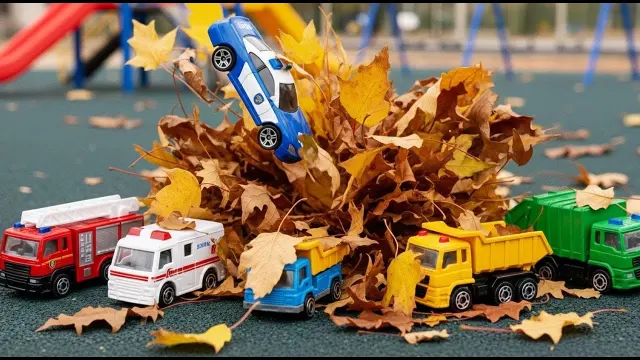
 Shape Hunt Adventure with Toy Cars and Trucks
#Stop Motion
1 ideas
Shape Hunt Adventure with Toy Cars and Trucks
Get new #Stop Motion ideas by email
Every Thursday: the week's best ideas, with the newest from #Stop Motion.
Related tags
Stop Motion: an easy guide to animated still images
Stop motion is a filmmaking technique that makes still objects appear to move by photographing them one frame at a time. Between each photo, the object is changed a little, so when the images are played in sequence, the motion looks smooth and alive. It is one of the oldest forms of animation and has been used with paper, clay, toys, cut-outs, puppets, and everyday objects.
What stop motion is
At its simplest, stop motion is about patience and small changes. You place an object in a scene, take a photo, move it slightly, take another photo, and repeat. The viewer does not see the pauses between frames, only the finished movement. Because of that, stop motion can make ordinary things feel playful, magical, or strangely real.
This technique is used in short films, commercials, music videos, educational clips, and creative social media content. It is also popular with hobbyists because it can be done on a small scale at home with simple tools.
Read more
Common styles
There are several well-known kinds of stop motion, and each has its own look:
- Clay animation: figures are modeled from clay or similar material and reshaped frame by frame.
- Puppet animation: built characters with internal armatures are posed and photographed.
- Cut-out animation: flat paper or card shapes are moved across a background.
- Object animation: everyday items are animated, such as toys, kitchen objects, or tools.
- Pixelation: real people are moved in tiny steps between frames to create an unusual, staccato effect.
The material you choose affects the mood of the final piece. Clay can feel soft and expressive, while cut-outs often look graphic and playful. Objects from daily life can make the animation feel familiar and surprising at the same time.
What beginners should know
The most important idea in stop motion is consistency. A camera that stays in one position, steady lighting, and a planned scene make a big difference. Even small changes in light or camera angle can make the animation look shaky.
It also helps to think in simple movements. A character does not need to do too much at once. Small actions, like turning, reaching, jumping, or rolling, are easier to control and usually look more natural. Storyboards or quick sketches can help you plan the action before you begin.
Practical tips
- Use a fixed camera so the frame does not shift.
- Keep lighting steady from start to finish.
- Move objects in very small steps.
- Take test frames before you begin the full sequence.
- Use a simple background so the motion is easy to follow.
- If your scene is delicate, use removable supports or hidden props to hold poses.
Stop motion works best when you embrace its handmade quality. Tiny imperfections can add charm, and the slight texture of the process is often part of its appeal. If you are new to it, start with a short scene and a simple subject. Once you understand the rhythm, you can experiment with more detailed characters, richer sets, and more complex movement.
Videos come from YouTube and posts from Instagram; titles and summaries are our own. All rights belong to their creators.