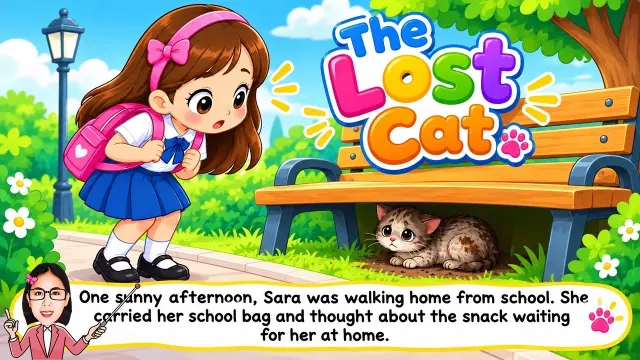
 Easy Story Reading Practice for Kids: The Lost Cat
#Story Reading
2 ideas
Easy Story Reading Practice for Kids: The Lost Cat
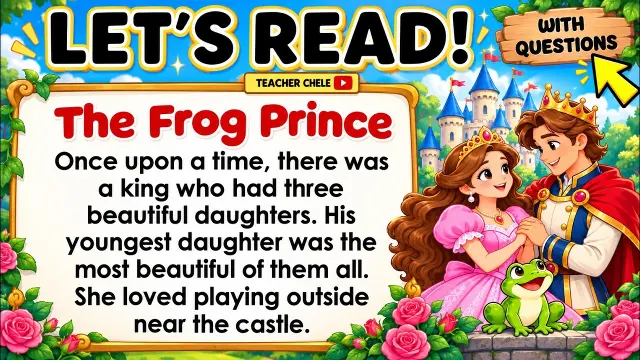 The Frog Prince: Reading Practice with Questions for Grades 4 to 6
Get new #Story Reading ideas by email
Every Thursday: the week's best ideas, with the newest from #Story Reading.
Related tags
Story Reading: A Gentle Guide for Families
Story reading is the simple act of reading a story aloud or alongside someone else, and it is one of the oldest ways people pass on language, comfort and imagination. Long before books were common, stories travelled by voice — around fires, at bedsides, in kitchens — and the habit of listening to a tale told well has never really left us. Today story reading usually means an adult and a child sharing a book, but the same idea works between friends, in classrooms, in libraries and between older and younger siblings.
What it looks like in practice
Story reading is not the same as teaching a child to decode words, though the two support each other. When you read a story to a child, they hear the rhythm of sentences, meet words they would not yet read alone, and follow a plot from beginning to end. When a child reads to you, they practise sounding out, pacing and expression. Both are forms of story reading, and both are worth making room for.
There are a few common shapes it takes:
Read more
- Read-aloud: an adult reads while the child listens and looks at the pictures.
- Shared reading: both look at the same book, with the child joining in on repeated lines.
- Paired reading: a confident reader and a newer reader take turns, or read together in unison.
- Independent reading: the child reads alone, with an adult nearby for questions.
Choosing a story
The best story is usually the one the reader wants to return to. Folk tales and fairy tales endure because their plots are clear and their language is memorable. Picture books give younger children something to look at while they listen. Short chapter books suit children who can hold a story in mind across several sittings. Riddles, fables and pourquoi tales — stories that explain why the leopard has spots, say — are useful because they are short and invite guessing.
For beginners, look for a clear storyline, a limited cast of characters, and sentences that can be read in one breath. Length matters less than momentum.
Practical tips
- Read the story to yourself first, so you know where the surprises are.
- Slow down. Pauses give a listener time to picture what is happening.
- Use different voices for different characters, even badly. It is not a performance.
- Stop and ask what might happen next, rather than what happened.
- Let the child interrupt. Questions are the point, not an interruption.
- Reread favourites as often as they ask. Repetition is how fluency grows.
- Keep sessions short enough to end while everyone still wants more.
Making it a habit
A fixed, modest moment works better than an ambitious one. Ten minutes at bedtime, a story after lunch, a Saturday morning chapter — small routines survive busy weeks. Keep something to read within reach, in the car, the bag, the room where you sit together. And let children see you reading for your own pleasure; the example does more than the instruction.
Above all, story reading should feel like company rather than a lesson. A child who remembers being read to warmly tends to come back to books on their own.
#Story Reading: frequently asked questions
How do I start story reading with a child?
Begin with a short, lively story you both enjoy rather than a long one you feel you should finish. Read it to yourself once first so you know where the surprises are, then read it aloud slowly, letting the child look at the pictures and jump in with questions.
What do I need to have on hand for story reading?
Nothing elaborate is required beyond something to read and a comfortable place to sit together. Keep a book or two within easy reach — in a bag, the car, or the room where you gather — so a story is always an arm's length away.
Which kind of story should I choose: picture books, fairy tales, or short chapter books?
Pick according to how much the listener can hold in mind and how much they want to look while they listen. Folk and fairy tales work well because their plots are clear and their language sticks, picture books suit younger children, and short chapter books suit those ready to carry a story across several sittings. A story the reader wants to return to usually beats the one that looks most educational.
What are common mistakes to avoid when reading aloud?
Rushing is the most frequent one — pauses are what let a listener picture the scene, and different voices for characters help even if they sound silly. Another is treating a child's interruptions as a disruption and turning the moment into a quiz; questions about what might happen next keep them curious where questions about what already happened do not.
How do I make story reading a regular habit?
Choose a fixed, modest slot — a bedtime story, a chapter after lunch, a quiet weekend morning — since a small routine survives busy weeks far better than an ambitious one. Let children see you reading for your own pleasure too, because the example does more than the instruction.
How can story reading support a child who is learning to read?
It works alongside decoding practice rather than replacing it: listening lets a child hear sentence rhythm and meet words they could not yet read alone, while reading aloud to you builds pacing and expression. Taking turns, or reading the same lines together, gives a newer reader support without pressure.
Videos come from YouTube and posts from Instagram; titles and summaries are our own. All rights belong to their creators.