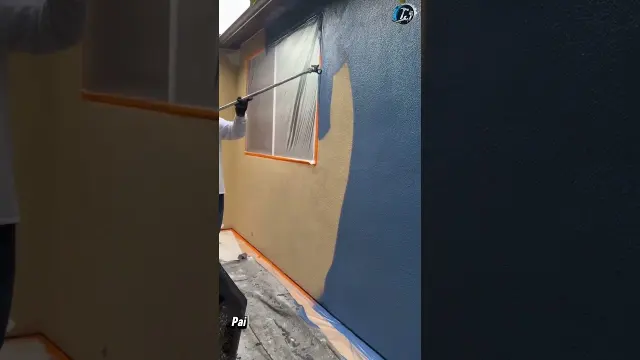
 Spray Painting a Stucco Exterior Wall Blue
#Stucco
1 ideas
Spray Painting a Stucco Exterior Wall Blue
Get new #Stucco ideas by email
Every Thursday: the week's best ideas, with the newest from #Stucco.
Related tags
Stucco: A Guide to Textured Exterior Walls
Stucco is a plaster made from a binder, sand and water, trowelled onto walls and ceilings both inside and out. The word comes from the Italian *stucco*, and the technique has been around for millennia: the Romans used lime plaster to face masonry, and variations of it spread across the Mediterranean, the Middle East and northern Europe. What unites all of them is the idea of a hard, continuous skin that protects whatever sits underneath and can be shaped, textured and coloured while it is still soft. In many places stucco means the cement-based render on the outside of a house; in others it refers to the finer decorative plaster used indoors.
How it is built up
Traditional stucco goes on in layers. The first coat is scratched with a comb-like tool so the next one grips; the second, or brown coat, builds thickness; the third is the finish. Between the wall and the plaster sits a metal lath or a masonry surface, and near the ground a weep screed lets moisture escape. Control joints break large areas into panels so the plaster can move without cracking. Getting these basics right matters more than the finish: most stucco problems begin with water that could not get out.
Main kinds and finishes
Read more
Cement stucco is the familiar hard, mineral render. Acrylic and other polymer-modified renders are applied in thinner coats and stay slightly more flexible. Synthetic systems built over insulation boards give a similar look with added thermal performance. Finishes range from the smooth, polished trowel of Mediterranean houses to sand float, a grainy surface made by rubbing with a float, and dash finishes, where material is flicked on to leave a rough, spattered texture. Colour usually comes from pigment mixed into the finish coat, though limewash and masonry paint are common too.
If you are starting out
Stucco rewards patience and punishes haste. Do not apply it in strong sun, wind or frost, and give each coat time to set before the next. Fresh stucco should be kept damp and shaded for a few days so it cures rather than dries out too fast.
For repairs, small hairline cracks can be filled with a flexible filler; anything wider or recurring is worth investigating for water behind the wall. When you paint stucco, choose a breathable masonry coating rather than a glossy, sealing one, and let new render cure for several weeks first — its surface stays alkaline and can affect some paints. Elastomeric coatings can bridge fine cracks but trap moisture, so only use them where the wall is sound and dry.
Finally, look after the details. Keep gutters clear, direct downpipes away from the wall, and trim plants back from the surface. A stucco wall that stays dry and can breathe will last a very long time.
#Stucco: frequently asked questions
What do I need to know before starting a stucco project for the first time?
Stucco is a mix of binder, sand and water that is trowelled on in layers, and it forgives neither haste nor bad weather. Work in mild conditions rather than strong sun, wind or frost, and let each coat set before adding the next. Keep fresh work damp and shaded while it cures instead of letting it dry out quickly.
Which type of stucco should I choose for my wall?
Cement-based stucco gives the hard, mineral render most people picture on an exterior, while acrylic and polymer-modified renders go on thinner and stay a little more flexible. Synthetic systems over insulation boards look similar and add thermal performance. Match the choice to the surface and the exposure, since the finish matters far less than whether moisture can escape.
How do I care for a stucco wall so it lasts?
Most lasting problems come from water that had no way out, so keep gutters clear, send downpipes away from the wall and trim plants back from the surface. Small hairline cracks can be filled with a flexible filler, but wider or recurring ones are worth checking for moisture behind the plaster. If you paint, use a breathable masonry coating rather than a glossy sealing one.
What are the most common mistakes people make with stucco?
The classic errors are rushing the coats, working in the wrong weather, and sealing the surface with something that traps moisture. Skipping the details underneath — the scratched base coat, the lath or masonry backing, the weep screed and the control joints — causes more trouble than any finish choice. Painting new render too early is another frequent one, since the surface stays alkaline for a while.
Can I paint or refresh a stucco wall myself?
Yes, provided the wall is sound and dry and the coating you pick can breathe. Let new render cure for a good stretch before painting, because its alkaline surface can react with some paints. Elastomeric coatings will bridge fine cracks but also hold moisture in, so reserve them for walls that are genuinely dry.
What finishes are available for stucco?
Finishes run from the smooth, polished trowel of Mediterranean houses to sand float, a grainy surface rubbed with a float, and dash finishes flicked on to leave a rough spatter. Colour usually comes from pigment mixed into the finish coat, though limewash and masonry paint are also widely used. Texture and colour are decided while the material is still soft, so plan them before you start.
Videos come from YouTube and posts from Instagram; titles and summaries are our own. All rights belong to their creators.