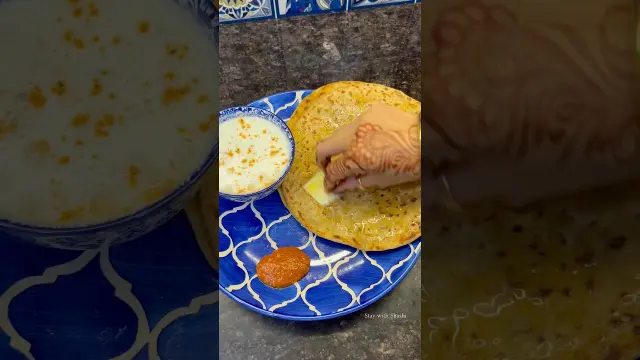
 Stuffed Chole Paneer Paratha Recipe
#Stuffed Paratha
1 ideas
Stuffed Chole Paneer Paratha Recipe
Get new #Stuffed Paratha ideas by email
Every Thursday: the week's best ideas, with the newest from #Stuffed Paratha.
Related tags
Stuffed Paratha Guide
Stuffed paratha is a traditional Indian flatbread made by enclosing a savoury filling inside dough and cooking it on a hot griddle until golden. It is especially popular as a hearty breakfast or lunch, but it can be eaten at any time of day. The idea is simple: soft dough, a seasoned filling, and careful rolling or sealing so the filling stays inside while cooking.
What stuffed paratha is
Paratha itself is an unleavened flatbread, usually made with wheat flour. A stuffed paratha takes that basic bread and turns it into a fuller meal by adding a filling before cooking. Common fillings include mashed vegetables, fresh cheese, lentils, herbs, or spiced mixtures of grains and legumes. The result is comforting, filling, and highly adaptable to what you have on hand.
Stuffed parathas are found in many home kitchens across the Indian subcontinent, especially in North Indian cooking, where they are often served with curd, pickle, butter, chutney, or a simple vegetable side. They are valued for being practical as much as delicious, since they can make a modest set of ingredients feel substantial and satisfying.
Read more
Common types of stuffing
There are many kinds of stuffed paratha, and the filling usually reflects local taste and household tradition. Some familiar versions include:
- Potato stuffing, often seasoned with spices and herbs
- Cauliflower stuffing, grated and lightly cooked or sautéed
- Paneer stuffing, crumbly fresh cheese mixed with spices
- Radish or mixed vegetable stuffing
- Lentil or pulse-based stuffing
- Greens or herb-based fillings
You can also combine ingredients, as long as the filling is not too wet. A dry or well-drained filling is easier to seal and roll.
How it is made
The basic process is to prepare a soft dough, shape it into small rounds, add the filling, seal the dough around it, and roll it out gently. Then the paratha is cooked on a hot griddle or pan with a little oil or ghee until both sides are well cooked and spotted with browning.
For beginners, the main skill is balance. Too much filling can make the bread tear, while too little may leave the paratha flat and uneven. It helps to begin with a small amount of filling and seal the edges carefully. If the dough springs back while rolling, let it rest a little longer before trying again.
Practical tips
- Keep the dough soft and smooth, not stiff
- Make the filling cool before stuffing, especially if it has been cooked
- Avoid excess moisture in the filling
- Roll gently and evenly, using light pressure
- Cook on medium heat so the inside cooks through without burning the outside
Stuffed paratha is also forgiving. If it is not perfectly round or the filling is slightly uneven, it can still taste wonderful. In home cooking, that part of its charm is often welcome.
Serving ideas
Serve stuffed paratha warm, fresh from the pan. It pairs well with plain yoghurt, tangy pickles, chutney, or a simple curry. Because it is already substantial, it can stand alone as a meal, especially when you want something comforting and homemade.
Videos come from YouTube and posts from Instagram; titles and summaries are our own. All rights belong to their creators.