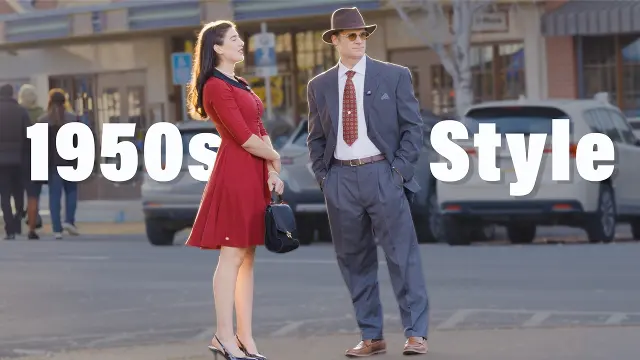
 What Happened When I Dressed Like a 1950s Man for a Week
#Style Experiment
1 ideas
What Happened When I Dressed Like a 1950s Man for a Week
Get new #Style Experiment ideas by email
Every Thursday: the week's best ideas, with the newest from #Style Experiment.
Related tags
#Style Experiment: A Guide to Trying New Looks
A style experiment is a deliberate, temporary change in how you dress, made to see how a different look feels before you commit to it. Rather than buying a whole new wardrobe, you borrow a set of rules — from a decade, a character, a colour palette, a profession — and live inside them for a while. The point is curiosity, not transformation. You are gathering information about yourself.
Where the idea comes from
Dressing up as someone else is as old as clothing itself: costumes, uniforms, and borrowed jackets have always been a way of testing a role. What is newer is treating it as a private exercise. Fashion students sketch and rework silhouettes, theatre performers live in a costume for weeks, and many people discover their own taste by first imitating someone whose look they admire. The experiment simply gives that instinct a start and an end date.
Kinds of experiments you can run
Read more
- The era week: dress in the shapes and habits of one decade for seven days, using only what you already own or can borrow.
- The single-colour trial: build outfits from one palette to see how it changes your mood and your mornings.
- The uniform test: choose one simple formula — same silhouette, different colours — and repeat it until it feels natural.
- The character study: dress as a version of yourself you would like to be, confident or understated or bold.
- The subtraction experiment: remove one habit, such as denim or black, and notice what fills the gap.
What beginners should know
Set a boundary before you start. A week or a fortnight is usually enough to learn something, and a clear end date keeps the exercise playful. Work with what you own first: most experiments need rearranging, not shopping. Keep a small notebook or a folder of photos, and note not just what you wore but how you felt — comfortable, invisible, exposed, delighted. That emotional record is the real result.
Take one element rather than the whole costume. If you are drawn to a theatrical look, try its collar or its colour in ordinary clothes. This makes the experiment wearable and teaches you which detail actually appeals.
Expect awkwardness in the middle. Unfamiliar clothes feel wrong before they feel like yours, and that discomfort is not proof you have made a mistake.
Finish by deciding what stays. One habit, one colour, one shape carried into your normal wardrobe is a good outcome. A style experiment is not a test you can fail; it is a short, safe way of asking yourself what you would like to wear if nobody were watching.
#Style Experiment: frequently asked questions
How do I start a style experiment without buying anything new?
Pick one simple rule to live inside — a decade, a single colour, a profession, a character — and set a clear end date so the exercise stays playful. Then go through what you already own and rearrange it to fit that rule before you consider shopping. Most experiments only need reorganising, not new clothes.
What do I actually need to run one?
You need a borrowed set of rules, a short fixed period, and a way to record how it felt. A notebook or a folder of photos works well. The written part matters more than the outfit, because noting comfortable, exposed or delighted is where the real information about yourself shows up.
Which kind of style experiment should I choose?
Choose the one whose question you are genuinely curious about: an era week if you like shapes and habits, a single-colour trial if your mornings feel chaotic, a uniform formula if you want to stop deciding. If you are drawn to something theatrical, take just one element of it rather than the whole costume. That keeps the experiment wearable and shows you which detail actually appeals.
How do I keep the results after the experiment ends?
Finish by deciding what stays, and treat one carried-over habit, colour or shape as a success. Fold that single element into your ordinary wardrobe and drop the rest without guilt. The experiment was there to gather information, not to be maintained as a whole performance.
Why does it feel wrong in the middle of the experiment?
Unfamiliar clothes almost always feel like a costume before they feel like yours, and that awkward stage is normal. Discomfort is not proof you picked badly — it is simply what adjusting to a new silhouette feels like. Give it the full period before you judge.
What are the most common mistakes?
The usual pitfalls are buying a whole new wardrobe, running the experiment with no end date, and copying an entire look instead of borrowing one element. Another is judging only the mirror and never writing down how the outfit made you feel. A style experiment is not a test you can fail, so keep it short, cheap and reversible.
Videos come from YouTube and posts from Instagram; titles and summaries are our own. All rights belong to their creators.