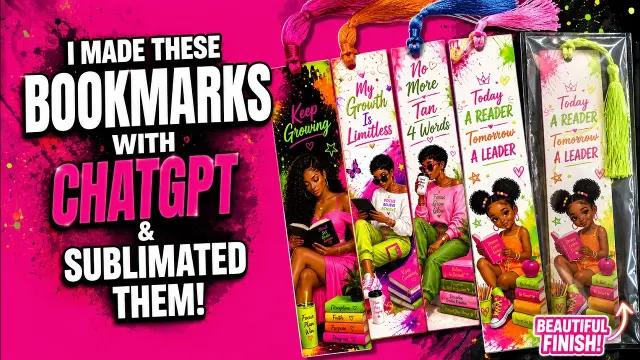
 Sublimation Bookmarks Made With AI Art and Blank MDF
#Sublimation Crafts
1 ideas
Sublimation Bookmarks Made With AI Art and Blank MDF
Get new #Sublimation Crafts ideas by email
Every Thursday: the week's best ideas, with the newest from #Sublimation Crafts.
Related tags
Sublimation Crafts: A Beginner's Guide to Dye Sublimation
Sublimation is a printing method in which a design is turned into a gas and absorbed directly into the surface of a material, rather than sitting on top of it as a layer of ink or vinyl. The word describes the change of state itself: a solid becomes a gas without passing through a liquid stage. In crafting, a special ink is printed onto paper, then heat and pressure release it as vapour that bonds with the material's surface. When the item cools, the image is locked in.
What makes it different
Because the colour sinks into the surface, sublimated pieces have no raised feel, no edges to peel, and no film to lift in the wash. The trade-off is that it only works on the right surfaces. The process needs a receptive layer to hold the dye, which is why polyester fabrics and specially coated hard blanks are the standard options. Cotton and uncoated ceramics resist it, and the dye will not take.
The basic process
Read more
The workflow is consistent whatever you are making. Print your design in mirror image onto sublimation paper, because the paper is flipped face down onto the blank. Trim away excess paper and secure it with heat-resistant tape so nothing shifts and produces a ghosted double image. Add a protective sheet over the paper to shield your press, then apply heat and pressure for the time your blank requires. Remove the item while hot, peel the paper away carefully, and let it cool flat.
Kinds of projects
Soft goods are the most common starting point: polyester garments, tote bags, cushion covers, aprons, and fabric for sewing. Hard blanks cover a huge range of gift items — mugs and tumblers with a coating applied, phone cases, mousepads, keyrings, bookmarks, coasters, plaques, and flat boards. Some crafters wrap blanks with a shrink film and heat them in an oven instead of a press, which suits rounded or irregular shapes. Small pieces of fabric can also be sublimated and then stitched into patchwork.
What beginners should know
Every blank has its own recommended temperature and time, and the maker's guidance is the place to start. Too little heat gives weak, washed-out colour; too much can scorch or yellow. Pressure matters as much as temperature — uneven pressure shows up as pale patches at the edges. Keep a lint roller nearby, since a single fibre trapped under the paper becomes a permanent flaw. Press on a firm, heat-resistant surface and work in a ventilated room, handling a hot press with care.
Choose blanks described as sublimation-ready rather than assuming an ordinary plain item will accept dye. Test on a spare piece before committing a full batch. Expect colours to shift slightly from screen to finished piece, and let your first attempts be practice rather than perfection.
Videos come from YouTube and posts from Instagram; titles and summaries are our own. All rights belong to their creators.