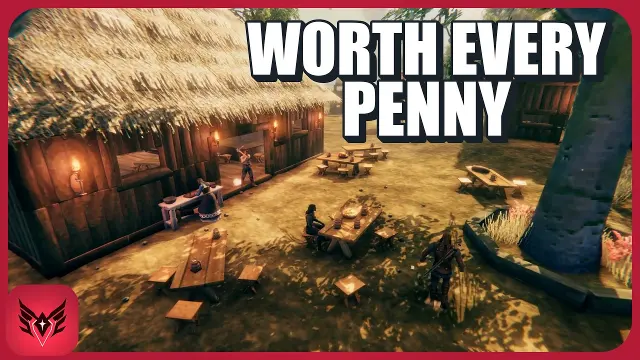
 Ten Survival and Base-Building Games Compared on Price and Playtime
#Survival Games
1 ideas
Ten Survival and Base-Building Games Compared on Price and Playtime
Get new #Survival Games ideas by email
Every Thursday: the week's best ideas, with the newest from #Survival Games.
Related tags
Survival Games: A Beginner's Guide to the Genre
Survival games are a broad family of video games built around a single question: can you keep your character alive in a place that is not on your side? You usually begin with empty hands — no map, no shelter, no supplies — and the world around you is indifferent at best. Everything you need has to be found, harvested, or made. That simple premise has produced one of the most varied and durable kinds of game around, and it is why so many players describe the genre by the stories it creates rather than by its rules.
The core loop
Most survival games share a rhythm. You explore to find resources, you use those resources to craft tools and shelter, and you spend those tools on exploring further. Layered on top are needs: hunger, thirst, warmth, rest, sometimes injury or illness, all ticking down while you work. A day and night cycle usually decides when the world becomes more dangerous, so shelter and light stop being luxuries and start being the point.
The tension comes from scarcity. Carrying capacity is limited, tools wear out, and every trip further from camp costs you something. Many games add a threat that escalates over time, so the quiet early hours are a grace period rather than the whole experience.
Read more
The main flavours
- Open-world sandbox survival, where building and exploring are the reward and the game rarely ends.
- Hardcore survival with permadeath, where one lost character means starting over completely.
- Co-op survival, built for small groups who divide the work of gathering, building and defending.
- Story-driven survival, which uses the mechanics as pressure behind a narrative you follow.
- PvP survival, where other players are the main danger and trust is a resource of its own.
What beginners should know
Start on an easier setting. There is no prize for learning the whole system while starving. Read the crafting menu early — the recipes tell you what the designers expect you to do first. Build small and close before you build beautiful; a modest shelter near resources beats a fortress you cannot reach. Keep a routine: gather in daylight, return before dark, store spares rather than carrying them. Resist the urge to hoard everything, since inventory space is usually the real limit.
Above all, accept losing progress. Death, damage and rebuilding are not failures in this genre; they are the game's main engine of drama. The base you lost is a story you will tell, and the next one will be better placed.
#Survival Games: frequently asked questions
How do I get started in a survival game without dying immediately?
Pick the gentler difficulty and spend your first sessions learning the basics rather than chasing distance. Read through the crafting list early, because the recipes there quietly tell you what the game expects you to build first. Gather close to where you plan to sleep, and head back before the light goes.
What do I actually need before I can survive on my own?
The essentials are always the same shape: something to drink, something to eat, warmth or shelter for the night, and a tool that lets you gather faster. Get a modest base near your resources before you worry about making it look good. Spare supplies stored at home matter more than the gear you carry, since you will lose what is on you sooner or later.
Which kind of survival game should I choose?
If you enjoy building and wandering without an ending, an open sandbox will suit you best. If you want company and shared work, look at co-op, where gathering, building and defending split naturally between people. Story-driven titles are the better pick when you want a reason to keep going, while permadeath and player-versus-player modes reward people who enjoy real risk.
How do I keep a run going once the world starts getting more dangerous?
Treat nightfall as a deadline and build a routine around it: gather while it is light, return with time to spare, and use the dark for crafting and sorting. Repair and replace tools before they break rather than after, and keep spares at base instead of hauling everything with you. Once the pressure ramps up, the goal shifts from expanding to consolidating what you already hold.
What makes a good group session for friends?
Co-op survival works best when people take clear roles, so decide early who gathers, who builds and who keeps watch. Agree on where home is and what gets stored there, because a shared base collapses quickly when nobody owns the stockpile. A short session with a specific aim, like securing a water source or finishing a wall, feels far better than everyone wandering separately.
What are the most common beginner mistakes?
Hoarding is the big one, since inventory space is usually the tighter limit and carrying everything means losing it all at once. The other is building too large too early, ending up with a place that looks impressive but sits far from anything useful. And treating a death as a failure rather than as the thing the genre is actually made of will make the whole experience frustrating.
Videos come from YouTube and posts from Instagram; titles and summaries are our own. All rights belong to their creators.