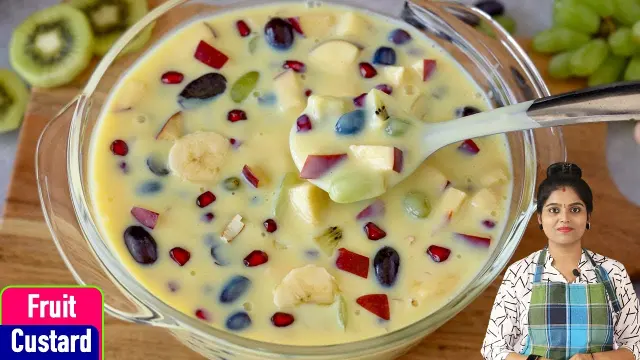
 Quick and Easy Homemade Mixed Fruit Custard
#Sweet Recipes
1 ideas
Quick and Easy Homemade Mixed Fruit Custard
Get new #Sweet Recipes ideas by email
Every Thursday: the week's best ideas, with the newest from #Sweet Recipes.
Related tags
Sweet Recipes: A Beginner's Guide to Making Desserts
Sweet recipes are dishes built around sugar and the pleasure of eating something sweet — usually served at the end of a meal, but just as often made for a celebration, an afternoon treat or a small comfort on an ordinary day. Almost every cuisine has its own sweet tradition, and those traditions differ widely: some lean on dairy and eggs, some on nuts and honey, some on rice, some on fruit alone. What they share is a structure — sweetness balanced by texture, aroma and a little acidity or salt.
The Main Kinds of Sweet Recipes
Most sweet dishes fall into a handful of families, and learning to recognise them makes recipes much easier to read.
- Baked desserts: cakes, tarts, cookies, pies and quick breads. These depend on accurate measuring and a reliable oven temperature.
- Creamed and chilled desserts: custards, puddings, mousses, ice creams and set creams. These depend on gentle heat and enough chilling time.
- Fruit-based desserts: compotes, fruit salads, baked fruit and fruit custards. These are often the simplest and the most forgiving.
- Fried and syrup-soaked sweets: pastries, fritters and syruped cakes, common across the Mediterranean, the Middle East and South Asia.
- Confectionery: caramels, fudges, brittles and sugar syrups, where the temperature of the sugar is the whole craft.
Read more
What Beginners Should Know
The single most useful skill in sweet cooking is weighing rather than guessing. Baking in particular is closer to chemistry than to cooking: the ratio of flour to fat to liquid to egg decides whether a cake rises or sinks, and small errors compound. A digital scale and a set of measuring spoons remove most of the uncertainty.
Sugar also behaves in ways worth understanding early. It dissolves in liquid, browns when heated, and crystallises when stirred at the wrong moment. Recipes that ask you not to stir a syrup mean it.
Eggs, butter and dairy are usually easier to work with at room temperature, unless a recipe specifically calls for them cold. And when a recipe says to chill the dough or the mixture, the waiting is not optional — it affects both texture and shape.
Practical Tips
Read the whole recipe before starting, and set out your ingredients first. Sweet dishes often move quickly once heat is involved, and there is no time to hunt for the vanilla.
Reduce sugar cautiously rather than drastically. Sugar does more than sweeten: it holds moisture, tenderises, browns and stabilises. Cutting it too far changes the result.
Taste as you go, especially with custards and fruit. A pinch of salt or a squeeze of lemon often does more for a sweet dish than another spoon of sugar.
Let baked goods cool before cutting them. Many desserts finish setting as they cool, and a warm cake will tear.
Finally, keep a small notebook of what you made and what you would change. Sweet recipes reward repetition more than almost any other kind of cooking, and the same recipe made three times will teach you more than three new ones.
#Sweet Recipes: frequently asked questions
How do I start making sweet recipes if I've never baked before?
Begin with the simplest family: fruit-based desserts such as a compote, baked fruit or a mixed fruit custard, since they are forgiving and don't depend on precise ratios. Once you're comfortable reading a recipe through and setting out ingredients in advance, move on to baked or chilled desserts. Repeating the same easy recipe a few times teaches you more than jumping between many new ones.
Do I really need a kitchen scale for dessert recipes?
It helps more than any other single tool, because sweet cooking depends on the balance of flour, fat, liquid and egg rather than on taste as you go. Weighing removes the guesswork that measuring by volume leaves behind, and small errors add up quickly in baking. A digital scale plus a set of measuring spoons covers almost everything a beginner needs.
Which kind of sweet recipe should I choose for a celebration?
It depends on how much time and oven space you have: a baked dessert such as a tart or cake suits a sit-down meal, while chilled desserts and confectionery can be made ahead and served without last-minute work. Fried, syrup-soaked sweets are a good choice when you want something generous and shareable. Pick the family that matches your schedule rather than the most impressive-looking photo.
Can I cut down the sugar in a dessert to make it lighter?
You can, but do it gradually, because sugar does more than sweeten — it holds moisture, tenderises, browns and stabilises the mixture. Removing too much at once changes both texture and colour, and in syrups or confectionery it can stop the recipe working altogether. Taste as you go and try a pinch of salt or a squeeze of lemon before reaching for another spoon of sugar.
Why do recipes tell me to chill the dough or let the cake cool before cutting?
Chilling is part of the recipe, not a pause: it firms the fat so the dough keeps its shape and gives a better texture once baked. Likewise, many desserts carry on setting as they cool, so cutting early will tear a warm cake or leave a custard looking loose. The waiting is usually the cheapest improvement you can make.
What are the most common mistakes beginners make with sweet recipes?
The usual ones are guessing at quantities, skipping the step about not stirring a syrup, and starting before reading the recipe to the end. Using cold eggs or butter when the recipe expects room temperature, and cutting into baked goods too soon, are close behind. Keeping a short note of what you made and what you'd change next time is the quickest way to stop repeating them.
Videos come from YouTube and posts from Instagram; titles and summaries are our own. All rights belong to their creators.