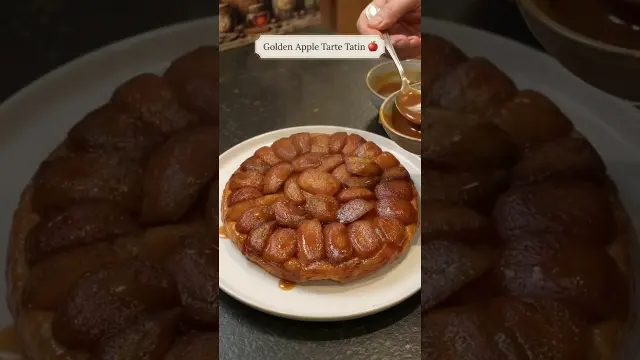
 Simple Classic French Apple Tarte Tatin
#Tarte Tatin
1 ideas
Simple Classic French Apple Tarte Tatin
Get new #Tarte Tatin ideas by email
Every Thursday: the week's best ideas, with the newest from #Tarte Tatin.
Related tags
Tarte Tatin: The Classic Upside-Down Tart
What tarte Tatin is
Tarte Tatin is a classic French upside-down tart, best known for its glossy caramelised fruit topping and crisp pastry base. It is usually made with apples, though other fruits can be used in similar ways. The filling is cooked with sugar and butter so it softens and turns richly caramelised before the pastry is placed on top and baked. When the tart is turned out after baking, the fruit sits on top in a shiny layer and the pastry underneath holds everything together.
The dessert is loved for the contrast it creates: soft fruit, deep caramel flavour, and a pastry shell that stays firm enough to slice neatly. It is often served warm, sometimes with cream, custard, or ice cream, but it is just as good on its own.
Where it comes from
Read more
Tarte Tatin is associated with French home cooking and the kind of baking that turns simple ingredients into something memorable. It belongs to a tradition of fruit tarts and desserts made with butter, sugar, and pastry, but its upside-down method gives it a distinctive character. That method is what makes it different from a standard tart: the fruit cooks first, then the pastry finishes the dish in the oven.
Main ingredients and variations
The most familiar version uses apples that hold their shape well when cooked. Slightly firm, not overly juicy fruit works best because it softens without collapsing into a puree. Sugar and butter form the caramel, while pastry gives the tart structure. Some versions use puff pastry for a lighter, flaky result; others use shortcrust pastry for a firmer, more biscuit-like base.
You can also find tarte Tatin made with pears, apricots, peaches, plums, or even savoury ingredients in some kitchens. The principle stays the same: fruit is cooked in caramel, topped with pastry, baked, and inverted.
How it is made
A good tarte Tatin depends on careful caramelising. The fruit is arranged in the pan with sugar and butter, then cooked until it begins to soften and take on colour. The pastry is then laid over the fruit and tucked in around the edges. During baking, the juices and caramel bubble gently beneath the pastry, infusing it with flavour.
The turning-out step matters as much as the baking. The tart should rest briefly after coming out of the oven, then be inverted while still warm so the caramel loosens and the fruit releases cleanly. If it cools too much, the caramel may set and make unmoulding harder.
Tips for beginners
- Choose fruit that is ripe but still firm.
- Use a pan that can safely go from hob to oven.
- Keep an eye on the caramel so it becomes golden, not dark and bitter.
- Let the tart rest briefly before turning it out.
- Serve it warm for the best texture and flavour.
What makes it special
Tarte Tatin is a simple dessert with a refined result. It rewards patience, careful caramelising, and good timing, but it does not need elaborate decoration or complicated technique. If you like rustic fruit desserts with a balance of sweetness, butter, and pastry, it is a beautiful recipe to learn and return to again and again.
#Tarte Tatin: frequently asked questions
What exactly is tarte Tatin, and how is it different from an ordinary apple tart?
It is an upside-down French tart: the fruit is cooked in sugar and butter in the pan first, then pastry is laid over it and the whole thing is baked and flipped out. That reversal is what gives it its glossy caramel top and keeps the pastry crisp rather than soggy. A standard tart is assembled the other way round, with the fruit simply arranged on raw pastry.
What equipment do I need to make one at home?
The one thing worth having is a heavy pan that can go from the hob straight into the oven, since the fruit starts on the stovetop and finishes under pastry in the oven. A round cake tin or a cast-iron skillet both work, provided the handle is oven-safe. Beyond that you only need a rolling pin, a knife for the fruit, and a plate or board large enough to invert the tart onto.
Which fruit should I pick, and does the pastry type matter?
Go for fruit that is ripe but still firm, because very soft or watery fruit breaks down into a puree instead of holding its shape in the caramel. Apples are the classic choice, though pears, apricots, peaches and plums all work on the same principle. For the pastry, puff gives a light flaky lid while shortcrust gives a firmer, more biscuit-like base, so pick according to the texture you enjoy.
How do I turn it out without the fruit sticking to the pan?
Let the tart sit for just a short while after baking so the caramel settles, then invert it while it is still warm. Warm caramel is fluid and releases the fruit cleanly, whereas a tart left to go cold will have set caramel that grips and tears. It also helps to loosen the edges with a knife before you flip.
What should I serve it with, and can I make it ahead?
It is at its best served warm, either plain or with cream, custard or ice cream to contrast the deep caramel. If you want to get ahead, bake and turn it out shortly before serving rather than long in advance, since the pastry loses its crispness once it sits. Any leftovers keep well loosely covered and can be gently warmed through to soften the caramel again.
What are the common mistakes that ruin a tarte Tatin?
The most frequent one is taking the caramel too far, so it turns dark and bitter instead of golden, which is why it needs watching rather than leaving unattended. Another is using fruit that is too juicy or too ripe, which floods the pan and makes the base soggy. Waiting too long before turning the tart out is the third, and it is the one that most often ends with fruit stuck in the pan.
Videos come from YouTube and posts from Instagram; titles and summaries are our own. All rights belong to their creators.