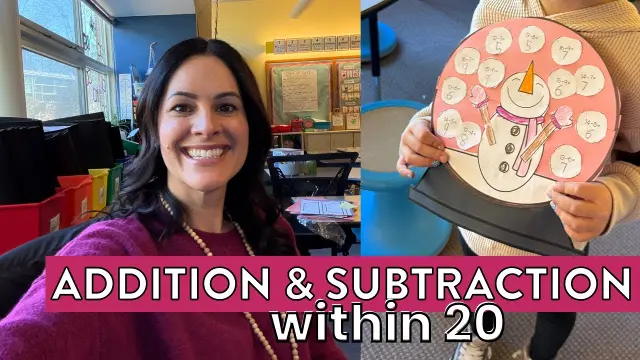
 Teaching First Grade Math Strategies for Numbers Within Twenty
#Teaching Math
1 ideas
Teaching First Grade Math Strategies for Numbers Within Twenty
Get new #Teaching Math ideas by email
Every Thursday: the week's best ideas, with the newest from #Teaching Math.
Related tags
Teaching Math: A Practical Guide for Beginners
What teaching math means
Teaching math is the practice of helping learners understand numbers, patterns, shapes, measurement, problem-solving, and logical thinking. It can happen in early childhood, school classrooms, tutoring sessions, homeschooling, or adult learning. At its best, math teaching is not only about getting the right answer, but about building understanding step by step.
Math has roots in many ancient cultures, where people needed it for counting, trade, timekeeping, building, and astronomy. Over time, it developed into a subject with many branches, from basic arithmetic to algebra, geometry, statistics, and more. For most learners, the journey begins with concrete ideas and slowly moves toward symbols and abstract reasoning.
Common ways to teach math
Read more
There is no single perfect method. Good teaching usually combines several approaches so learners can see, hear, touch, talk about, and practice the same idea in different ways.
- Concrete learning: using objects such as counters, blocks, coins, or drawings to make ideas visible
- Visual learning: showing number lines, diagrams, charts, and models
- Verbal explanation: talking through the steps and reasoning clearly
- Guided practice: solving problems together before asking learners to work alone
- Independent practice: giving enough repetition for skills to become secure
- Problem-based learning: using real-life situations so math feels useful
For younger learners, play and hands-on work are often especially helpful. For older learners, discussion, reasoning, and structured practice become more important.
Main areas to cover
A strong math foundation usually includes several key topics:
- Number sense: recognizing quantities, comparing numbers, and understanding place value
- Arithmetic: addition, subtraction, multiplication, and division
- Fractions and decimals: understanding parts of a whole and how numbers relate
- Measurement: length, weight, time, temperature, and capacity
- Geometry: shapes, space, symmetry, and position
- Data and probability: reading charts, collecting information, and making simple predictions
- Problem-solving: choosing a strategy and explaining the answer
What beginners should know
If you are new to teaching math, start with clarity. Introduce one idea at a time and make sure the learner understands it before moving on. Math can feel intimidating if too many steps are given at once.
A few useful habits:
- Use simple language and avoid rushing
- Ask learners to explain their thinking in their own words
- Watch for misconceptions early, especially in basic operations and place value
- Mix practice with review so older skills stay fresh
- Celebrate effort and progress, not just correct answers
Practical tips for better lessons
Make math concrete whenever possible. For example, counting real objects is often easier than starting only with written numbers. Show multiple ways to solve a problem so learners understand that there can be more than one route to the answer.
Keep lessons structured:
- Review a familiar skill
- Introduce the new idea
- Model one or two examples
- Practice together
- Let the learner try independently
- Check understanding and revisit if needed
Patience matters. Some learners need more time, more repetition, or a different explanation before a concept clicks. A calm, encouraging approach helps build confidence, and confidence often matters as much as skill when learning math.
Videos come from YouTube and posts from Instagram; titles and summaries are our own. All rights belong to their creators.