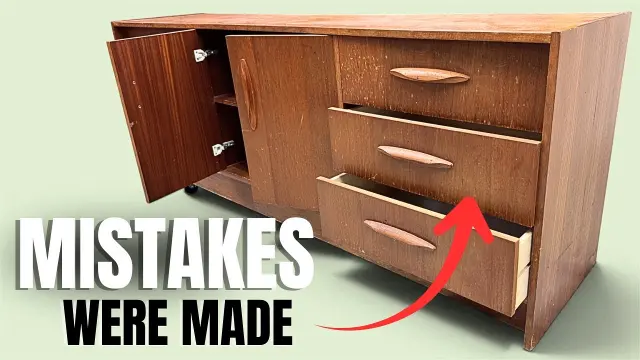
 Refinishing a Vintage Teak Credenza with Custom Wood Handles
#Teak Credenza
1 ideas
Refinishing a Vintage Teak Credenza with Custom Wood Handles
Get new #Teak Credenza ideas by email
Every Thursday: the week's best ideas, with the newest from #Teak Credenza.
Related tags
Teak Credenza: A Guide to Style, Care and Character
A teak credenza is a long, low storage piece — doors, drawers or a mix of both — usually raised on slim legs and finished to show the honey-brown grain of teak. The word "credenza" once described a side table for serving in Italian households; in modern usage it covers any low sideboard used for storage in a dining room, living room or hallway. Teak gives the form its character: a dense tropical hardwood with a warm golden tone, a straight and often striking grain, and a natural oiliness that helps it resist moisture.
Where it comes from
The teak credenza belongs to the mid-twentieth-century enthusiasm for honest materials and clean lines. Designers in Scandinavia and Britain took the traditional sideboard and stripped it down: no heavy carving, no ornament, just a long horizontal cabinet lifted off the floor on tapered wooden legs. Craftsmanship moved to the joinery and to the grain itself, with doors matched from the same board so the pattern runs uninterrupted across the front. Teak was favoured because it was stable, workable and beautiful with nothing more than oil or a thin lacquer.
Main kinds
Read more
You will meet several variations. Danish-style pieces tend to be lighter in build, with rounded corners, sliding doors and fine tapered legs. British and Australian interpretations often add more visual weight, with recessed handles and stronger grain. Storage layouts vary widely: a bank of drawers for cutlery and linens, a pair of hinged doors over adjustable shelves, or a central drop-front that turns into a drinks or serving surface. Smaller "mini" credenzas suit narrow rooms, while long examples work as a console beneath artwork.
Solid wood and veneer
Much of the teak furniture made in the mid-century era used veneer: a thin slice of teak glued over a stable core such as plywood or blockboard. This is not a shortcut — it was a deliberate technique that let makers match grain and control movement. Solid teak fronts exist too, usually on drawers and edges. For a beginner, the practical question is condition rather than construction: look for veneer that is not lifting, bubbled or chipped at the corners, drawers that slide cleanly, and a carcass that sits level without rocking.
Caring for teak
Teak is forgiving but not indifferent. Keep the piece out of direct sun, which bleaches the surface unevenly, and away from radiators and damp walls. Dust with a soft dry cloth, wipe spills promptly — teak handles water well but standing moisture still marks it — and use coasters under hot cups. If the surface looks dry or dull, a light application of dedicated teak or furniture oil, worked in with the grain and buffed off, restores depth without building a sticky film.
Beginning with an older piece
Refinishing is approachable. Clean first with a mild solution, then assess whether the finish is merely tired or actually failing. Light sanding with the grain, careful work around veneer edges, and a fresh oil or hardwax finish can bring a dull front back to life. Replace missing handles with simple wooden or brass shapes that respect the original proportions.
Choose slowly, sit with the piece, and let the grain be the decoration. A well-kept teak credenza earns its place by being useful every day and quietly beautiful for years.
#Teak Credenza: frequently asked questions
What is a teak credenza, and what makes it different from an ordinary sideboard?
It is a long, low storage cabinet — doors, drawers or both — lifted off the floor on slim legs, most often used in a dining room, living room or hallway. What sets it apart is the wood: teak is a dense hardwood with a warm golden tone, a straight and often striking grain, and a natural oiliness that helps it shrug off moisture. The look is deliberately plain, with the grain and the joinery doing the decorating rather than carving or ornament.
Which style of teak credenza should I choose for my room?
Danish-influenced pieces read lighter, with rounded corners, sliding doors and fine tapered legs, while British and Australian versions tend to carry more visual weight through recessed handles and bolder grain. Think about how you will actually use it: a bank of drawers suits cutlery and linens, hinged doors over adjustable shelves suit larger items, and a drop-front turns the top into a drinks or serving surface. A short mini credenza fits a narrow wall, while a long one works well as a console beneath artwork.
Should I look for solid teak or accept a veneered credenza?
Veneer is not a shortcut — gluing a thin slice of teak over a stable core was a deliberate technique that let makers match grain and keep the panels from moving. Solid teak usually appears on drawer fronts and edges, so construction matters less than condition. Check that the veneer is not lifting, bubbling or chipped at the corners, that drawers slide cleanly, and that the piece sits level without rocking.
How do I care for a teak credenza so it keeps its colour?
Keep it out of direct sun and away from radiators and damp walls, since uneven light bleaches the surface. Dust with a soft dry cloth, wipe spills promptly, and use coasters under hot cups — teak handles water well, but standing moisture still marks it. When the surface looks dry or dull, work in a little dedicated teak or furniture oil with the grain and buff off the excess so no sticky film builds up.
Can I refinish an older teak credenza myself?
Yes, it is an approachable project. Clean the piece with a mild solution first, then decide whether the finish is merely tired or genuinely failing before you sand. Light sanding with the grain, careful work around veneer edges and a fresh oil or hardwax finish can bring a dull front back to life, and simple wooden or brass handles in keeping with the original proportions can replace the missing ones.
What mistakes do people make when buying and placing a teak credenza?
The usual one is falling for the grain and overlooking the practical checks — lifting veneer, sticky drawers, a carcass that rocks on the floor. Another is placing it against a damp wall or in strong sun, which dulls the finish and bleaches the colour unevenly. Take your time, sit with the piece in the room you intend it for, and let the wood itself be the decoration.
Videos come from YouTube and posts from Instagram; titles and summaries are our own. All rights belong to their creators.