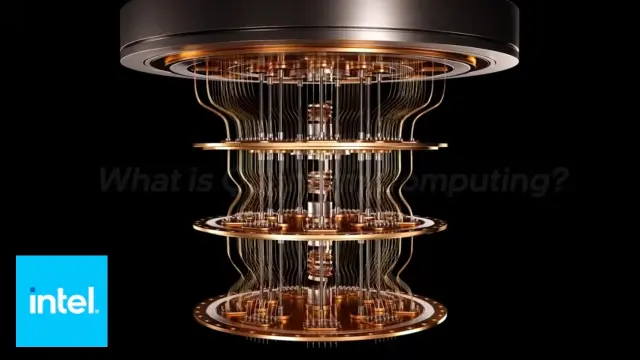
 Quantum Computing Explained: Qubits and How They Differ from Bits
#Technology Explainer
1 ideas
Quantum Computing Explained: Qubits and How They Differ from Bits
Get new #Technology Explainer ideas by email
Every Thursday: the week's best ideas, with the newest from #Technology Explainer.
Related tags
Technology Explainer: How Everyday Tech Actually Works
A technology explainer is a piece of writing that takes something complicated — a device, a piece of software, a scientific idea — and makes it understandable without flattening it into something untrue. The goal is not to impress you with jargon but to leave you able to describe the thing to someone else in your own words. Good explainers respect the reader: they assume curiosity, not ignorance.
Where the form comes from
Explaining tools is as old as toolmaking, but the modern explainer grew out of two traditions: the science column in newspapers and magazines, and the manual that accompanied a machine. The first taught writers to be accurate and readable at once; the second taught them that a reader usually arrives with a task in mind. Today the same craft appears in documentation, in classroom teaching, in museum labels and in the short articles people share to settle an argument at dinner.
The main kinds
Read more
Explainers differ by what they are trying to do, and it helps to recognise which one you are reading.
- Conceptual explainers answer "what is it, really?" and rely on comparison and analogy.
- Procedural explainers answer "how do I do this?" and depend on ordered steps.
- Comparative explainers set two things side by side and explain the trade-offs.
- Historical explainers trace how a technology arrived at its present shape, which often reveals why it works the way it does.
How a good one is built
Most follow a quiet structure: a plain statement of the problem, a familiar image to anchor it, the mechanism itself, then the limits. The analogy does the heavy lifting early and is then set aside, because every analogy breaks somewhere and a writer who hides that is not being honest. Numbers are used sparingly and only when they clarify scale. Technical vocabulary appears after the idea, never before it, so the reader meets a concept and then learns its name.
What beginners should know
You do not need the underlying mathematics to follow a good explanation, but you do need patience with one idea at a time. When something confuses you, the useful question is usually "what problem does this solve?" rather than "what does this word mean?" A term you cannot attach to a purpose will not stay with you; a term attached to a problem tends to stick.
Read skeptically, too. An explainer that promises the end of a debate, offers no limits, or never mentions what a technology cannot do is selling rather than explaining.
Writing your own
Start with the smallest true version of the idea, then add one layer at a time. Test each paragraph by asking whether a reader who stopped there would be misled. Prefer concrete examples over abstractions, cut anything you cannot verify, and end by naming the trade-offs. An explainer that leaves the reader calmer and more precise has done its job.
Videos come from YouTube and posts from Instagram; titles and summaries are our own. All rights belong to their creators.